Claude Daily Claude Daily
RSS
Web Dev Simplified 36 min video 3 slides

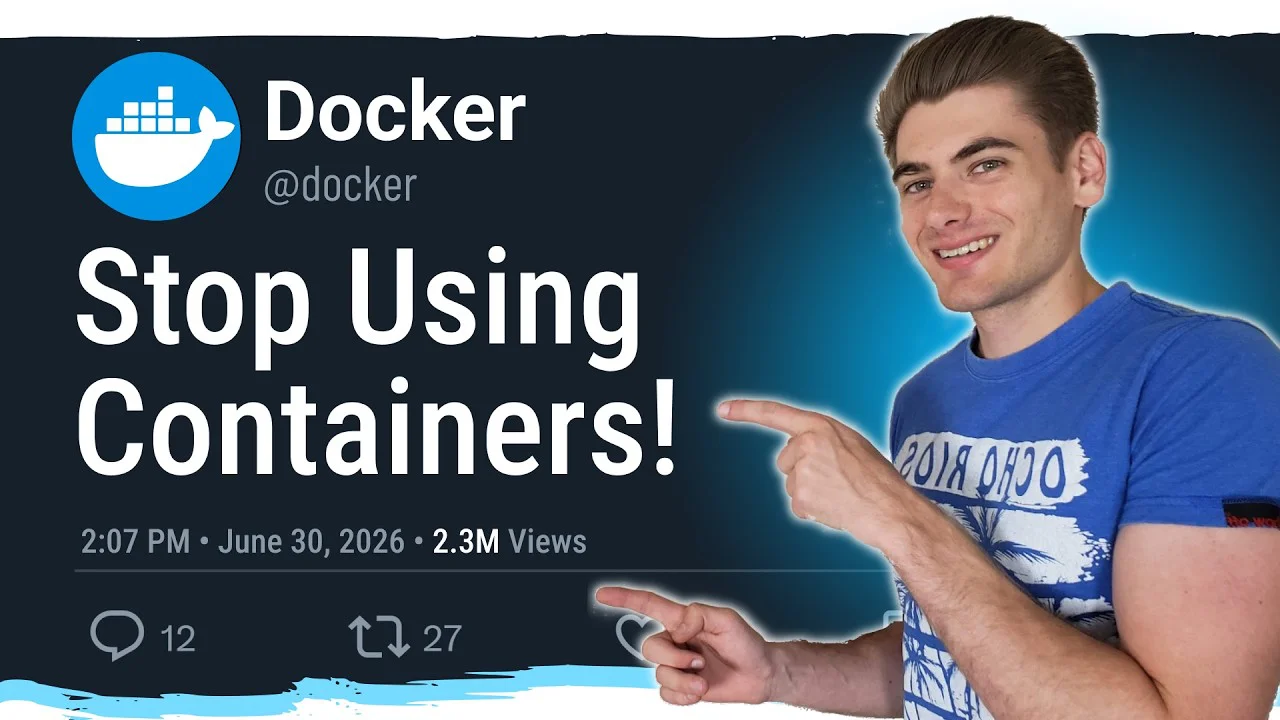
Containers Alone Don't Make Your AI Agent Safe: Sandboxing in the Age of Weekly npm Exploits

Containers Don't Make Your AI Agent Safe
15,234 views 7 highlights

TL;DR · What you'll learn

  • 1 To avoid AI wiping databases or destroying machines, most developers require permission prompts before any risky action.
  • 2 Constant permission prompts kill productivity, pushing some developers to grant AI unrestricted access instead -- creating new risks.
  • 3 npm sees a new security vulnerability nearly every week, with malicious packages designed to steal API keys and destroy systems.
  • 4 The creator now sandboxes every task, including AI development, so agents can run with zero permission checks yet cause no real damage.
  • 5 By default, external API access is locked down, and fetch calls to non-allowlisted sites fail -- demonstrated live in the video.
  • 6 Network policies can be listed and added via simple commands, allowing specific sites to be permitted globally or per sandbox.
  • 7 The features shown cover 99% of the creator's daily usage, and he says he no longer writes AI-generated code outside a sandbox.

Read as slides

3 slides total

01 Slide 1 / 3
Watch at 00:00

The False Choice Between Prompts and Unrestricted Access

To prevent AI from deleting databases or wiping files, many developers require a permission prompt for every risky action. But those constant interruptions crush productivity.

As a result, some developers swing to the other extreme, removing permission checks entirely and giving AI unrestricted access. Combined with npm's near-weekly stream of new vulnerabilities and malicious packages, that unrestricted approach leaves systems exposed regardless of whether AI is involved.

Claude Daily 01 / 03
02 Slide 2 / 3
Watch at 17:19

Controlling Outbound Access With Network Policies

The video demonstrates Docker Sandbox with external API access locked down by default -- fetch requests to non-allowlisted domains simply fail. Only explicitly permitted destinations are reachable.

Using the SBX policy commands, developers can list and add network policies, pre-approving commonly needed sites (package registries, Figma, and similar developer tools) either globally across all sandboxes or scoped to a single one.

Claude Daily 02 / 03
03 Slide 3 / 3
Watch at 35:41

Sandboxing Becomes Daily Infrastructure, Not a One-Off Setup

The later part of the video covers saving reusable setup kits to GitHub, but the creator's core claim is that these features now cover 99% of his day-to-day workflow -- he no longer writes AI-generated code outside a sandbox.

Worth noting: this segment is sponsored content for Docker Sandbox, so the specific tooling and policy design shown are particular to that product rather than universal.

Claude Daily 03 / 03

Editor's Take

The real insight here isn't about Docker Sandbox specifically -- it's that the choice between 'ask permission every time' and 'grant unrestricted access' is a false dichotomy. As agents become more autonomous, permission management shifts from individual actions to the execution environment itself. With npm supply-chain attacks now a near-weekly occurrence, allowlist-based network control isn't really an AI-specific innovation so much as a long-standing security principle finally being applied to agentic coding. Given this is sponsored content, teams should weigh Docker Sandbox against comparable options like Docker's own sandboxing or firejail before standardizing on one.

Source

Containers Don't Make Your AI Agent Safe

Web Dev Simplified

Containers Don't Make Your AI Agent Safe

Published 6/30/2026 36 min 15,234 views

This article auto-summarizes the YouTube video's transcript with Claude. Please refer to the original video for nuance and exact wording.

Watch on YouTube

Related

3 articles