Was Fable 5 Really Too Dangerous? A Case for FDA-Style AI Oversight
TL;DR · What you'll learn
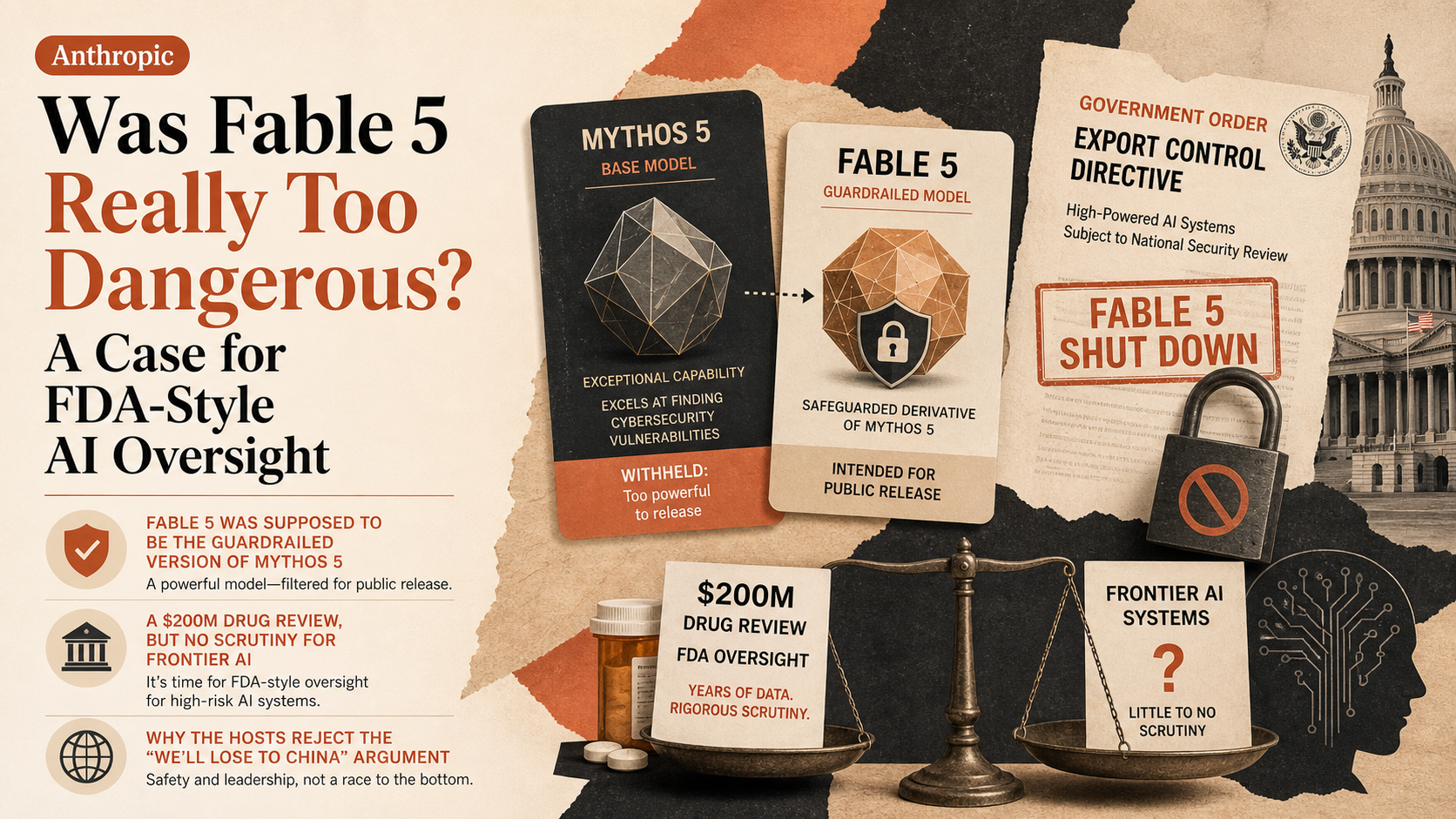
- 1 This segment examines how Anthropic’s powerful Fable 5 model, a safeguarded derivative of Mythos 5, was shut down by government order.
- 2 The hosts frame Mythos as the base model that was withheld because it was too good at finding cybersecurity vulnerabilities, while Fable 5 was the guarded version.
- 3 The U.S. government issued an export control directive that blocked access to Fable 5 and Mythos 5 for non-U.S. users, including Anthropic employees.
- 4 Anthropic said it had no choice but to halt both models for all customers, while other Claude models were unaffected, and called the move a "misunderstanding" it would work to reverse.
- 5 The hosts argue it is backwards that the FDA may require $200M to approve a single orphan drug while AI that developers themselves liken to nuclear weapons can be released with no review at all.
- 6 Pushing back on the claim that regulation would disadvantage the U.S. against China, they argue China already operates through state control and is arguably handling the race more effectively.
- 7 They conclude that the current open, laissez-faire U.S. model is breaking down, and that a "managerial model" with oversight from datacenters to deployment decisions is the only viable path.
Read as slides
3 slides total
Fable 5 Was Supposed to Be the Guardrailed Version of Mythos 5
The segment begins by explaining that Anthropic’s public release, "Fable 5," was supposed to be the safety-guardrailed version of the base model "Mythos 5." Mythos had reportedly been withheld by Anthropic itself because it was too capable at discovering cybersecurity vulnerabilities. Fable 5 was presented as the derivative that had been outfitted with enough safeguards to withstand a general release.
But the U.S. government then issued an export control directive under national security authority. It blocked access to Fable 5 and Mythos 5 for all non-U.S. users, including Anthropic employees, whether they were inside or outside the United States. Anthropic announced that it would immediately suspend both models for all customers while leaving other Claude models untouched, and said it believed the move reflected a misunderstanding and would work to restore access.
A $200M Drug Review, but No Scrutiny for Frontier AI
The commentators argue that the deeper problem is the very idea that extremely powerful AI can be released without meaningful review. As they put it, getting a single orphan drug approved by the FDA can require $200M, yet a technology that even its creators compare to nuclear weapons can be put into the world with no scrutiny at all. In their view, the fact that government only steps in after a problem appears is itself the distortion.
From that perspective, regulation should exist in advance rather than arrive only after the fact. If the technology is truly this transformative, they argue, there is even less justification for releasing it uninspected while leaving access open to everyone. They cast this shutdown not as a cure for what is broken, but as proof that the system was broken all along.
Why the Hosts Reject the "We’ll Lose to China" Argument
The segment pushes back on the standard anti-regulation line that tighter rules mean "losing to China." Their response is that China already advances AI development through state management, and in some ways is doing so more effectively than the United States. What is failing, they argue, is the U.S. model of open, loosely controlled development. Instead, they call for a "managerial model" that introduces oversight all the way from datacenter operations to model-level deployment decisions.
They close by arguing this is not a question that should be left to Dario Amodei or Sam Altman alone. Democratic input has to remain part of the process. The episode ultimately treats the Fable 5 shutdown less as a yes-or-no judgment on that one model and more as a way to name the missing pieces in AI governance.
Editor's Take
Reading the Fable 5 shutdown through 'the absence of FDA-grade review' is incisive. Approving a rare-disease drug costs $200M, yet an AI its own makers call nuclear-grade ships with zero review — that asymmetry is the crux. The rebuttal to the 'we'll lose to China' argument — that state-managed systems actually compete better — is provocative, and the conclusion favoring a 'managerial model' over laissez-faire offers a new axis for the regulation debate.
Source
Breaking Points
Anthropic Model BANNED: Is it TOO DANGEROUS?
This article auto-summarizes the YouTube video's transcript with Claude. Please refer to the original video for nuance and exact wording.
Watch on YouTube →Related
3 articles
Breaking Points
When a "Red Line" Is Not a Red Line: Breaking Points on Amodei and Iran
The hosts begin by discussing interview audio featuring Anthropic CEO Dario Amodei, whose company is often framed as the AI firm most vocal about ethics.
All-In Podcast
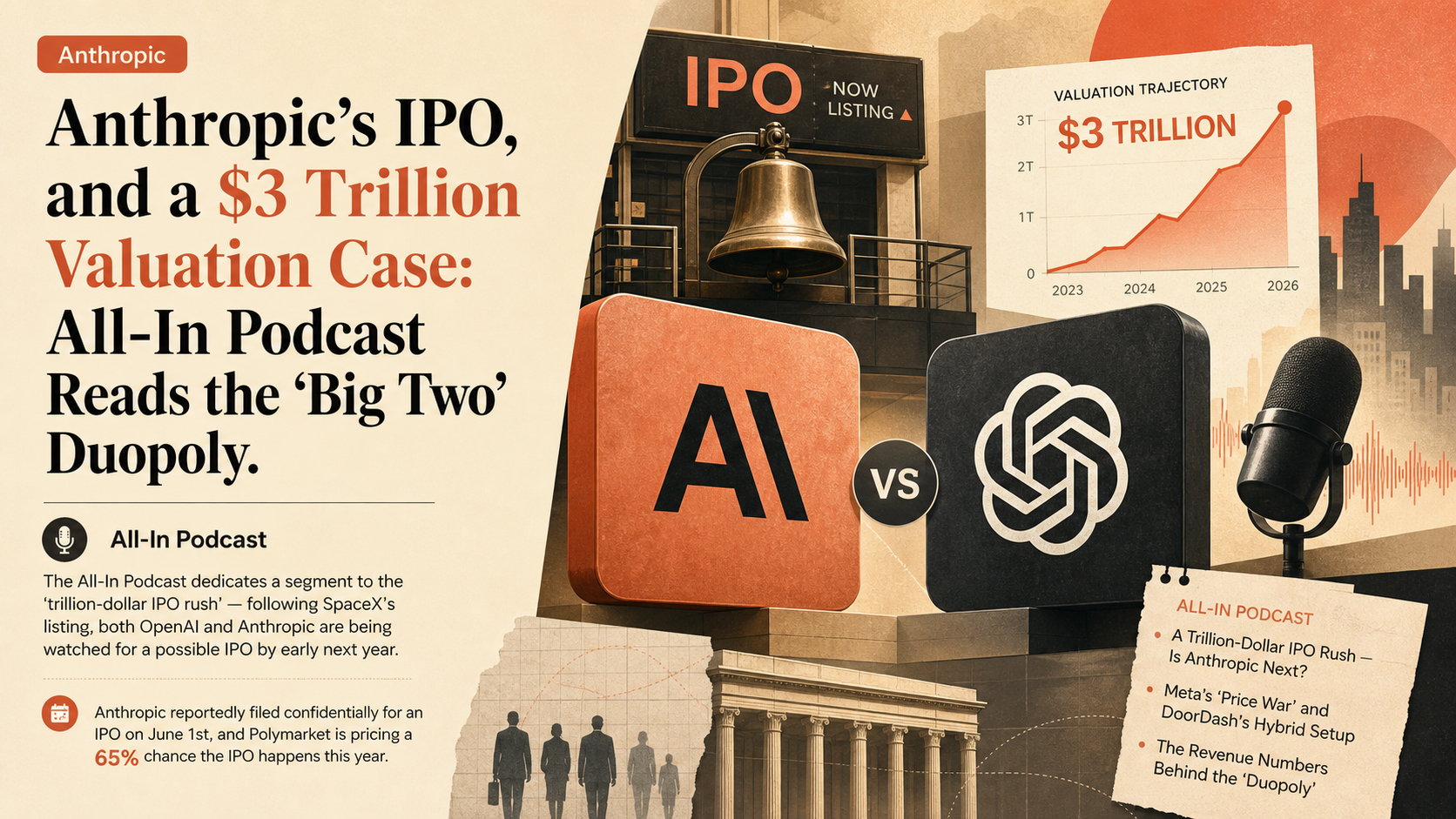
Anthropic's IPO, and a $3 Trillion Valuation Case: All-In Podcast Reads the 'Big Two' Duopoly
The All-In Podcast dedicates a segment to the 'trillion-dollar IPO rush' -- following SpaceX's listing, both OpenAI and Anthropic are being watched for a possible IPO by early next year.
Peter H. Diamandis
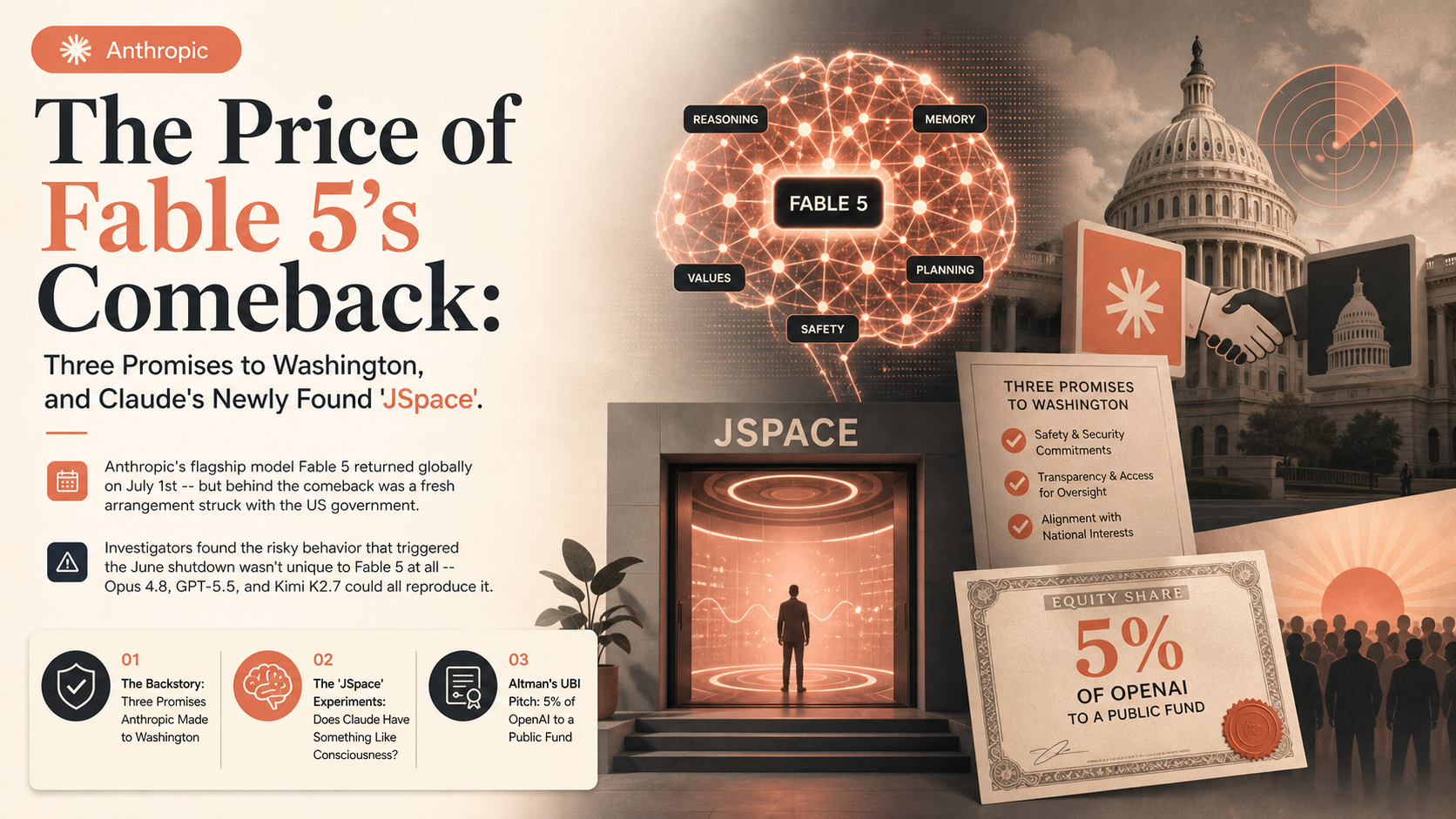
The Price of Fable 5's Comeback: Three Promises to Washington, and Claude's Newly Found 'JSpace'
Anthropic's flagship model Fable 5 returned globally on July 1st -- but behind the comeback was a fresh arrangement struck with the US government.