Building the AI-Native Enterprise: Groupon's VP on the 'AI Factory' and Working With Claude Co-work
TL;DR · What you'll learn
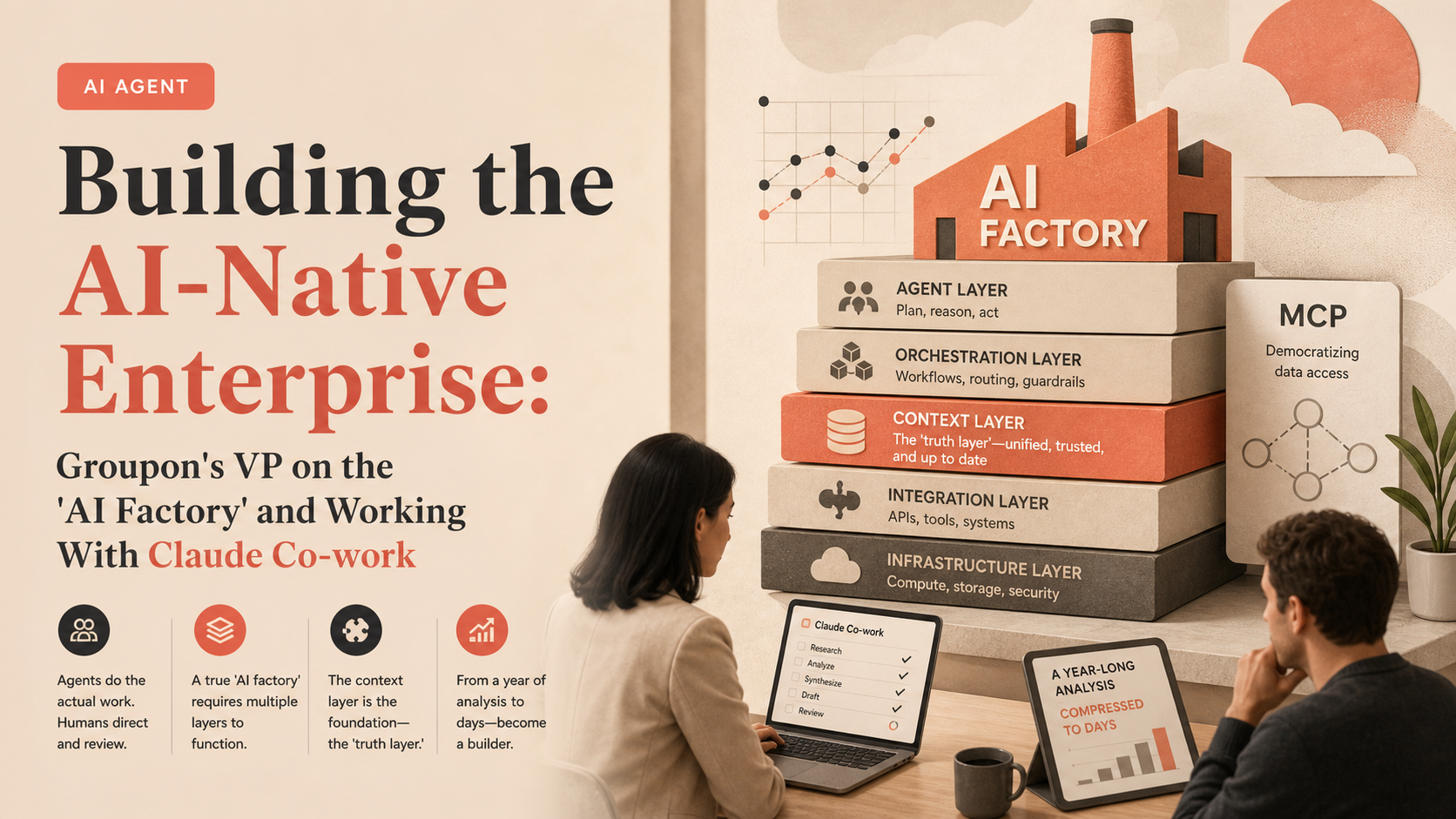
- 1 AI-native means agents do the actual work while humans direct and review it, and a true 'AI factory' requires multiple layers to function.
- 2 One of the foundational layers behind an AI-native organization is the 'context layer' -- what she calls the 'truth layer.'
- 3 Engineering democratized data through MCPs, shared frameworks, connectors, and training -- letting non-engineers build their own dashboards.
- 4 The organization started with Cursor but now leans heavily on Claude Co-work, Claude Design, and Claude Code.
- 5 Training resources for learning AI tools are provided free, making the barrier to entry effectively zero.
- 6 A comprehensive product analysis that once took a full year now takes just days once data sources are connected, thanks to Claude Co-work.
- 7 Her closing message: 'become a builder' -- don't delegate your understanding of AI to your team; sit down and direct the agents yourself.
Read as slides
3 slides total
Defining 'AI-Native' and Why the Context Layer Matters
Masha Sharma is VP of merchant experience at Groupon, where she's rebuilding the company into an AI-first growth engine for its merchants. AI-native, in her framing, means agents do the actual work while humans direct and review it -- a shift that changes the nature of the output itself, not just the org chart.
A true 'AI factory' requires multiple layers to function, and one of the core foundational ones is the context layer -- what she calls the organization's 'truth layer.' Without it, AI-native operations don't have a stable foundation to build on.
Democratizing Data via MCP, and a Shift Toward Claude Tools
Groupon's engineering team democratized data access through MCPs, shared frameworks, connectors, and training -- opening the door for people traditionally outside engineering, like salespeople, to build their own dashboards and lead-research tools. The conversations she's having with non-engineers today look completely different than they did just six months ago.
On tooling, the organization started with Cursor but now leans heavily on Claude Co-work, Claude Design, and Claude Code. Training resources for learning these tools are provided free, and she emphasizes that the barrier to entry is effectively zero.
A Year-Long Analysis Compressed to Days, and 'Become a Builder'
A comprehensive product-capability analysis that used to be an annual exercise now takes just days once data sources are connected, thanks to Claude Co-work -- enabling a research-backed roadmap to come together far faster than before.
Her closing message, repeated for emphasis: become a builder. Don't delegate your understanding of AI to your team -- sit down, roll up your sleeves, and start directing the agents yourself. That path, she argues, advances you further than a team working on the same problem for two years would. Getting started with a coding agent is, in her view, genuinely easy for anyone.
Editor's Take
What this conversation surfaces is that becoming an AI-native organization is less about adopting a tool and more about an organizational-design problem: democratizing data. Building an environment where non-engineers can construct their own dashboards via MCP shows that the key to spreading AI's benefits beyond the engineering org lies in shared infrastructure, not just the underlying technology. The example of a year-long analysis shrinking to days is a concrete sign that autonomous tools like Claude Co-work aren't just improving efficiency -- they're reshaping the structure of the decision-making cycle itself. 'Become a builder' can sound like a platitude, but given the free training resources and genuinely low barrier to entry she describes, it reads as a practical, actionable recommendation rather than a slogan.
Source
Augmented U
Building the AI-Native Enterprise, Agent Crews and the AI Factory | Interview with Masha Sharma
This article auto-summarizes the YouTube video's transcript with Claude. Please refer to the original video for nuance and exact wording.
Watch on YouTube →Related
3 articles
Christian Lempa
Why I Went Back to Obsidian From Notion: Choosing a Notes Setup for the Local-AI-Agent Era
The same creator who once published a video on 'why I switched from Obsidian to Notion' admits he's moved his main notes and project-management workflow back to Obsidian.
Higgsfield AI
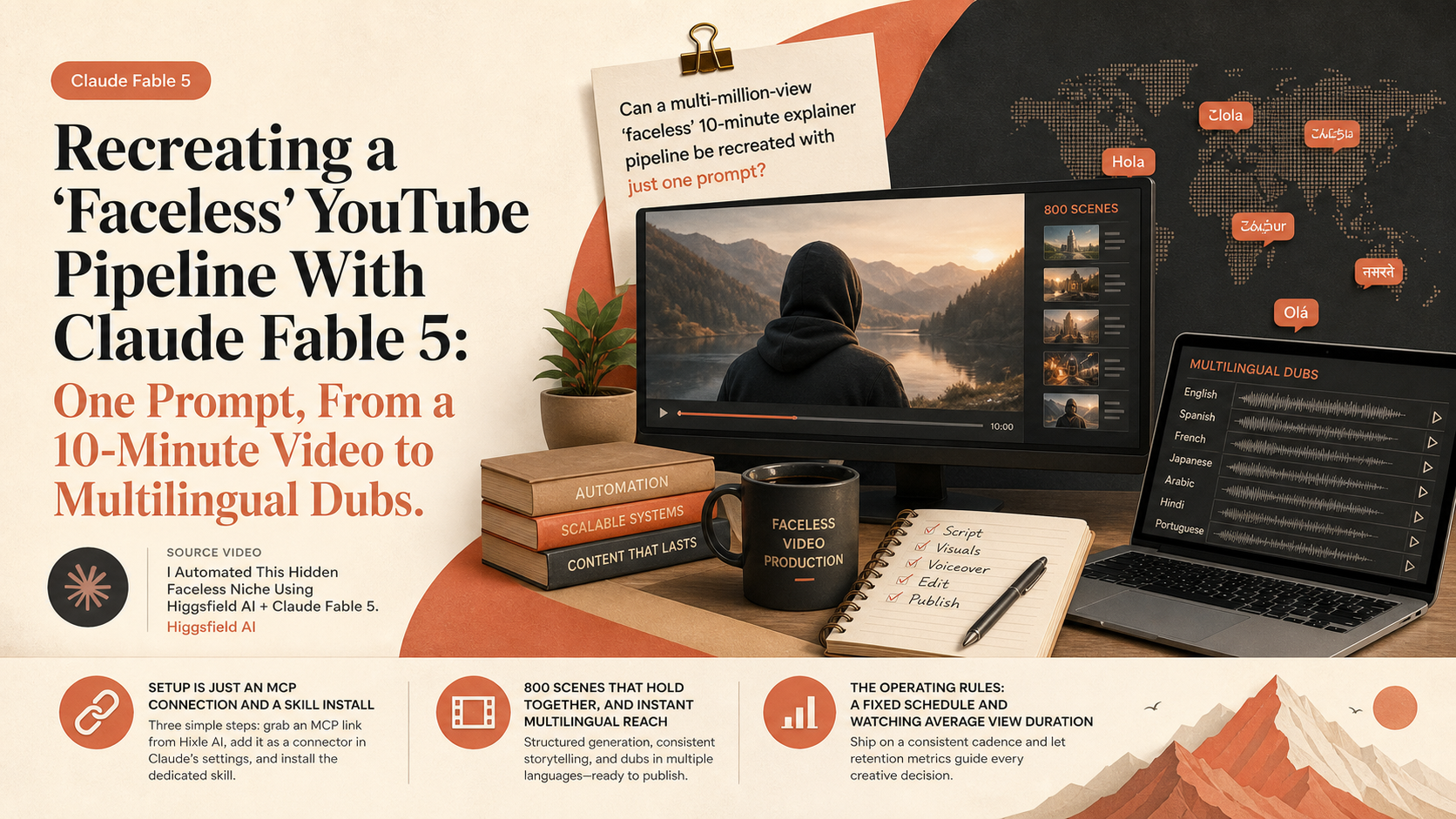
Recreating a 'Faceless' YouTube Pipeline With Claude Fable 5: One Prompt, From a 10-Minute Video to Multilingual Dubs
The video asks whether a multi-million-view 'faceless' 10-minute explainer production pipeline can be recreated with a single prompt.
Jason Lee
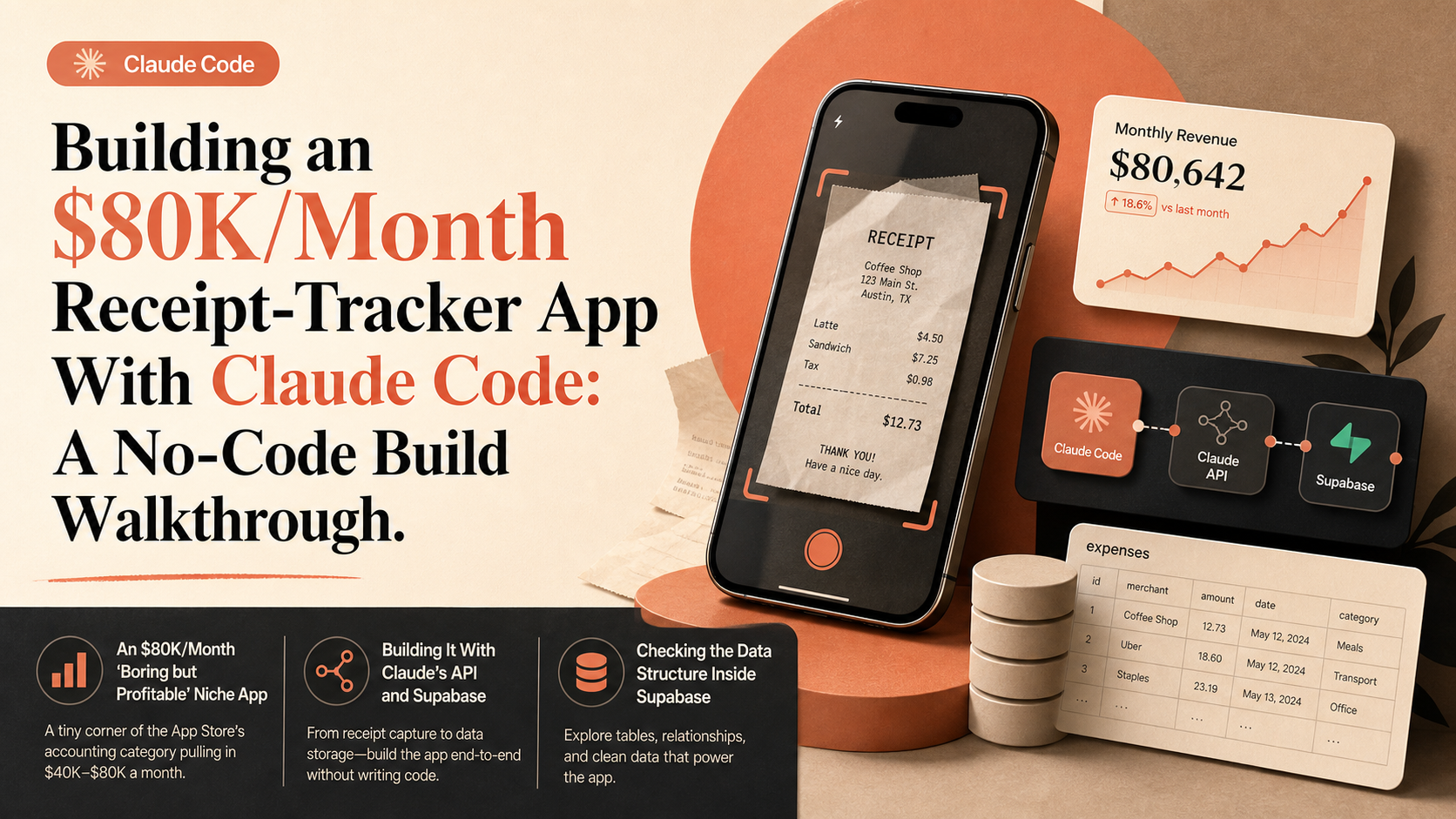
Building an $80K/Month Receipt-Tracker App With Claude Code: A No-Code Build Walkthrough
The video highlights a tiny niche in the App Store's accounting category -- receipt and expense tracking -- where several apps pull in $40,000-$80,000 a month.