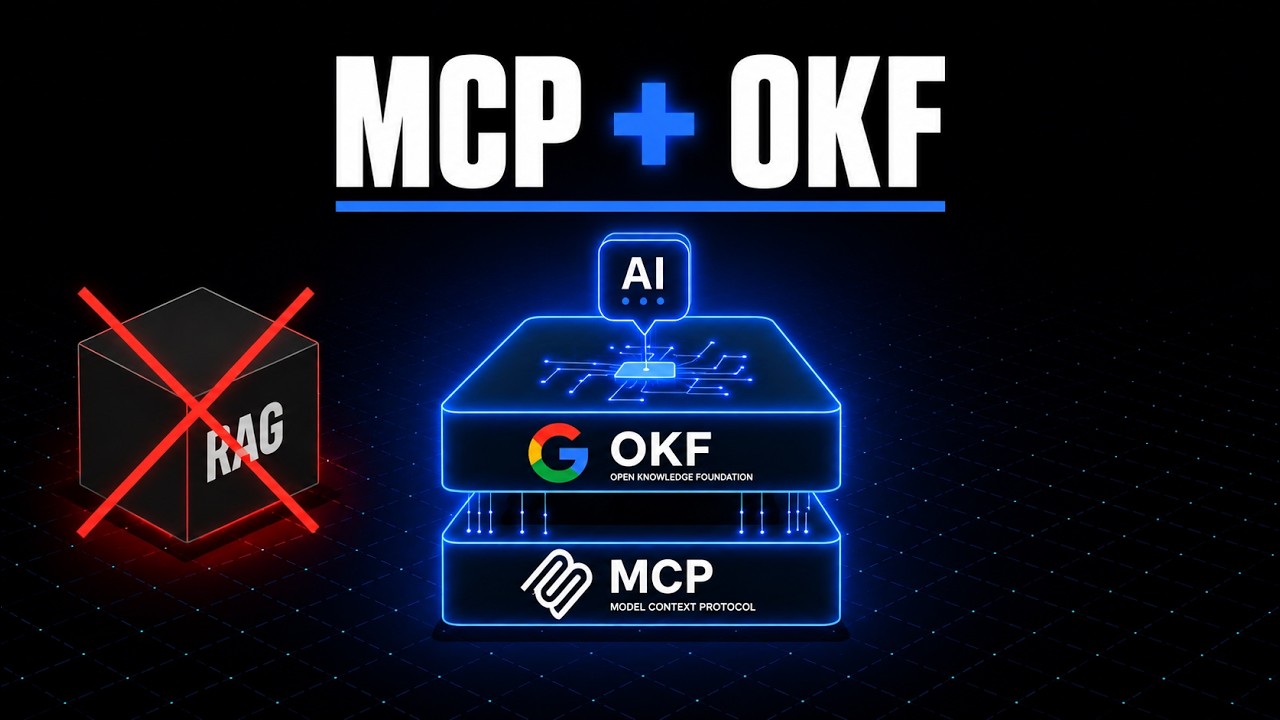
Google OKF + MCP — the AI context stack as meaning plus action
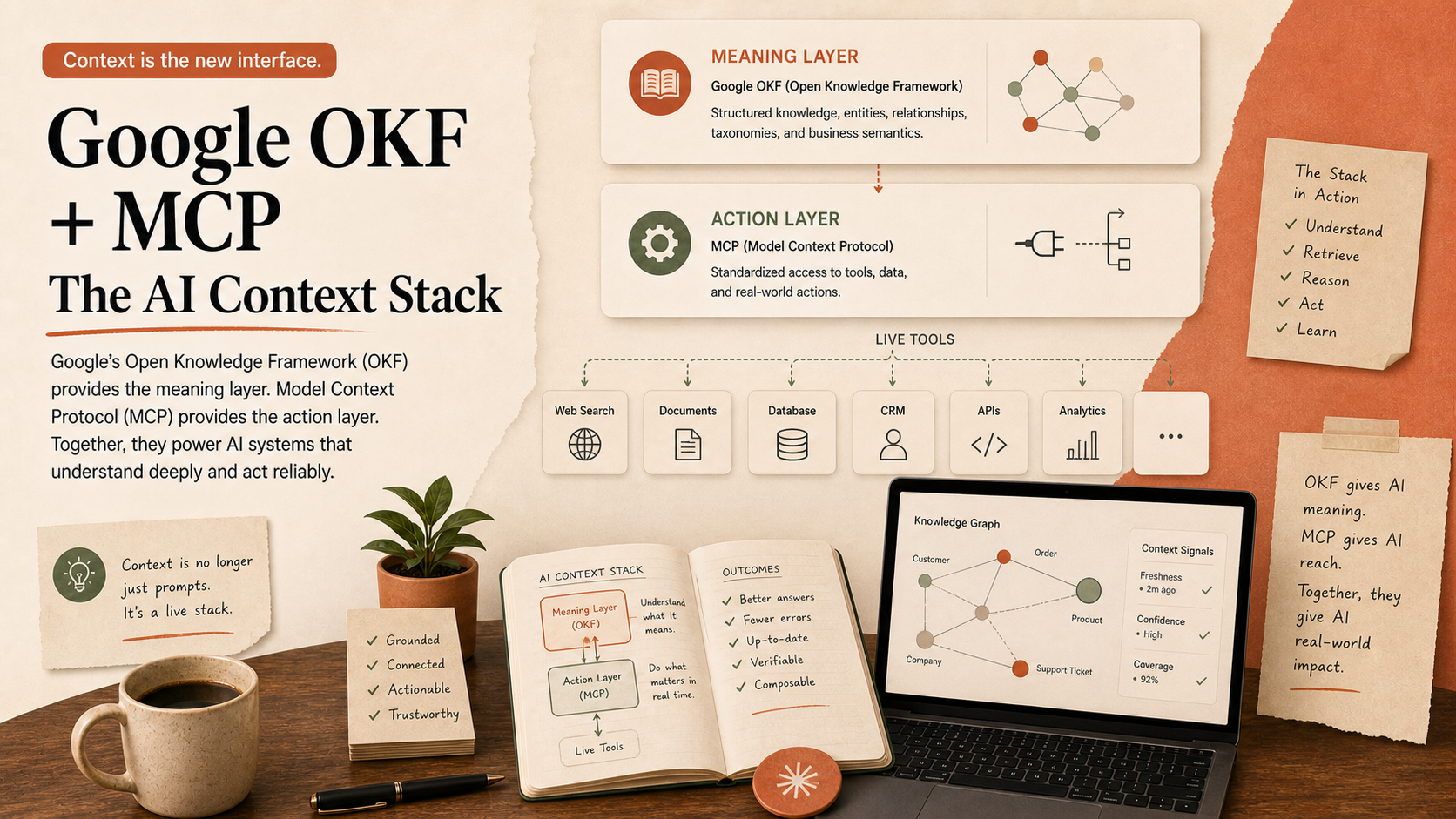
TL;DR · What you'll learn
- 1 The video opens with a simple problem: models can write SQL, but they do not know your company’s weekly active users unless context is connected.
- 2 OKF is framed as a meaning layer that links metrics, customers, documents, and definitions rather than a simple folder tree.
- 3 Karpathy’s LLM wiki idea appears as a way for agents to write and maintain compounding knowledge.
- 4 MCP becomes the live governed access layer from knowledge into real tools and systems.
- 5 Together, OKF and MCP form a useful mental model: meaning at the bottom, action on top.
Read as slides
3 slides total
The problem is context, not intelligence
The video starts with a useful distinction. A modern model can write a query, but it cannot answer a company-specific metrics question unless it has access to the definitions, data, and relationships behind that metric. The missing part is context.
That shifts the design problem from model selection to context architecture.
OKF as meaning, MCP as action
OKF is presented as a meaning layer: a graph of metrics, customers, docs, and definitions. MCP is the live, governed tool-access layer. One tells the model what things mean; the other lets it act.
The video connects this to Karpathy’s LLM wiki idea, where knowledge compounds because the agent can maintain its own working context.
Designing the stack
The stack is useful because either layer alone is incomplete. Knowledge without action produces reports. Tool access without meaning produces risky automation.
For Claude and Codex deployments, the practical sequence is: organize meaning first, then add least-privilege MCP actions.
Editor's Take
The important point is that MCP should not be treated as the whole context story. Tool access needs a meaning layer beneath it. As agents become more capable, this separation between definitions and actions becomes a safety and reliability requirement, not architecture trivia.
Source
Cloud Codes
Google OKF + MCP : Explained The New "AI Context Stack"
This article auto-summarizes the YouTube video's transcript with Claude. Please refer to the original video for nuance and exact wording.
Watch on YouTube →Related
3 articles
Eric Tech
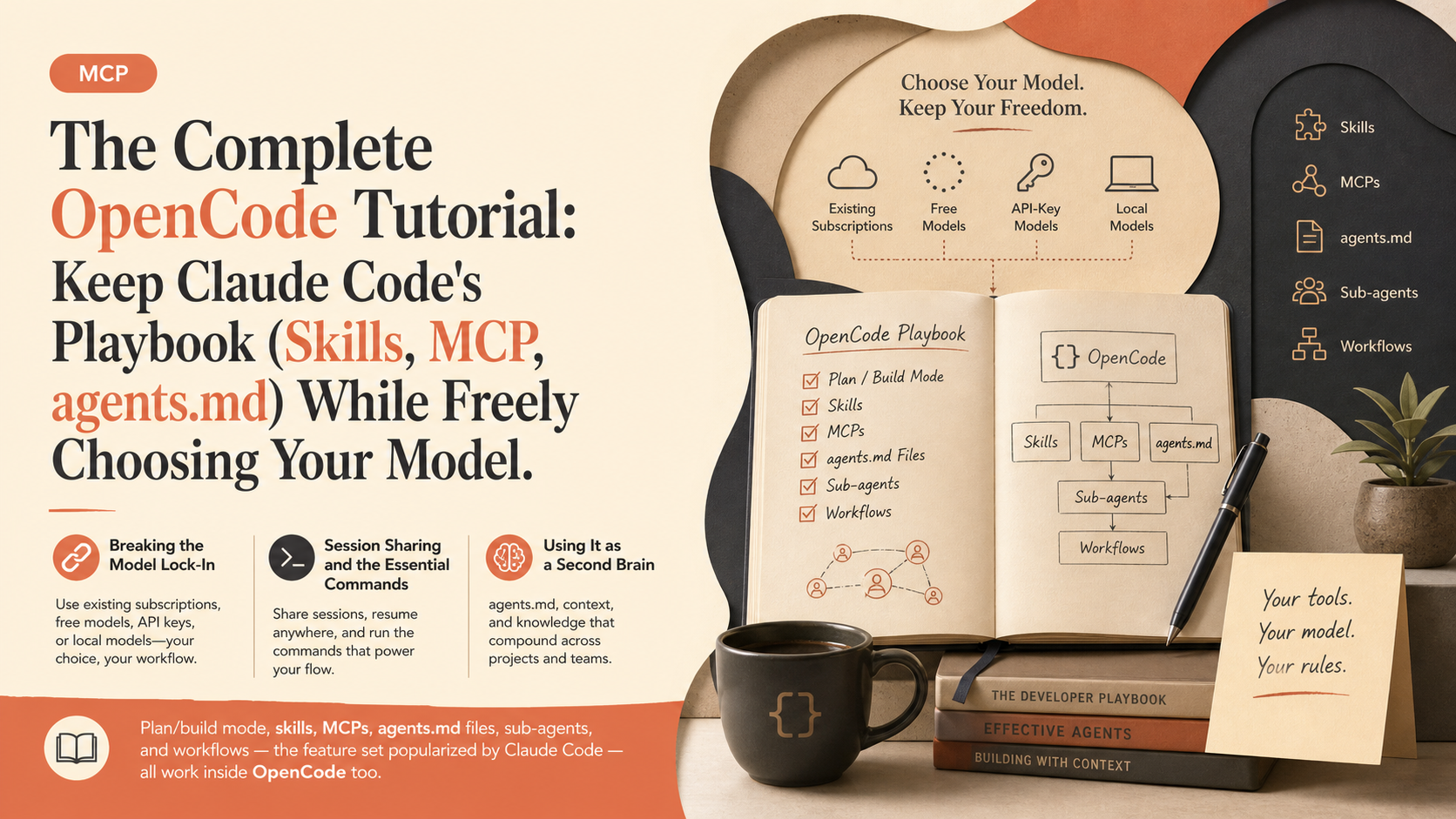
The Complete OpenCode Tutorial: Keep Claude Code's Playbook (Skills, MCP, agents.md) While Freely Choosing Your Model
Coding agents tend to lock you into one provider and model, but OpenCode lets you freely choose between existing subscriptions, free models, API-key models, or local models -- while keeping the features popularized by Claude Code and Codex.
IBM Technology
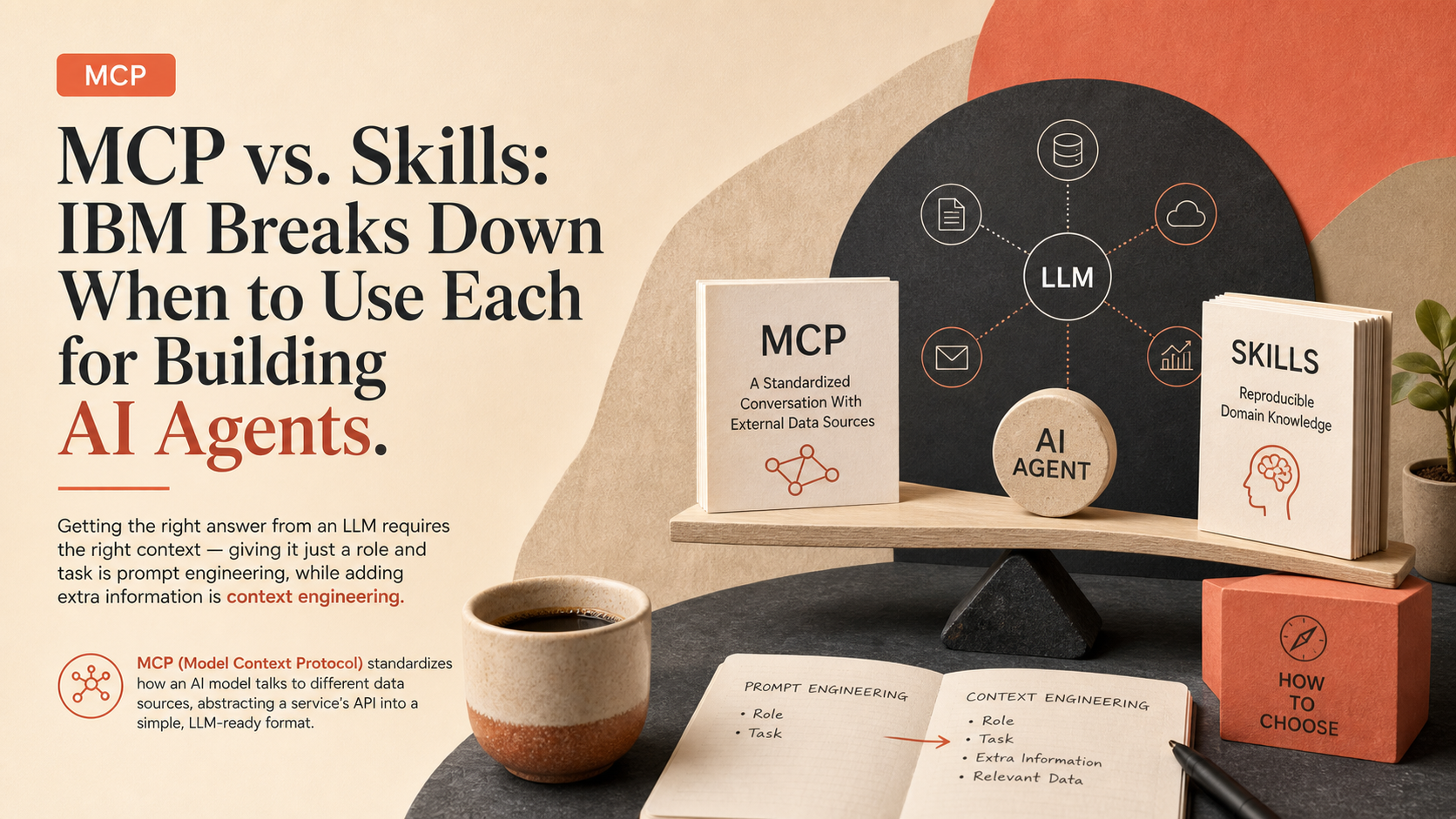
MCP vs. Skills: IBM Breaks Down When to Use Each for Building AI Agents
Getting the right answer from an LLM requires the right context -- giving it just a role and task is prompt engineering, while adding extra information is context engineering.
Griffin Wooldridge
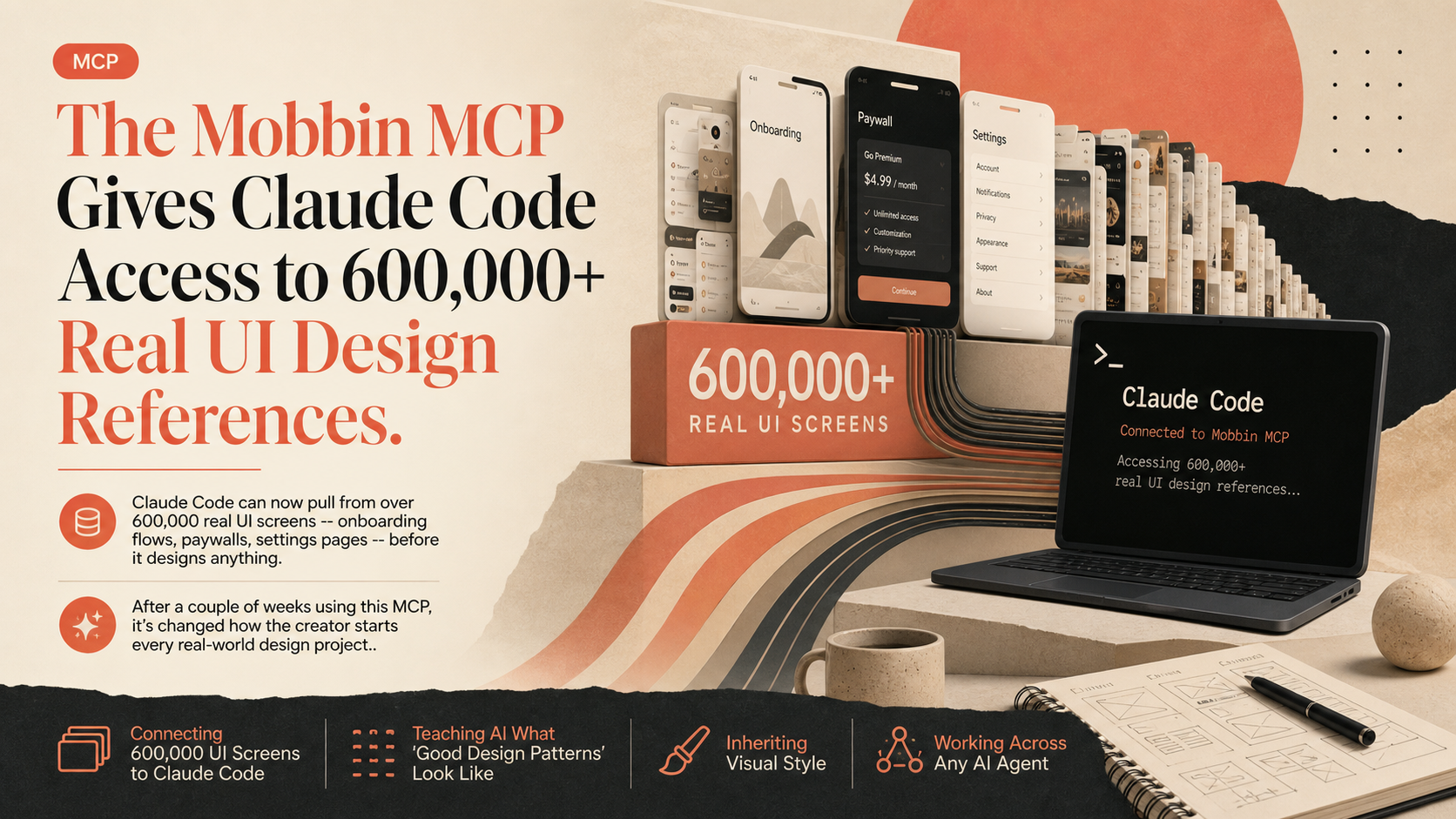
The Mobbin MCP Gives Claude Code Access to 600,000+ Real UI Design References
Claude Code can now pull from over 600,000 real UI screens -- onboarding flows, paywalls, settings pages -- before it designs anything.