
China Warns of a 'Backdoor' in Claude Code, Demanding Restrictions Over Alleged Location Data Leaks

TL;DR · What you'll learn
- 1 China is starting to lock down its domestic AI industry -- Alibaba and ByteDance reportedly plan to shut down user-created agents on July 15th.
- 2 Chinese authorities also warned that Anthropic's Claude Code may contain a 'backdoor' capable of sending user location and identity data to remote servers.
- 3 On July 8th, China's National Vulnerability Database (NVDB), run by the industry ministry, warned that Claude Code versions 2.1.91 through 2.1.96 carry a serious backdoor risk.
- 4 The warning claims Claude Code has a built-in monitoring mechanism that can transmit sensitive information -- including geographic location and identity identifiers -- to remote servers without user consent.
- 5 NVDB told organizations to review affected systems, uninstall the impacted versions, or upgrade to a secure release with the alleged backdoor code removed.
- 6 Anthropic did not immediately respond to Reuters; the warning came shortly after Alibaba had already banned employees from using Claude Code over features that could identify China-linked users.
- 7 Separately, tests show Fable 5 running as an orchestrator -- delegating heavy work to cheaper worker models -- can retain most of its performance while sharply cutting costs.
Read as slides
3 slides total
China Weighs Restricting Overseas Access to Its Own AI Models
According to Reuters, Chinese authorities have spent the past month meeting with major domestic AI firms -- Alibaba, ByteDance, and Zhipu AI (Z.ai) among them -- to discuss whether Beijing should restrict overseas access to China's most advanced AI models, including ones not yet released. Unlike ordinary content moderation, this marks a real reversal for Chinese AI, which built its global following on being cheap and easy to access. Alibaba and ByteDance are reportedly set to shut down user-created agents on July 15th.
China Formally Warns of an Alleged Backdoor in Claude Code
On July 8th, China's National Vulnerability Database (NVDB), operated by the industry ministry, warned that Claude Code versions 2.1.91 through 2.1.96 carry a serious backdoor risk. The warning claims Claude Code has a built-in monitoring mechanism capable of transmitting sensitive data -- including geographic location and identity identifiers -- to remote servers without user consent. NVDB told organizations to review affected systems, uninstall the impacted versions or upgrade to a secure release with the alleged code removed, and tighten external network access and traffic monitoring for development tools.
Anthropic did not immediately respond to Reuters' request for comment. The warning followed shortly after Alibaba had already banned employees from using Claude Code, citing features that could identify China-linked users.
A Cost-Efficiency Hint: Fable 5 as Orchestrator
In a separate story, test results show Fable 5 acting as an 'orchestrator' -- handling only the high-level judgment calls while delegating the heavy lifting to cheaper Sonnet 5 sub-agents. On SWE-Bench Pro, this setup reached about 92% of standalone Fable 5's performance at roughly 63% of the cost. On a fact-checking task across 10 major US national parks, a single Fable 5 run cost about $4 and took 68 seconds, while the orchestrated setup cost about $161 and took 194 seconds -- but pushed over 80% of tokens to cheaper worker models.
Editor's Take
China's 'backdoor' allegation against Claude Code is, for now, an unverified claim -- but it captures how coding tools are becoming a genuine geopolitical security flashpoint. Because coding agents hold broad access to codebases and business data, the transparency of where they communicate and what they monitor is set to become an unavoidable issue for developer tools going global. Meanwhile, the Fable 5 orchestration results point to a design pattern reaching production maturity: reserving a top-tier model for judgment calls while delegating execution to cheaper models to balance cost and performance -- a trend developers should track alongside the security story.
Source
AI Revolution
China Just Started The AI Cold War: Best AI Models Get Locked
This article auto-summarizes the YouTube video's transcript with Claude. Please refer to the original video for nuance and exact wording.
Watch on YouTube →Related
3 articles
PIVOT 公式チャンネル
Building a Personal AI Agent for a TV Anchor in 4 Hours: How Claude Code Turned 21 Hours of Research Into 10 Minutes
Japanese business show PIVOT filmed a live segment building a personal AI agent for anchor Tsuyoshi Nojima using Claude Code, from scratch, in four hours.
いけともch
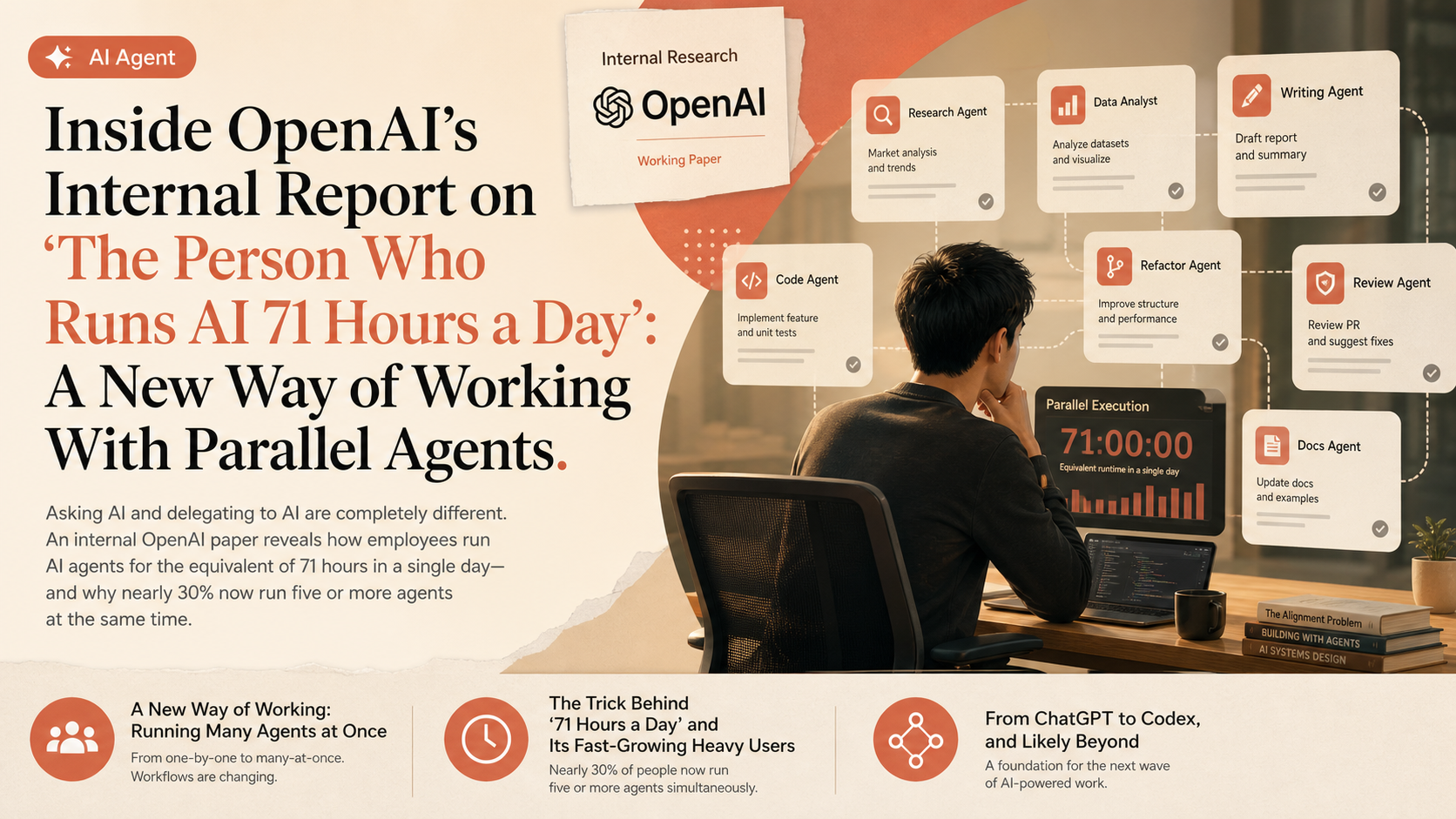
Inside OpenAI's Internal Report on 'The Person Who Runs AI 71 Hours a Day': A New Way of Working With Parallel Agents
Asking AI and delegating to AI are completely different, the video argues, introducing an internal OpenAI paper analyzing employees who run AI agents for the equivalent of 71 hours in a single day.
Parker Prompts
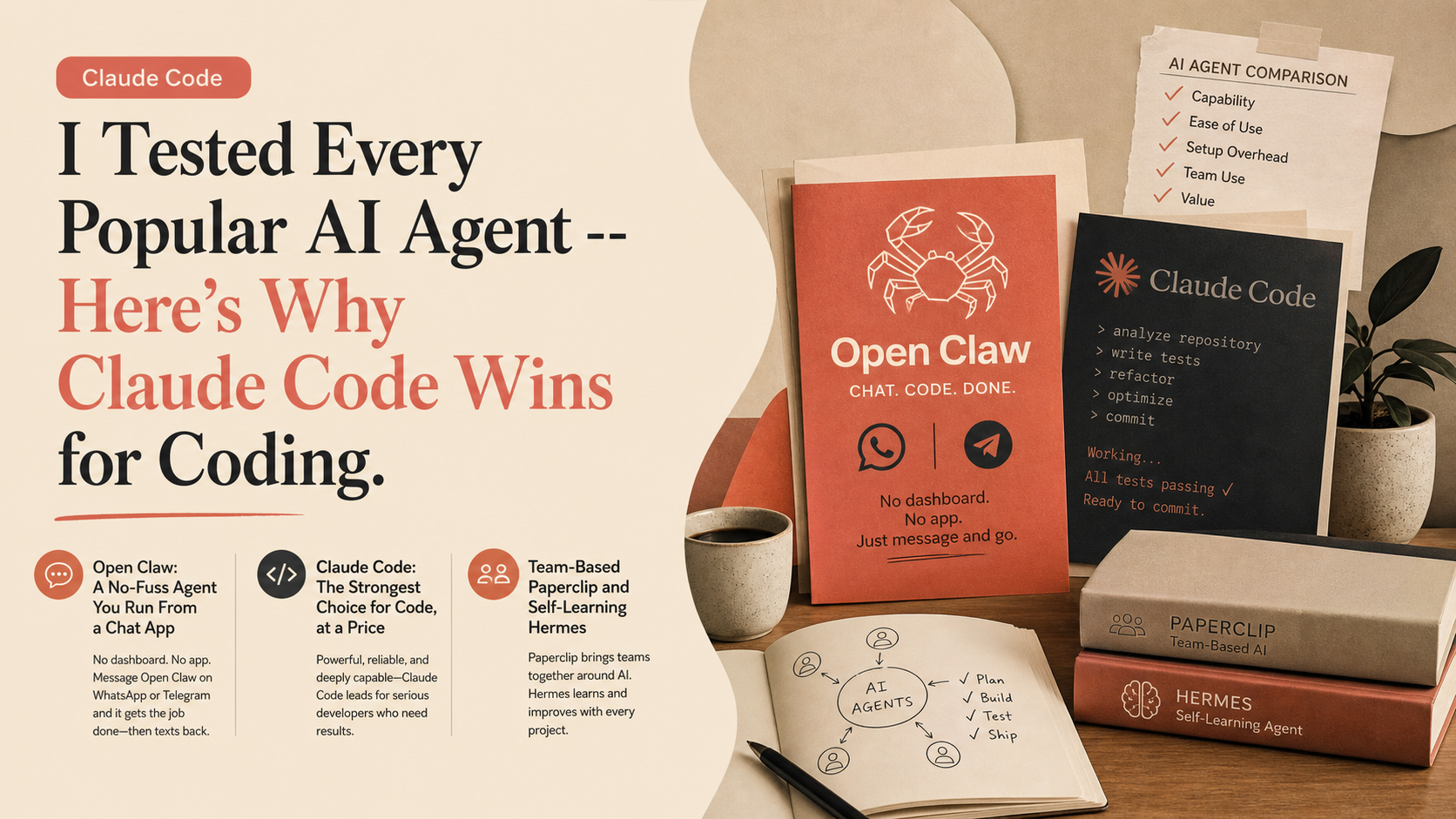
I Tested Every Popular AI Agent -- Here's Why Claude Code Wins for Coding
One of the most widely installed agents today, Open Claw, went through earlier names -- Claude Bot, then Mult Bot -- before landing on its current one.