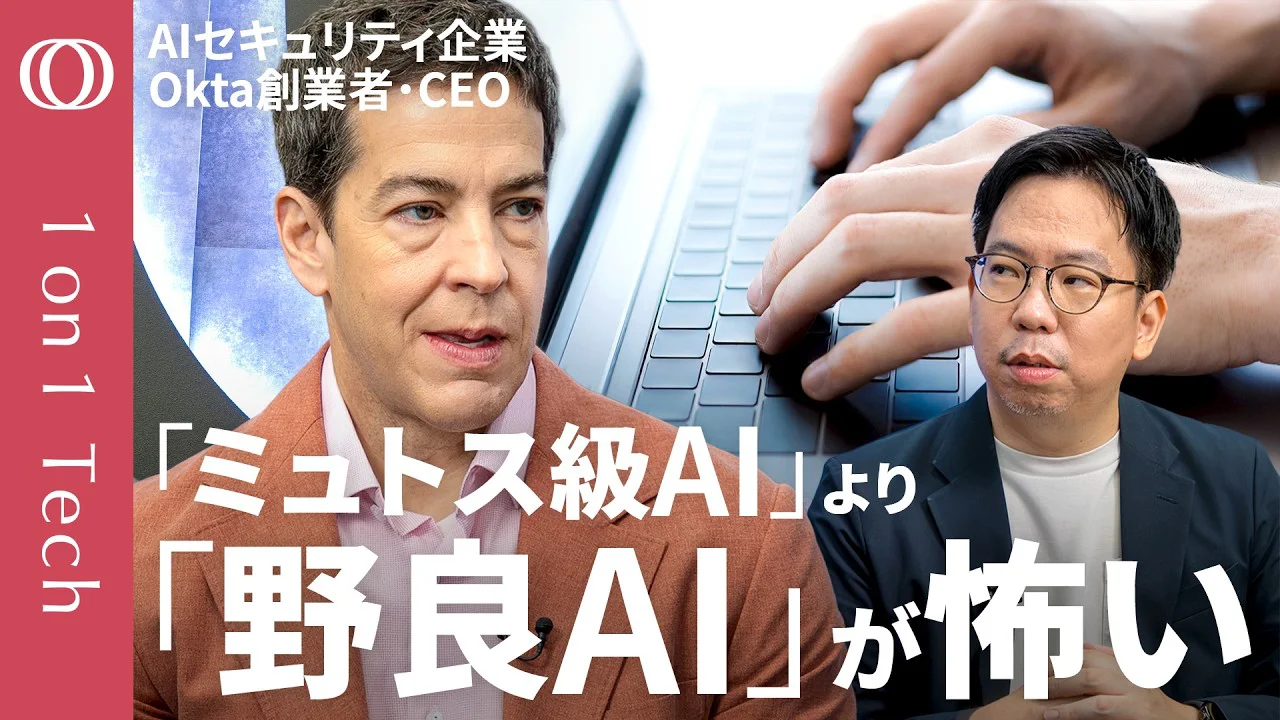
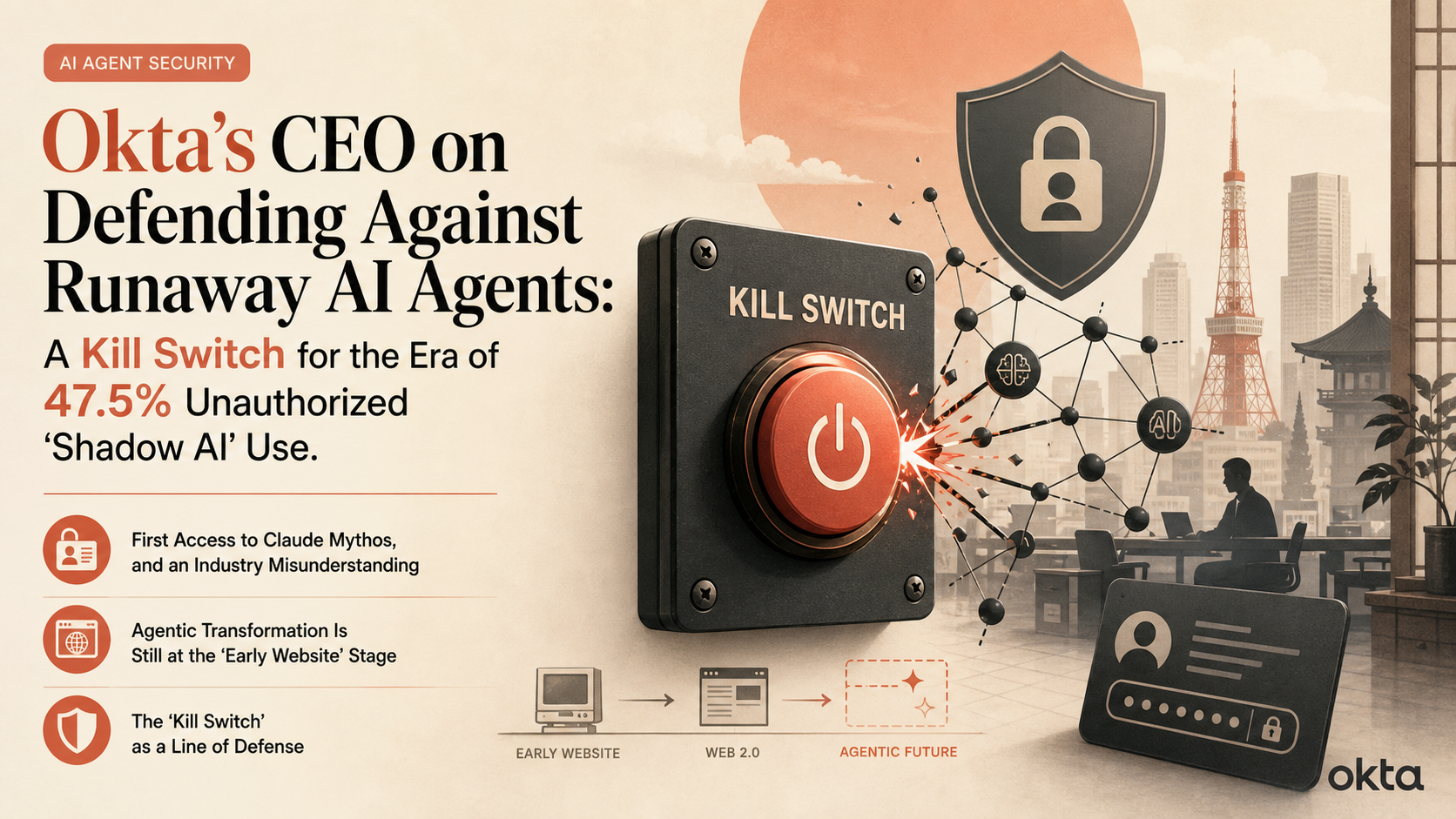
Okta's CEO on Defending Against Runaway AI Agents: A Kill Switch for the Era of 47.5% Unauthorized 'Shadow AI' Use
TL;DR · What you'll learn
- 1 Okta co-founder and CEO Todd McKinnon, visiting Japan, was one of the first companies granted access to Anthropic's Claude Mythos.
- 2 Claude Mythos proved dramatically faster at finding security vulnerabilities than anything before it -- and McKinnon says the industry partly misunderstands what that means.
- 3 Every technology -- operating systems, websites, business systems -- is transforming into something agentic, and we're still in the early stages, much like the earliest, simplest websites.
- 4 Over the next two to three years, AI agents will be connected to far more company data, eventually knowing a customer's purchase history and past support interactions.
- 5 A 'kill switch,' he explains, lets a central control system sever connections the moment a problem is detected, preventing an agent from doing further harm.
- 6 The kill switch can be triggered manually or automatically by a risk-detection system, and Okta is positioned to offer it precisely because it manages all the connections.
- 7 Those most open to change, most willing to adapt, are the ones who survive -- his advice is to make 'no-regrets' investments now in connecting systems and gaining visibility.
Read as slides
3 slides total
First Access to Claude Mythos, and an Industry Misunderstanding
Todd McKinnon, co-founder and CEO of identity management company Okta, made his second visit to Japan and remarked on the intense interest in AI and industry trends he encountered. Okta was among the first companies granted access to Anthropic's Claude Mythos, drawn by its dramatically faster ability to find security vulnerabilities compared to anything before it -- and moved immediately to evaluate it for the safety of their own software and customers. At the same time, in conversations with Japanese companies and security professionals, he's noticed the industry partly misunderstands what this technology actually means.
Agentic Transformation Is Still at the 'Early Website' Stage
Every technology -- operating systems, websites, the business systems companies build for customers and employees -- is inevitably transforming into something agentic, McKinnon says, but we're still early in that transformation. He compares it to the early days of the web, when a handful of simple sites existed with just a phone number and a logo. Many vendors already offer simple AI agents today, but over the next two to three years, those agents will be connected to far more of a company's data, eventually understanding a customer's purchase history and past support interactions.
The 'Kill Switch' as a Line of Defense
Against the unpredictable risk of a runaway AI agent, Okta built a 'kill switch' as a defensive line. When a problem is detected somewhere in the system, a central control system severs the connection between the agent and the system -- blocking further reads or writes and effectively neutralizing the agent. It can be triggered manually or automatically based on risk detection from other security products, and Okta is positioned to offer it precisely because it centrally manages all the connections.
McKinnon closes by emphasizing that those most open to change, most willing to adapt, are the ones who survive. What companies should do now is make 'no-regrets' investments -- connecting systems together and gaining visibility -- so they're well-positioned no matter how the market evolves.
Editor's Take
The key point in this interview is that AI agent security here is framed not as 'stopping the capability' but as 'keeping it safely usable.' The kill switch concept doesn't restrict agent autonomy directly -- it's designed as a circuit breaker that severs connections on anomaly detection, a practical approach to easing the tradeoff between productivity and safety. Given the show's headline statistic that 47.5% of Japanese employees use unauthorized 'shadow AI' tools, this kind of connection visibility and centralized management reads as essential AI-governance infrastructure, a natural extension of shadow-IT defense that will only grow more critical.
Source
TBS CROSS DIG with Bloomberg
【日本企業の社員47.5%は“野良AI”を無断使用】「ミュトス」で防御を固める米CEO「まずパスワードが盗まれる」/AIエージェントの暴走は予測不能→「遮断スイッチ」を独自開発【1on1 Tech】
This article auto-summarizes the YouTube video's transcript with Claude. Please refer to the original video for nuance and exact wording.
Watch on YouTube →Related
3 articles
Fireship
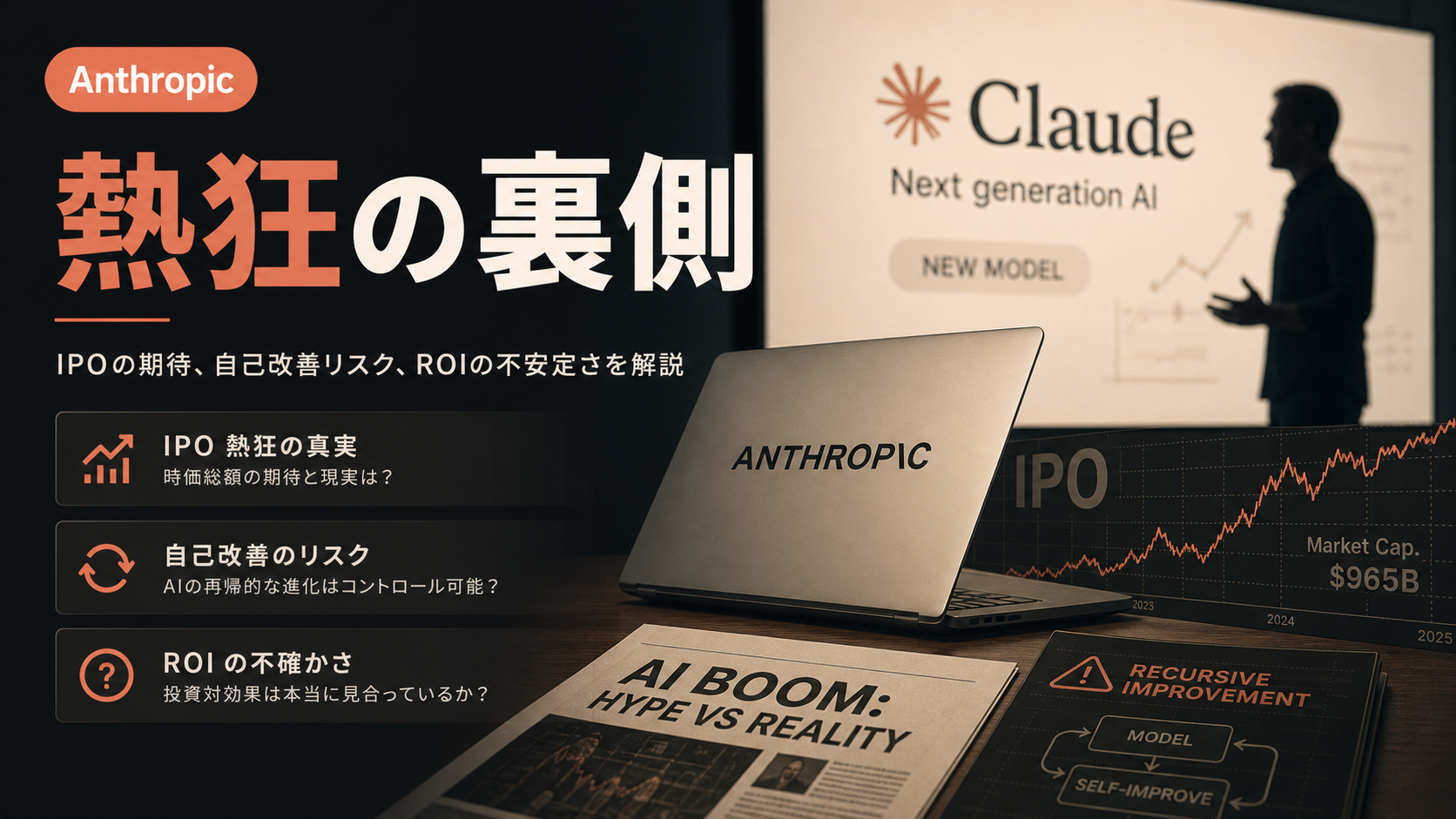
Anthropic’s Contradiction: IPO Momentum, Pause Calls, and AI’s ROI Problem
Anthropic filed for an IPO at a valuation above OpenAI's, formally cementing its position as one of the leaders in the AI race.
PIVOT 公式チャンネル
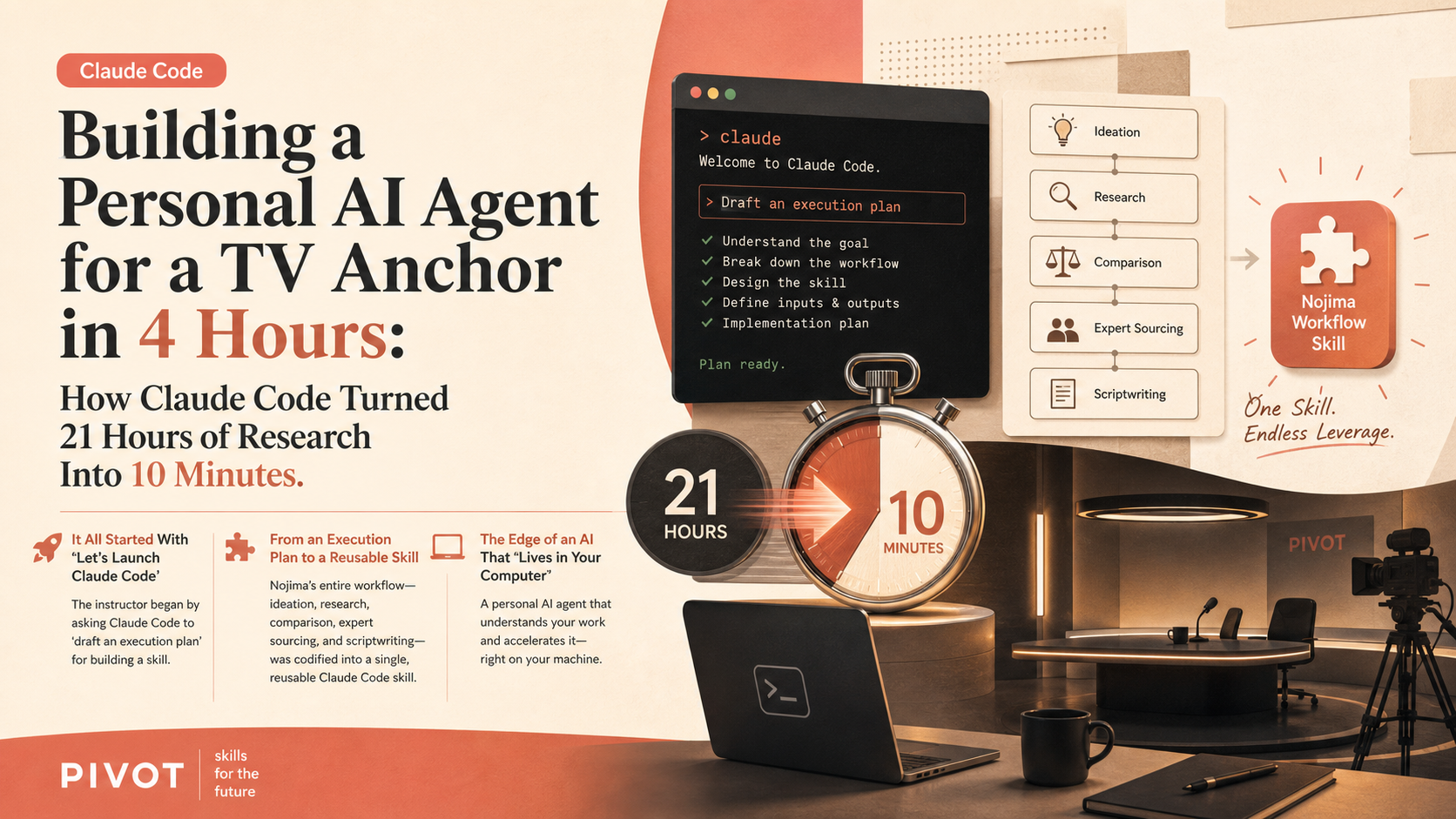
Building a Personal AI Agent for a TV Anchor in 4 Hours: How Claude Code Turned 21 Hours of Research Into 10 Minutes
Japanese business show PIVOT filmed a live segment building a personal AI agent for anchor Tsuyoshi Nojima using Claude Code, from scratch, in four hours.
AI Revolution
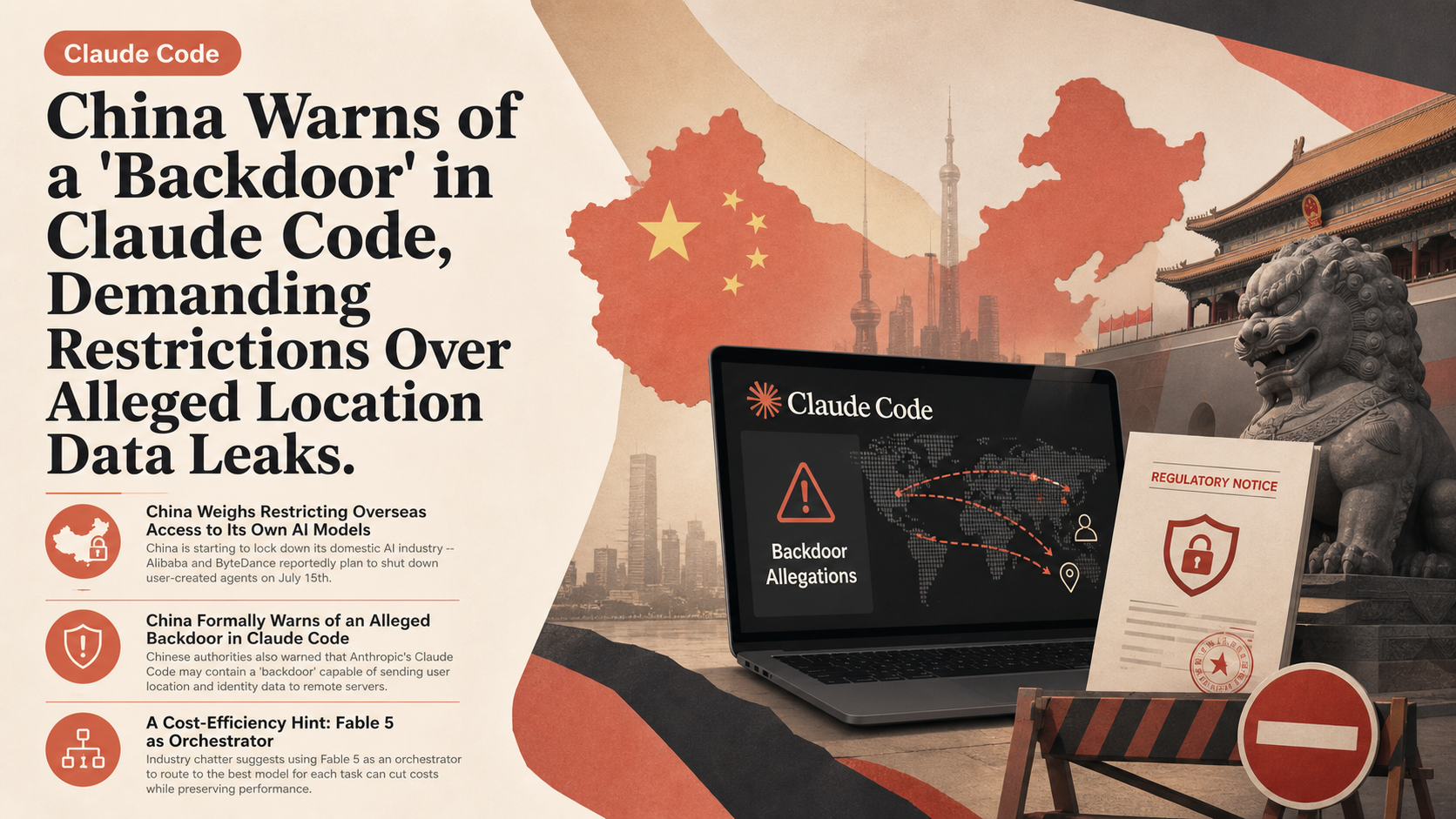
China Warns of a 'Backdoor' in Claude Code, Demanding Restrictions Over Alleged Location Data Leaks
China is starting to lock down its domestic AI industry -- Alibaba and ByteDance reportedly plan to shut down user-created agents on July 15th.