MCP vs API: Understanding the Protocol Rewriting How AI Connects to Everything
TL;DR · What you'll learn
- 1 The way AI models connect to tools, data, and systems is being rewritten around a new standard: the Model Context Protocol (MCP).
- 2 Traditional APIs were built for predictable program-to-program calls, not for models that need to chain endpoints and reason over messy data.
- 3 An API is like a locked cabinet where you must know exactly which drawer to open -- a poor fit for a model that's reasoning about unlabeled contents.
- 4 An MCP server is a lightweight process that self-describes its capabilities via JSON schemas, letting models call functions directly using that metadata.
- 5 Instead of building 100 custom integrations, you build one MCP interface and every compatible model can use it instantly.
- 6 Just as HTTP unified fragmented protocols like FTP and Telnet, MCP aims to become the unifying layer for AI agents.
- 7 APIs aren't going away -- they remain the deterministic foundation, while MCP is the layer built for probabilistic, reasoning-based systems.
Read as slides
3 slides total
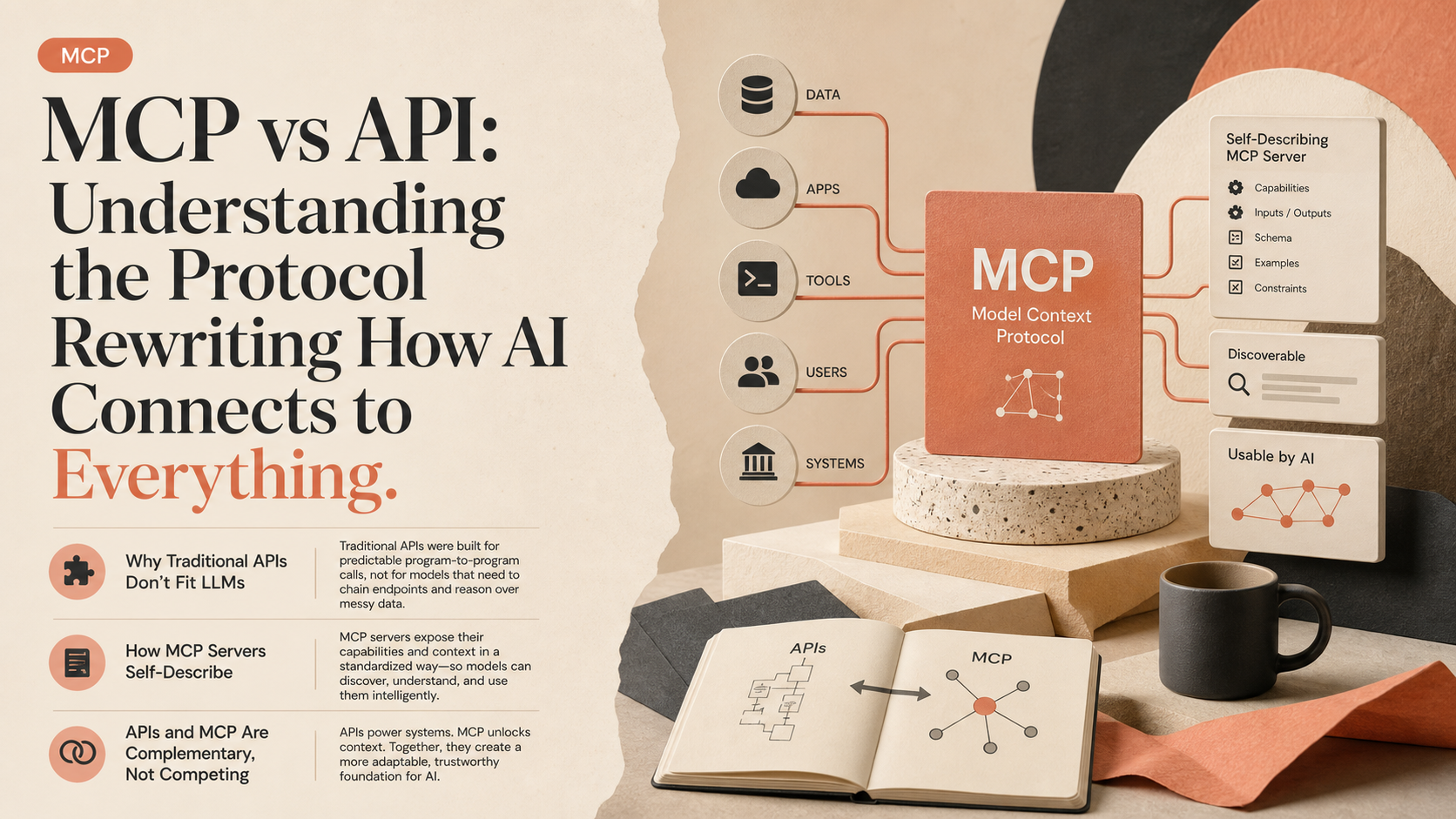
Why Traditional APIs Don't Fit LLMs
For decades, APIs served as the universal handshake between systems: define an endpoint, send a request, get a response back. Clean and predictable -- perfect for traditional software.
Large language models changed the equation. Models don't just call one endpoint; they chain many together, interpret unstructured data, and ask follow-up questions. That means they need context, not just tool access, and conventional APIs simply weren't designed for that kind of reasoning.
How MCP Servers Self-Describe
An MCP server sits next to a service or data source as a lightweight process, describing what it can do and what functions it exposes entirely through JSON schemas. Models connect via a standardized interface like WebSocket or HTTP and receive metadata about available resources.
Once connected, a model can call functions directly -- not by guessing, but by reading the metadata for required inputs, field meanings, and expected output types. Everything is self-describing, eliminating the need to hand-craft prompts around a schema or manually wrap each endpoint the way traditional API integration requires.
APIs and MCP Are Complementary, Not Competing
Just as HTTP once unified fragmented internet protocols like FTP, Gopher, and Telnet, MCP is trying to do the same for AI agents -- replacing each company's bespoke plugin format with a single open protocol that any model can understand. Build a connector once, and any compliant model can use it.
The conclusion isn't that APIs are dead; they're evolving. APIs remain the foundation for deterministic, program-to-program systems, while MCP is built for probabilistic systems where a model reasons about what it can do. MCP sits one layer above APIs, turning static routes into living interfaces models can actually reason about.
Editor's Take
The most useful framing here is treating MCP and API not as rivals but as different layers of the same stack. Teams building MCP servers who simply wrap an existing API without rethinking self-description lose the protocol's core benefit -- the payoff comes from investing in how inputs, outputs, and semantics are described, not just exposing endpoints. The HTTP analogy is also a reminder that standardization compounds: once one protocol wins, integration costs across the whole ecosystem drop, which matters for any team weighing MCP adoption today.
Source
Google Cloud Tech
MCP vs API: The protocol every developer needs to know
This article auto-summarizes the YouTube video's transcript with Claude. Please refer to the original video for nuance and exact wording.
Watch on YouTube →Related
3 articles
IBM Technology
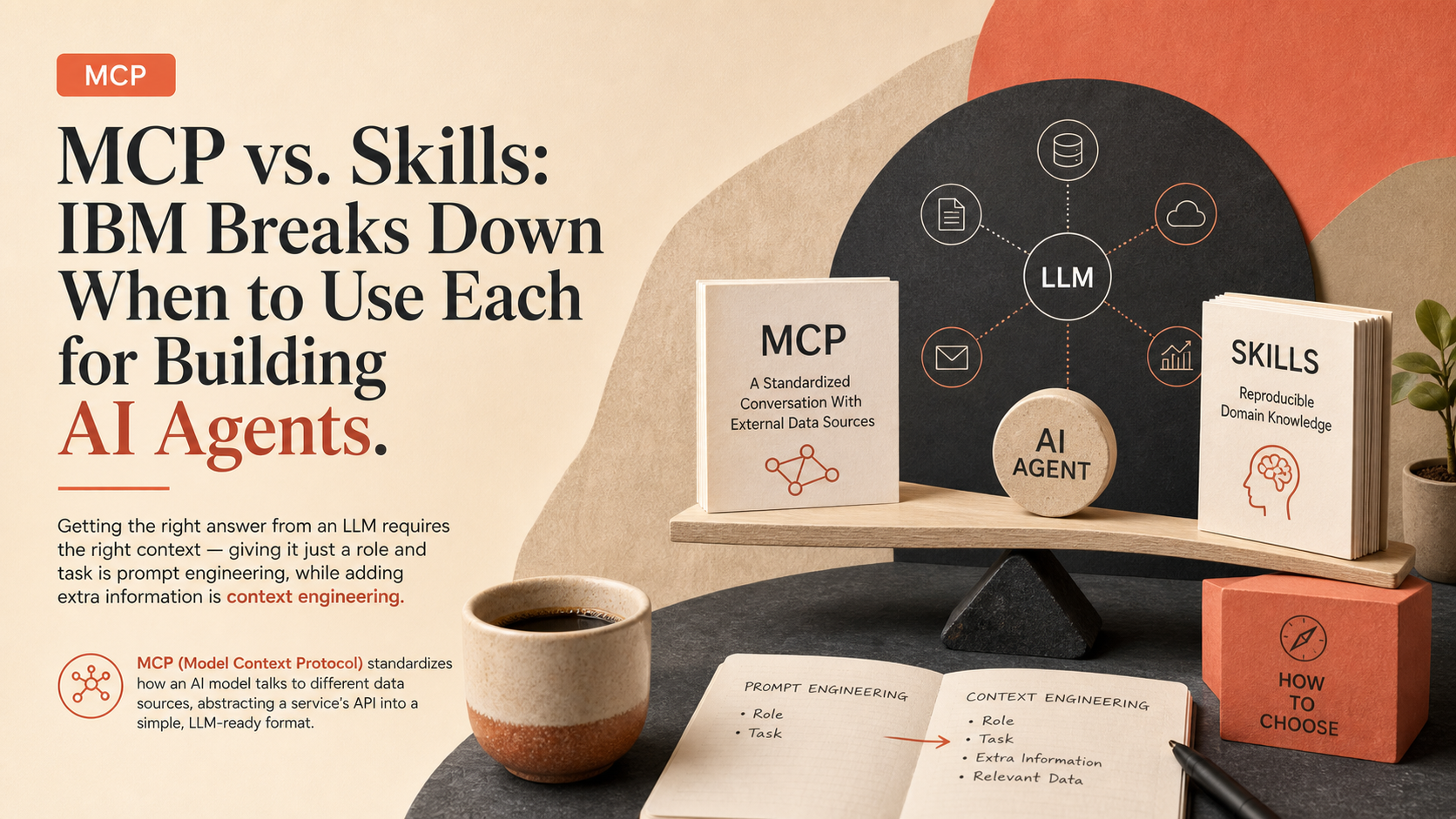
MCP vs. Skills: IBM Breaks Down When to Use Each for Building AI Agents
Getting the right answer from an LLM requires the right context -- giving it just a role and task is prompt engineering, while adding extra information is context engineering.
Mac-TV
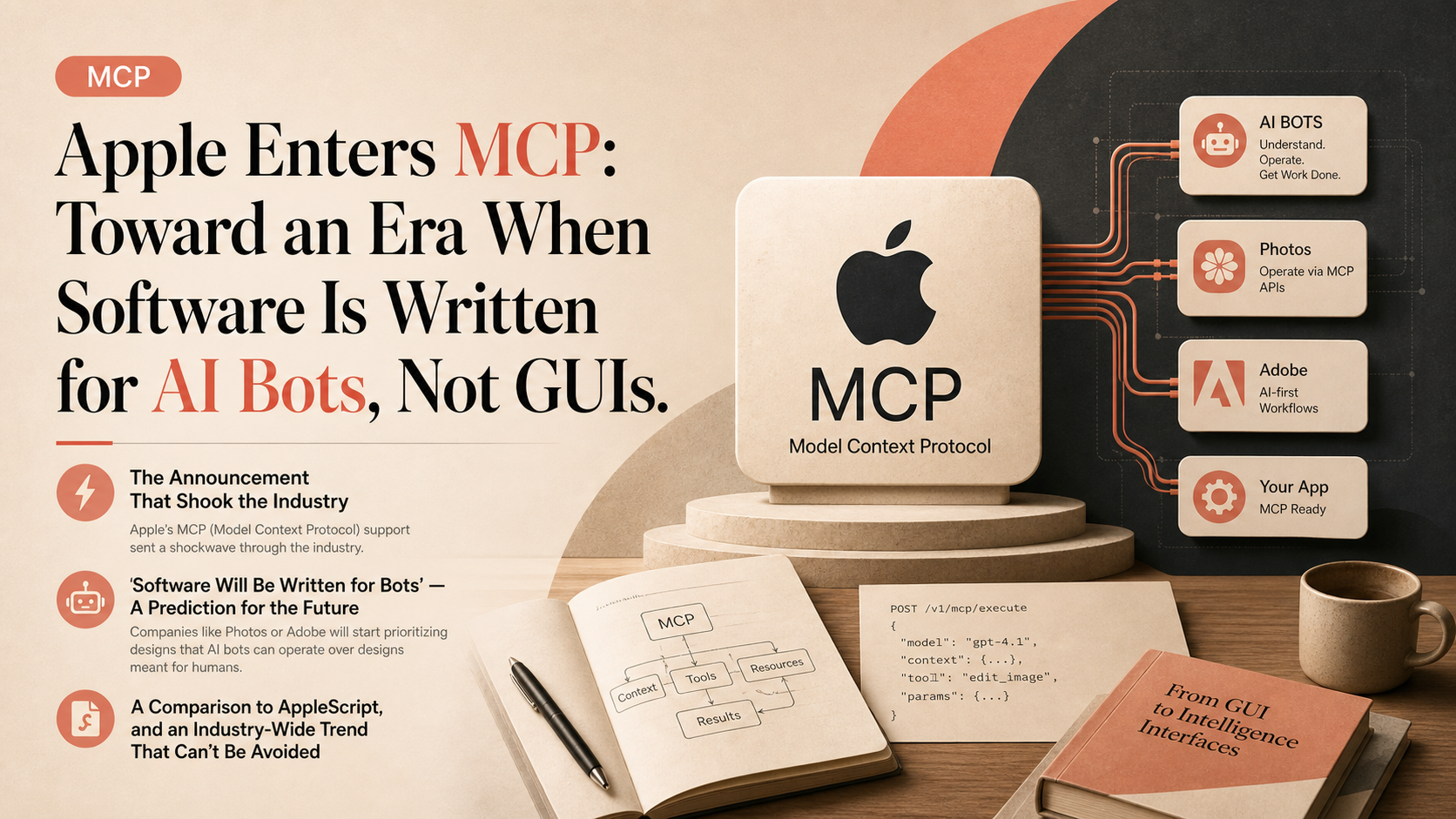
Apple Enters MCP: Toward an Era When Software Is Written for AI Bots, Not GUIs
Apple recently announced MCP (Model Context Protocol) support, a move the presenter says sent a shockwave through the industry.
Microsoft Developer
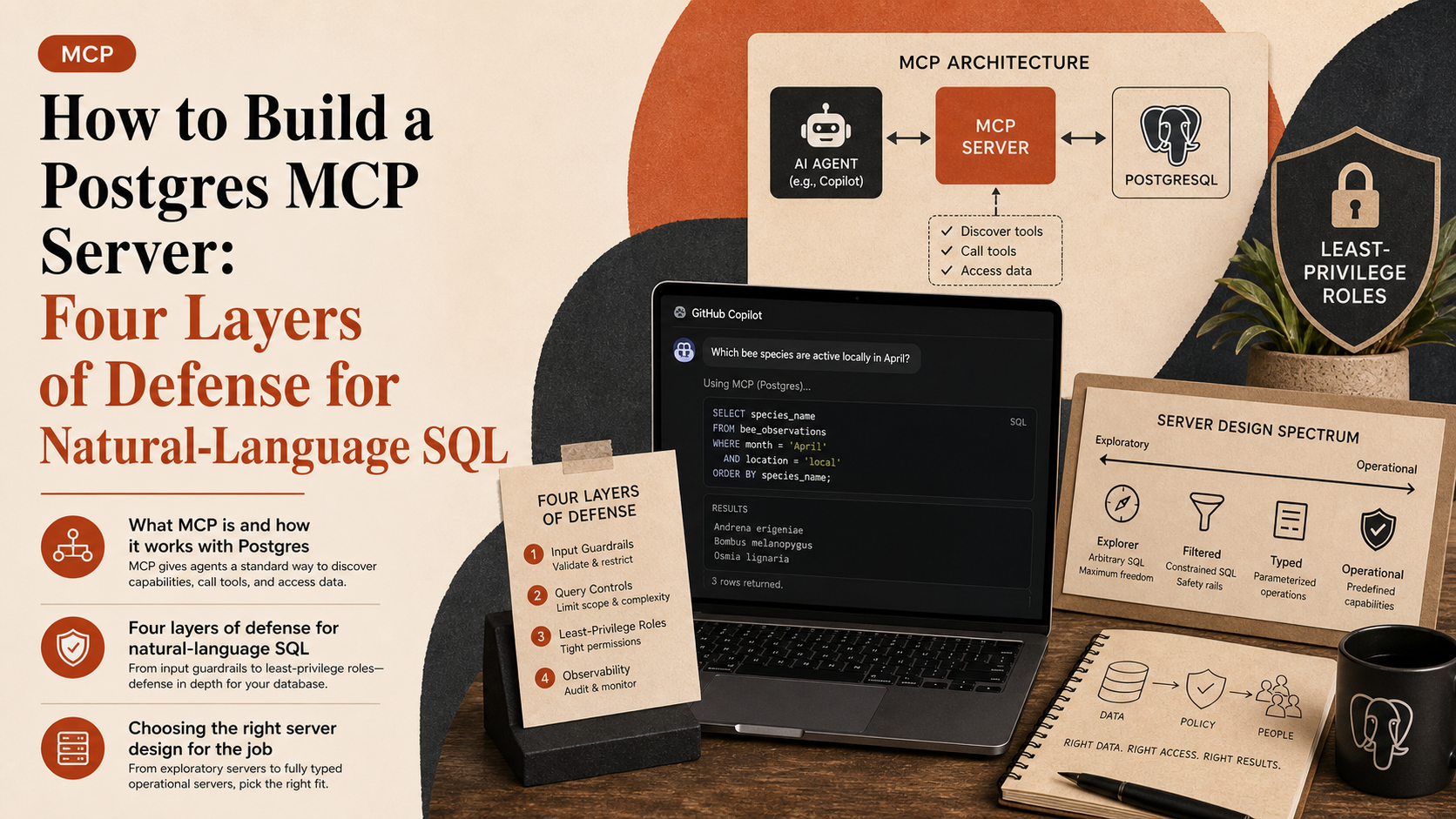
How to Build a Postgres MCP Server: Four Layers of Defense for Natural-Language SQL
At POSETTE, Microsoft's Pamela explains the full range of Postgres MCP architectures, from exploratory servers that let agents send arbitrary SQL to fully typed operational servers.