Claude Now Does Everything For You — Yassine Sdiri on the 'Routines' Feature That Builds a Virtual Employee
TL;DR · What you'll learn
- 1 Yassine Sdiri introduces a Claude feature released a few weeks ago that can literally replace every repetitive task in your day. Everything that used to eat your time can now be automated, and anyone can set it up.
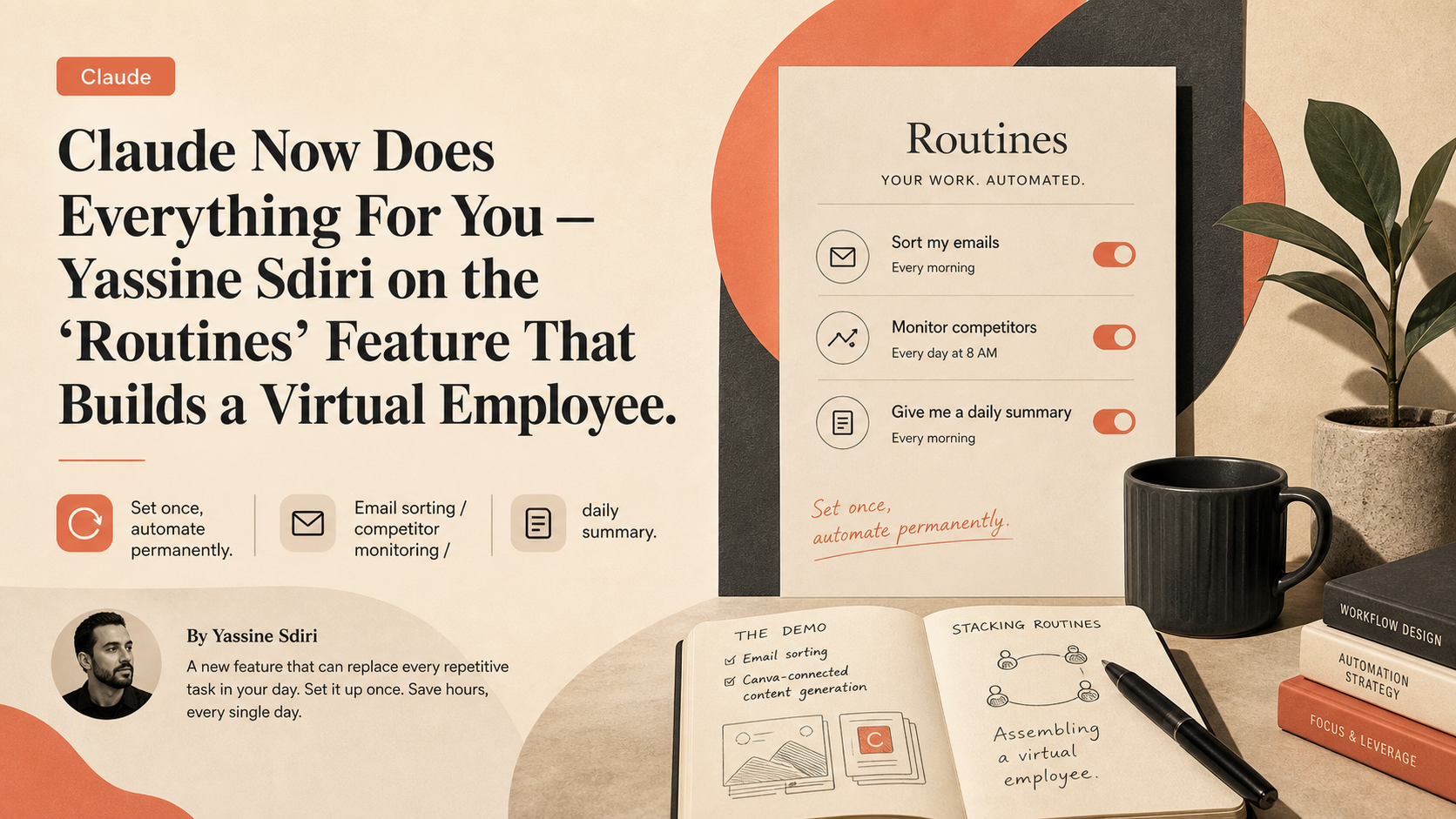
- 2 The feature is called 'routines.' The idea is simple: describe a task once — sort my emails, monitor my competitors, give me a summary every morning — and Claude repeats it every day on its own, with zero further input from you.
- 3 The work continues whether your computer is off, you're napping on a beach, or making coffee. The video shares the screen live and builds two routines together with the viewer.
- 4 Designed to work for total beginners and advanced users alike, with a copy-paste list of the best routines promised at the end. The video goes a step further into something few people do.
- 5 That step further: stacking several simple routines together to create a genuine virtual employee that works for you. This is the video's real payoff — a technique most people aren't using.
- 6 To level up the prompts shown here, just request the advanced version in the free community, where all resources are stored — including a full 6-hour Claude Code course, retrievable in a few clicks from the drive or platform.
- 7 After demonstrating the first routine for daily time savings and reduced mental load, the video builds a second routine that generates content on your behalf, connecting a Canva connector to extend its reach.
- 8 The closing section shows exactly how to stack routines into a virtual employee and how to get the full kit. Built to be reproduced hands-on by the viewer, not just watched.
Read as slides
3 slides total
What Routines Are — Automate Permanently With a Single Instruction
Yassine Sdiri builds this video around a Claude feature released a few weeks ago called 'routines.' It can literally replace every repetitive task in your day — everything that used to eat your time can now be automated, and the setup is simple enough for anyone.
The idea is straightforward. Describe a task once — sort my emails, monitor my competitors, give me a summary every morning — and Claude repeats it every day on its own, with no further thought required. The work continues whether your computer is off, you're napping on a beach, or making coffee. The video shares the screen live, builds two routines with the viewer in real time, and promises a copy-paste list of the best routines at the end, designed to work for total beginners and advanced users alike.
The Demo — Email Sorting and Canva-Connected Content Generation
The first demo builds a routine aimed at daily time savings and reduced mental load. It runs through the steps with the screen shared, in a format the viewer can replicate directly.
The second demo widens the scope — building a routine that generates content on your behalf. Here a Canva connector gets wired in, showing that routines can go beyond information organization into creative output. This staged structure lets the viewer build a mental picture of expanding Claude's use from 'first, save time' to 'next, generate output.'
Stacking Routines — Assembling a Virtual Employee
The video's highlight is stacking several simple routines together to create 'a genuine virtual employee that works for you.' Yassine calls this out as something few people do — a design philosophy that goes beyond one-off automation.
The closing section shows exactly how to assemble this stacking technique, and notes that leveling up the prompts shown here just requires a request in the free community. YouTube's resources section bundles items including a full 6-hour Claude Code course, retrievable in a few clicks from the drive or platform. The idea of designing a role-bearing virtual employee through stacking, rather than settling for single-task automation, is the video's most reproducible and valuable takeaway.
Editor's Take
Routines and stacking read as an individual-scale echo of what Anthropic is building at enterprise scale with Claude Tag and Notion-resident agents. An organization-wide resident harness and a personal stack of routines differ in scale but share the same design principle — set it once, have it keep working continuously. Two implications for readers. First, the shift from issuing one-off prompts each time to permanent routines is the next productivity step for individual users. Second, the idea of stacking multiple routines into a role is itself a useful maturity gauge for AI adoption. Being satisfied with single-task automation versus being able to design how several routines combine into one coherent 'virtual employee' role is likely to widen the gap between individual users' AI leverage going forward.
Source
Yassine Sdiri
Claude IA fait maintenant TOUT à votre place
This article auto-summarizes the YouTube video's transcript with Claude. Please refer to the original video for nuance and exact wording.
Watch on YouTube →Related
3 articles
Nate Herk | AI Automation
GPT 5.6 Sol vs. Fable 5, Head to Head: Fable Edges Out a Bike Game Build at 3x the Cost
With GPT 5.6's Sol, Terra, and Luna released, benchmarks show Sol beating Opus and Fable while costing far less -- but the creator decided to run both models side by side on real work for a full day instead of just quoting numbers.
Trading with DaviddTech
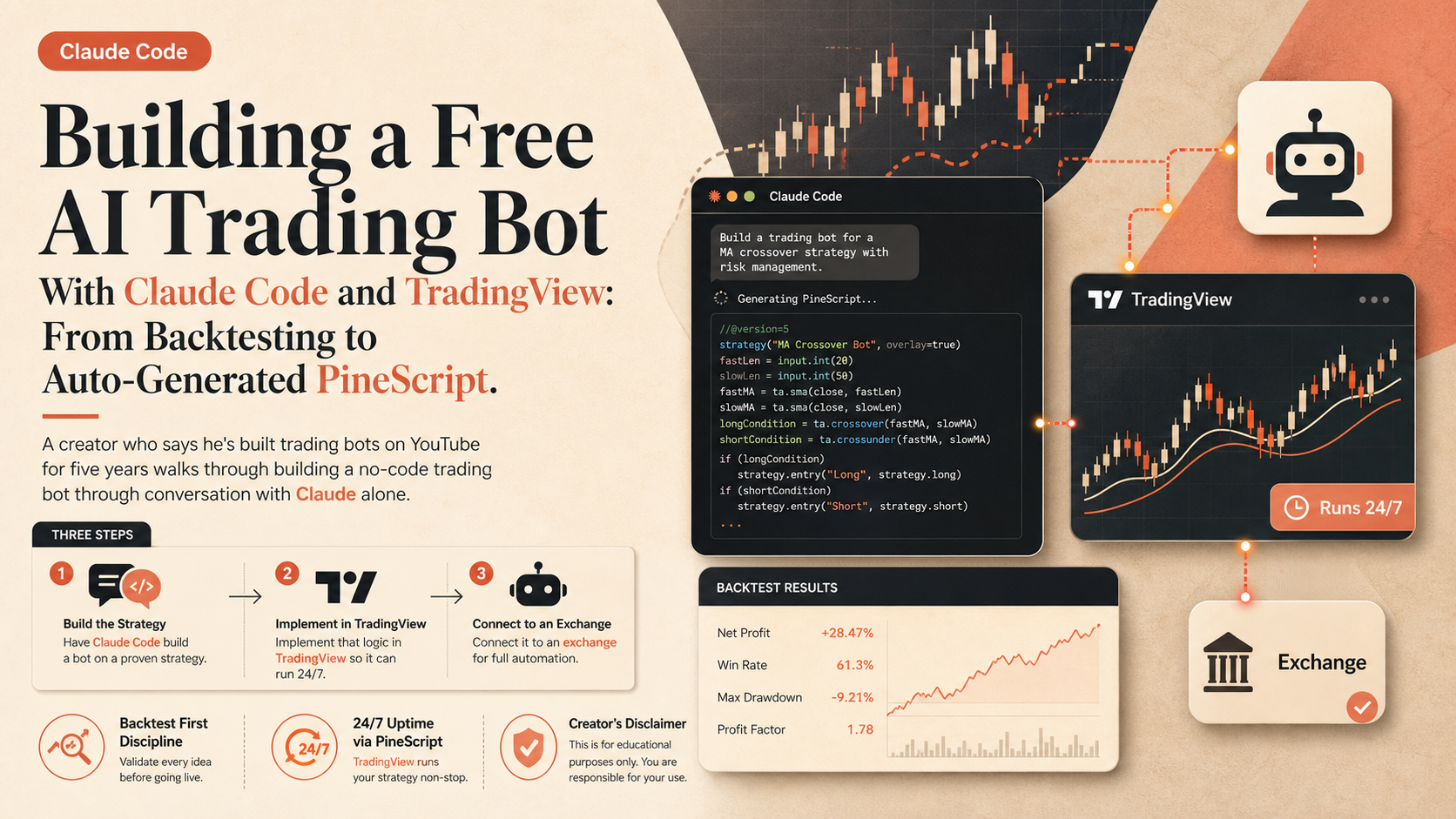
Building a Free AI Trading Bot With Claude Code and TradingView: From Backtesting to Auto-Generated PineScript
A creator who says he's built trading bots on YouTube for five years walks through building a no-code trading bot through conversation with Claude alone.

The Calum Johnson Show
Building a Membership Site With Claude Code in a Weekend, $20K in the First Week: 'You Don't Need the Terminal'
The guest says he built a membership platform, digitalcreatorclub.com, that would have previously cost $50,000-$100,000, in a single weekend using Claude Code -- and made about $20,000 in its first week.