Claude Design 2.0: Five Upgrades That Finally Fix the Usage-Limit Problem

TL;DR · What you'll learn
- 1 Claude Design shipped a major update with a new layout and, notably, a fix for its biggest complaint: usage limits.
- 2 Claude Design previously had its own separate usage limit from the main Claude subscription, forcing a week-long wait after hitting the cap.
- 3 Usage is now unified under a single monthly Claude subscription covering Claude Code, chat, Claude Design, and Cowork.
- 4 Backend efficiency improvements mean the same work now consumes more tokens per task, effectively expanding usable capacity.
- 5 A new Higgsfield connector lets Claude Design design prompts, generate images and video, and pull the assets back in automatically.
- 6 A new canvas-editing feature allows direct text resizing and copy edits without chatting with Claude at all.
- 7 New export options send projects to Claude Code, Codex, Cursor, or third-party builders like Base44, Lovable, and Canva.
Read as slides
3 slides total
Solving the Biggest Complaint: Usage Limits
Claude Design previously ran on its own usage limit, separate from the standard Claude subscription -- hitting the cap meant waiting a full week before using it again, a persistent source of frustration.
This update folds Claude Design's usage into the monthly Claude subscription alongside Claude Code, chat, and Cowork, simplifying billing into a single plan. Backend efficiency gains also mean the same tasks now consume more tokens, effectively giving users more room to work with.
Higgsfield Integration and Direct Canvas Editing
A new connector to Higgsfield lets Claude Design handle image and video generation prompts automatically, then pull the generated assets straight back into a website build -- users only need to keep an eye on their Higgsfield credit balance, without writing a single prompt themselves.
A new canvas-editing capability also lets users resize text or edit copy directly by dragging, skipping the back-and-forth of chatting with Claude for small adjustments.
Exporting Into a Broader Toolchain
Once a design is ready for backend work -- databases, Stripe payments, and so on -- it can be sent directly to Claude Code with one click, or exported as a zip for use with Claude Code, Codex, or Cursor.
Claude Design can also send projects to other no-code and AI builders like Base44, Lovable, and little rapid, or hand off simple assets like banners to Canva, broadening the paths available once a design leaves Claude Design.
Editor's Take
Folding Claude Design's usage limit into the standard Claude subscription is more than a quality-of-life fix -- it signals product consolidation. By unifying Claude Code, chat, Design, and Cowork under one plan, Anthropic is betting on a workflow where users move fluidly between tools rather than treating each as a separate product. The Higgsfield connector also points to a broader strategy: rather than building every generative capability in-house, Claude increasingly positions itself as an orchestrator wiring together specialized external services -- a pattern likely to expand as MCP-based integrations mature.
Source
Jason Lee
Anthropic just dropped Claude Design 2.0 (MASSIVE Upgrades)
This article auto-summarizes the YouTube video's transcript with Claude. Please refer to the original video for nuance and exact wording.
Watch on YouTube →Related
3 articles
All-In Podcast
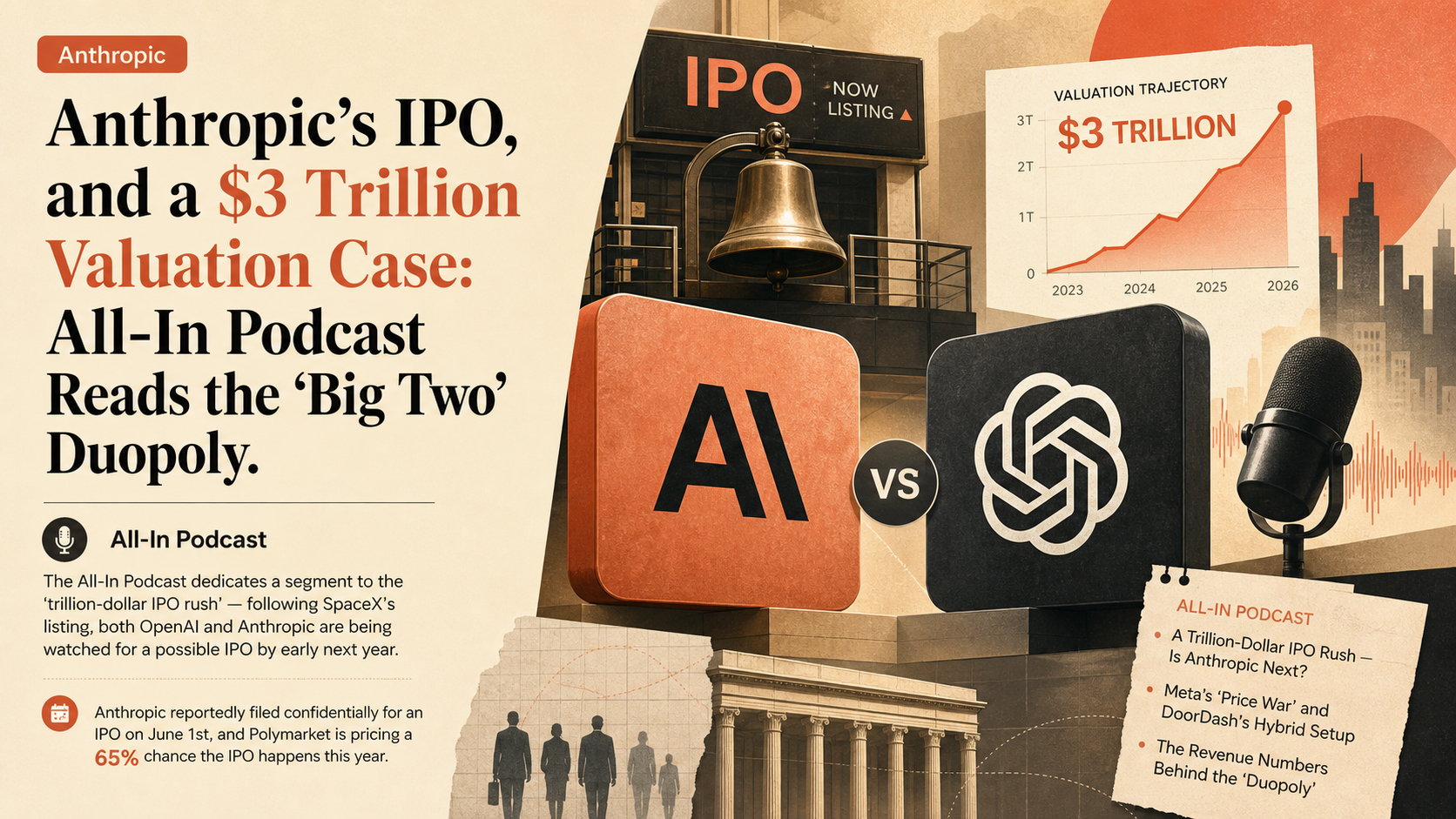
Anthropic's IPO, and a $3 Trillion Valuation Case: All-In Podcast Reads the 'Big Two' Duopoly
The All-In Podcast dedicates a segment to the 'trillion-dollar IPO rush' -- following SpaceX's listing, both OpenAI and Anthropic are being watched for a possible IPO by early next year.

Brock Mesarich | AI for Non Techies
Anthropic Ships Claude Cowork Mobile: Tasks Keep Running Even After You Close Your Laptop
Anthropic released a mobile version of Claude Cowork, calling it one of the most requested features it has seen.

Inteligencia Artificial
Behind Fable 5's Comeback, Anthropic's Relationship With Washington Sours -- Could Europe Become a 'Safe Harbor'?
Fable 5, previously pulled offline, is back and currently the world's most powerful AI model -- included in standard plans until the 7th, after which usage-based billing returns and prices rise.