Claude Design 2.0's Four Big Changes — A Practical Guide to Credit Efficiency and MCP Integration
TL;DR · What you'll learn
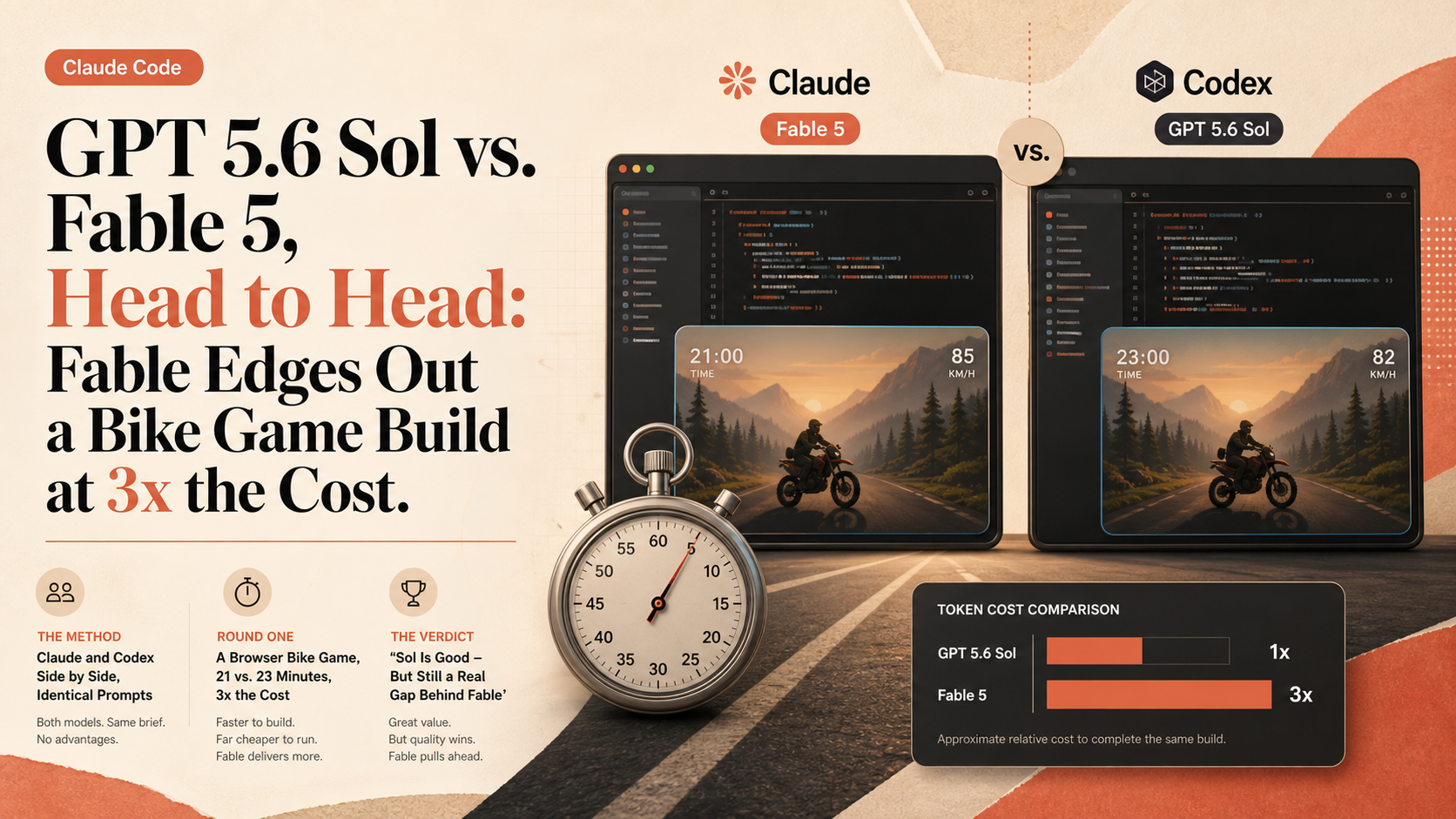
- 1 Jack Roberts calls Claude Code 'the world's best design agent' and organizes Claude Design 2.0 across five levels — from basics to the biggest limitation and how to work around it.
- 2 Claude Design generates websites, apps and prototype decks. It runs Opus 4.8 under the hood and pulled a million users in its first week.
- 3 2.0 ships four big changes plus a handful of smaller ones. The video walks through how each change shapes the actual design workflow in order.
- 4 The biggest change is improved credit efficiency — the same credit balance now buys substantially more output. It's coordinated with Anthropic's Opus 4.8 optimization on the model side.
- 5 The demo connects Firecrawl MCP, extracts brand identity from glido.com, and generates a three-page animated deck. External-data ingestion via MCP has become a standard part of the workflow.
- 6 For image generation, Higgsfield or Kia AI are recommended as inexpensive options. Connect your API key to Claude Design and 'reference, generate, embed' runs as one continuous loop with Firecrawl.
- 7 When you hit a credit ceiling on a Claude Code project, you can continue building via Claude Design. The integration between the two surfaces becomes a practical pressure release for the credit limit.
- 8 Calling GLM 5.2 from the Claude Design terminal gets you Opus 4.8-equivalent quality at roughly one-sixth the cost. Mixing a commercial model with an open-source one is now officially recommended.
Read as slides
3 slides total
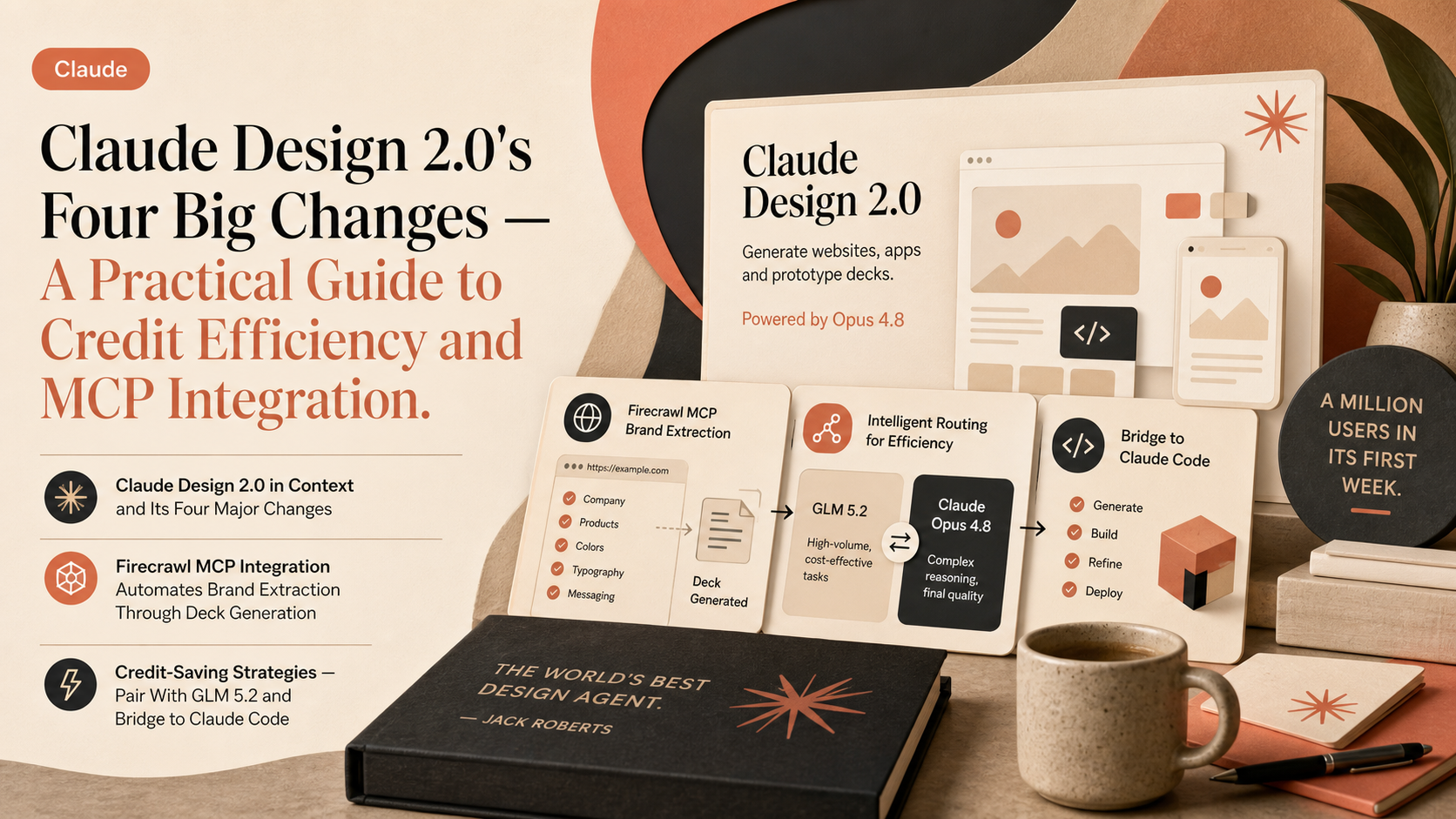
Claude Design 2.0 in Context and Its Four Major Changes
Jack Roberts calls Claude Code 'the world's best design agent' and organizes Claude Design 2.0 across five levels of use. The video runs in a single line from basics for new users through MCP integration and model switching for advanced users.
Claude Design itself generates websites, apps and prototype decks, with Opus 4.8 running under the hood. It pulled in a million users in its first week. 2.0 adds four major changes and a handful of smaller ones, and the largest is credit-efficiency improvement — the same credit balance now buys substantially more output, coordinated with the model-side optimization on Opus 4.8.
Firecrawl MCP Integration Automates Brand Extraction Through Deck Generation
The center of the demo is the MCP-connector workflow. Connect Firecrawl MCP to glido.com and ask 'Extract the brand identity here and generate a three-page animated deck' — the external site's color, typography and tone get pulled back, and a deck aligned to them is generated.
For image generation, Higgsfield or Kia AI are recommended as inexpensive options. With API keys connected to Claude Design, 'reference, generate, embed' runs as one continuous loop using the brand information Firecrawl extracted. Firecrawl is highlighted because it strips HTML and returns only the meaningful text — token cost stays low. MCP-based data ingestion is becoming a standard component of design workflows.
Credit-Saving Strategies — Pair With GLM 5.2 and Bridge to Claude Code
Claude Design 2.0's biggest operational constraint is still the credit ceiling. Jack's proposal is layered. First, when you hit the ceiling on a Claude Code project, you can keep building through Claude Design, so a design that alternates between the two surfaces eases credit pressure.
Second, calling GLM 5.2 from the terminal is now officially supported. With Opus 4.8-equivalent quality at roughly one-sixth the cost, you can do rough exploratory work on GLM 5.2 without a ceiling and reserve Opus 4.8 for final polish. Mixing a commercial model with an open-source companion is now baked into the assumed workflow, and Claude Design's identity is sharpening as a creative-generation hub. There are constraints — Open AI-style templates can't be exported to PowerPoint, for instance — but for work that stays inside Claude Design, the flexibility is high.
Editor's Take
Claude Design 2.0 is best read not as a standalone-feature update but as an update to the integration design across Anthropic's full product surface. The biggest change — credit efficiency — sits in lock-step with Opus 4.8's model optimization. MCP connectors like Firecrawl are becoming part of the standard workflow. And the official endorsement of GLM 5.2 as a companion model layers in. The outline emerging is less 'design agent' and more 'creative hub' — one canvas binding a commercial model, an open-source model, and external SaaS data. Two implications for readers. The more you live inside the Claude ecosystem, the more your MCP-connector design choices become the variable that decides output quality. And exclusively running on a single commercial model is becoming a higher-cost path as cheap-or-free OSS spreads — designing for combined use from the start is the realistic call.
Source
Jack Roberts
Claude Design 2.0 Just Changed Everything...
This article auto-summarizes the YouTube video's transcript with Claude. Please refer to the original video for nuance and exact wording.
Watch on YouTube →Related
3 articles
Nate Herk | AI Automation
GPT 5.6 Sol vs. Fable 5, Head to Head: Fable Edges Out a Bike Game Build at 3x the Cost
With GPT 5.6's Sol, Terra, and Luna released, benchmarks show Sol beating Opus and Fable while costing far less -- but the creator decided to run both models side by side on real work for a full day instead of just quoting numbers.
Trading with DaviddTech
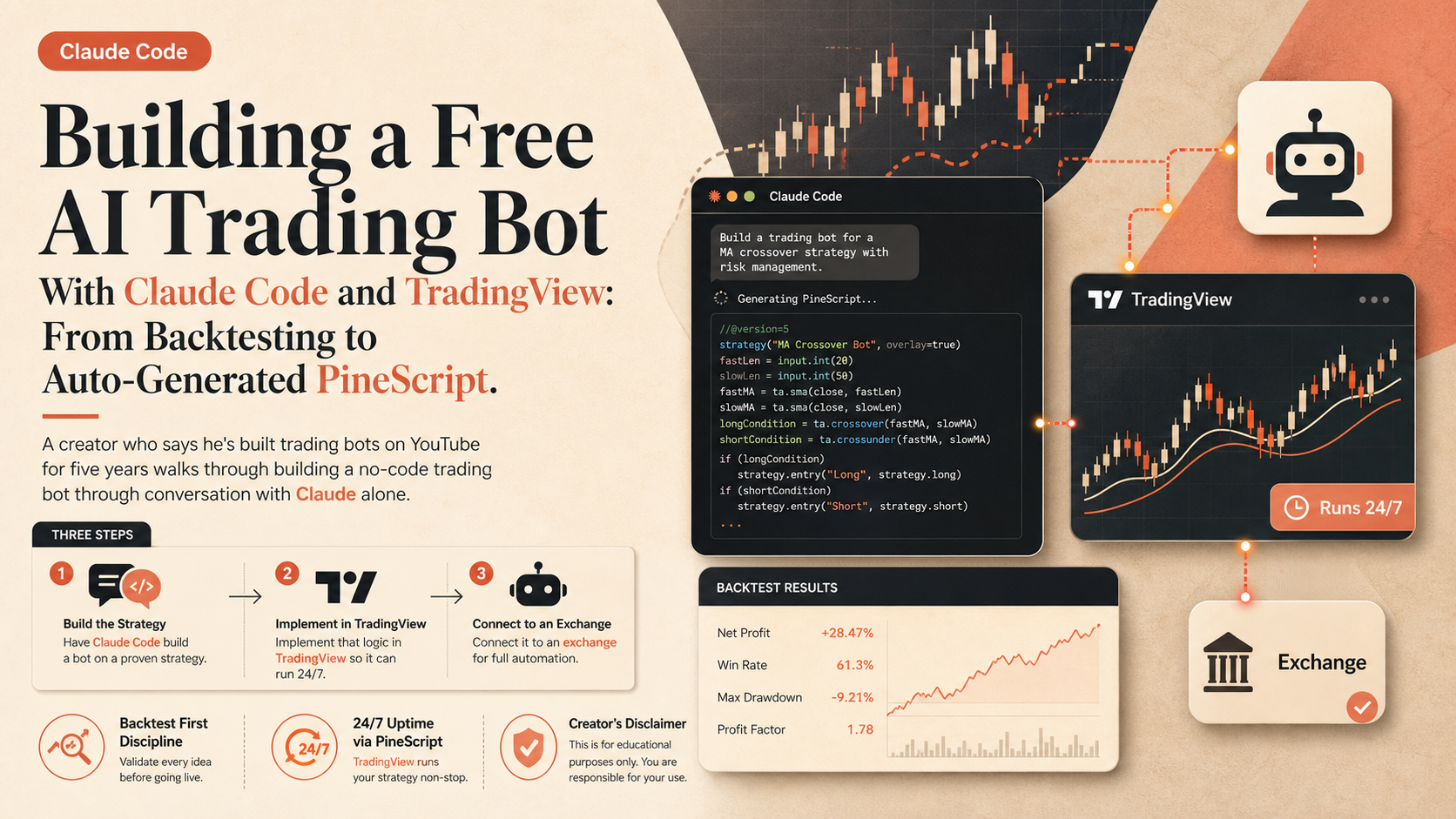
Building a Free AI Trading Bot With Claude Code and TradingView: From Backtesting to Auto-Generated PineScript
A creator who says he's built trading bots on YouTube for five years walks through building a no-code trading bot through conversation with Claude alone.
The Calum Johnson Show
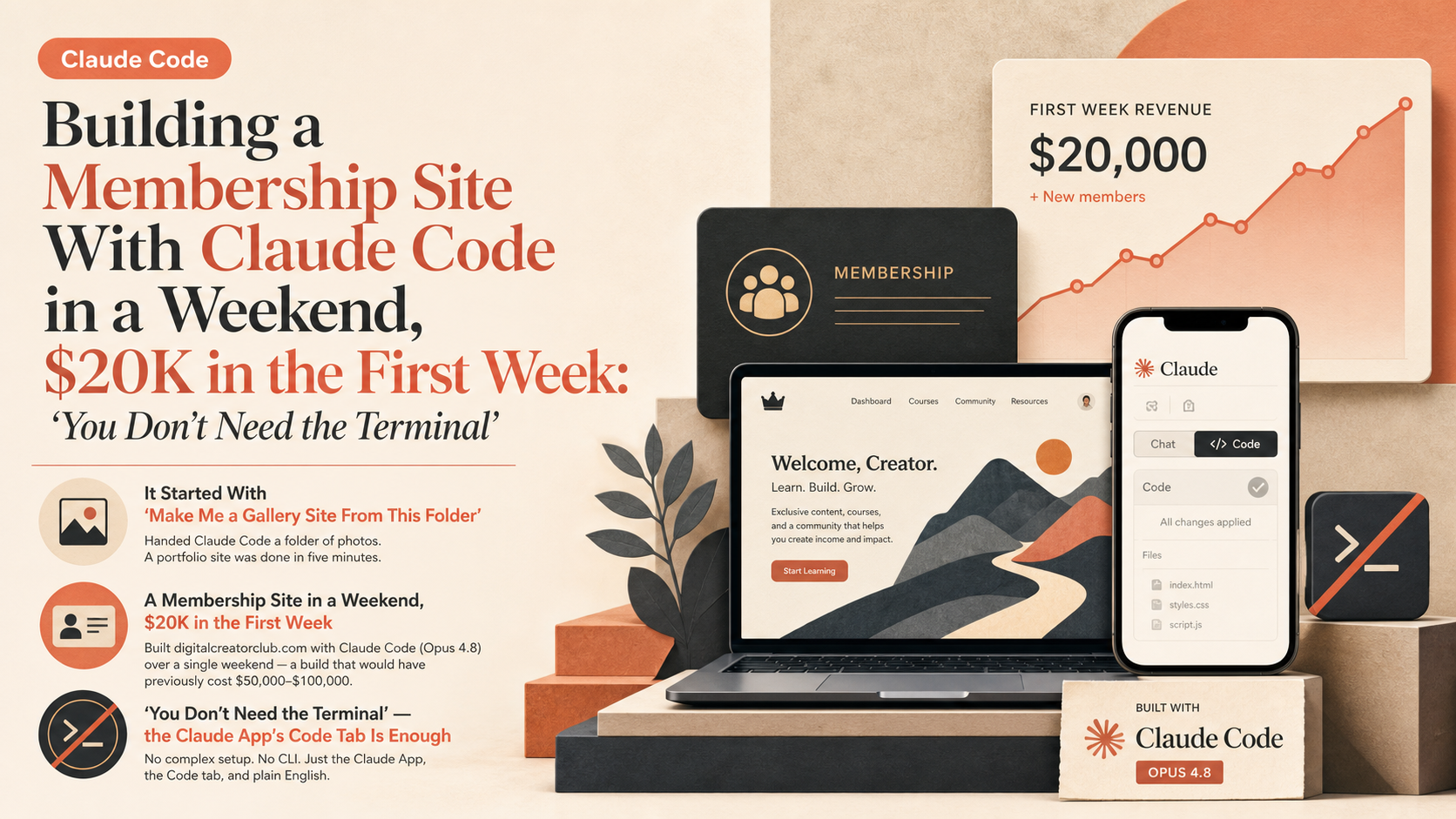
Building a Membership Site With Claude Code in a Weekend, $20K in the First Week: 'You Don't Need the Terminal'
The guest says he built a membership platform, digitalcreatorclub.com, that would have previously cost $50,000-$100,000, in a single weekend using Claude Code -- and made about $20,000 in its first week.