Cinematic 3D Product Pages With Claude Code and Higgsfield MCP
TL;DR · What you'll learn
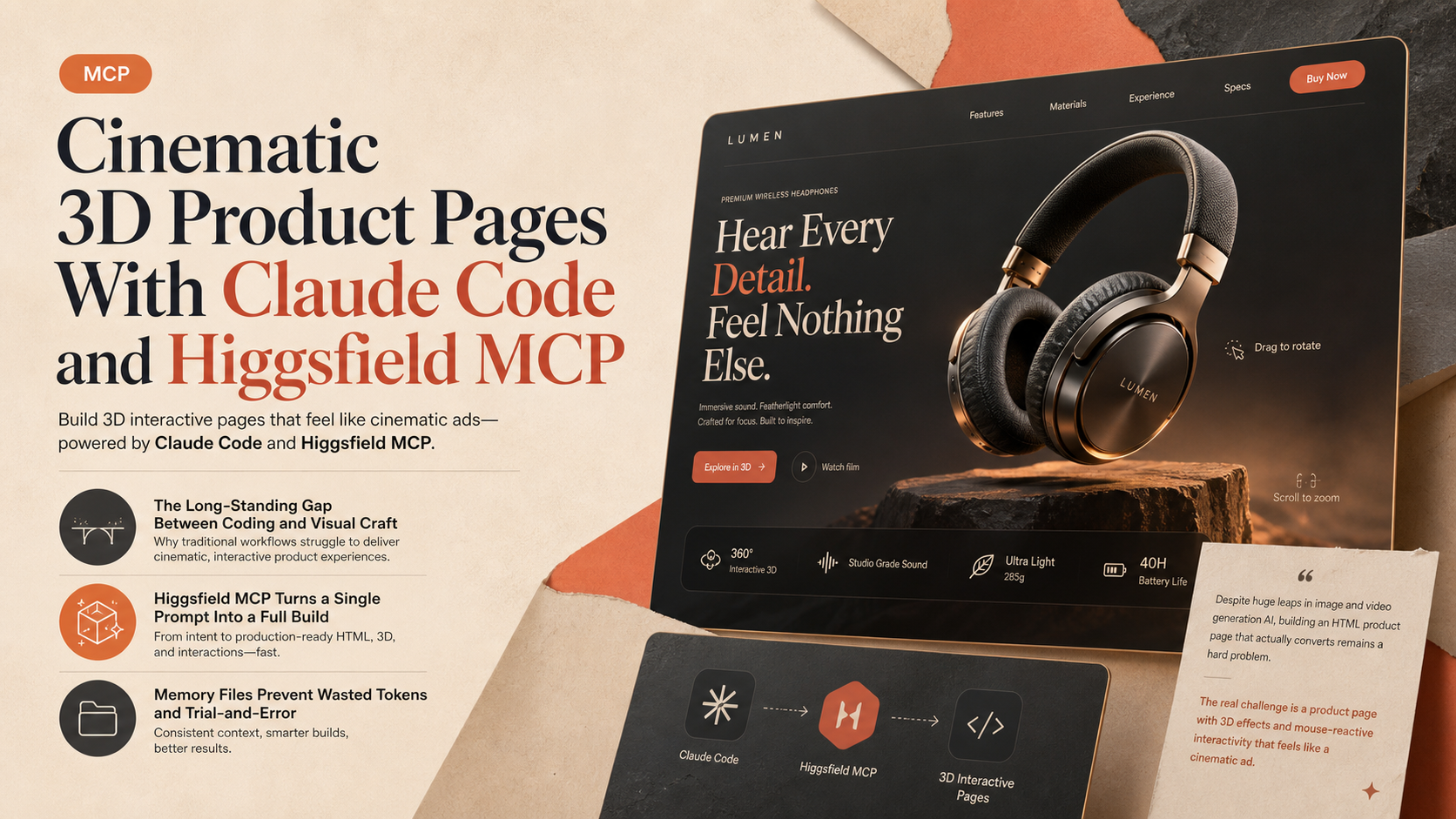
- 1 Despite huge leaps in image and video generation AI, building an HTML product page that actually converts remains a hard problem.
- 2 The real challenge is a product page with 3D effects and mouse-reactive interactivity that feels like a cinematic ad.
- 3 Adding the Higgsfield MCP to Claude Code turns the coding tool itself into something that generates and controls visual effects.
- 4 Installing Higgsfield MCP takes just three commands, with browser login completing in seconds.
- 5 Claude was instructed to avoid jarring cuts, stay responsive to user interaction, and build a narrative arc that draws the eye toward the buy button.
- 6 The apricot juice demo shows fruit bursting on scroll with golden liquid drifting in cinematic slow motion.
- 7 A project-specific 'memory file' lets Claude Code understand the architecture and Higgsfield integration rules upfront, saving tokens otherwise wasted on trial and error.
Read as slides
3 slides total
The Long-Standing Gap Between Coding and Visual Craft
No matter how good image and video generation AI gets, building an HTML product page that actually sells remains stubbornly difficult. Merging complex graphics with code has always been a nightmare -- developers on one side, effects designers on the other -- and the usual result is a heavy interface with underwhelming effects.
Until now, only large companies and agencies could afford the cost of truly creative product pages. Powerful coding tools existed, and powerful video and image generation tools existed, but nothing wired the two together instantly.
Higgsfield MCP Turns a Single Prompt Into a Full Build
The fix is combining the best of both worlds: Claude Code and Higgsfield. Adding Higgsfield MCP to the coding assistant transforms it into what amounts to a fully empowered art director -- one that writes the site architecture while simultaneously generating and embedding cinematic effects with pixel-level precision. Installation takes just three commands.
In the demo, Claude was given rules against jarring visual cuts and told to stay responsive to user interaction throughout, then guided to build a coherent narrative -- opening with a visual burst and closing on a dramatic light/dark contrast that draws attention to the buy button.
Memory Files Prevent Wasted Tokens and Trial-and-Error
A strong prompt alone isn't always enough to hold the context of a complex project -- the model can forget instructions or misfire. The fix demonstrated here is preparing a project-specific 'memory.md' file ahead of time.
Dropped into the project folder, Claude Code reads it automatically, starting each session already understanding the architecture, the rules, and how to work with Higgsfield. That saves a substantial amount of tokens that would otherwise be burned on failed attempts, and reliably reproduces the same cinematic quality every time.
Editor's Take
What this demonstrates is that MCP isn't just a way to standardize tool calls -- it can bolt genuine aesthetic judgment onto a coding agent. A workflow that used to require separate developers and visual designers now collapses into one operator and one prompt once Higgsfield MCP is in the loop. The project-specific memory file is a particularly practical technique worth flagging: pre-loading rules and integration context measurably improves reproducibility and cost efficiency for anyone building similar MCP-driven workflows. It's a concrete signal that small businesses may soon be able to afford product pages that once required an agency budget.
Source
Python Arabic Community
كيف تنشئ صفحة منتج تفاعلية (3D) قوية باستخدام Claude Code & Higgsfield MCP
This article auto-summarizes the YouTube video's transcript with Claude. Please refer to the original video for nuance and exact wording.
Watch on YouTube →Related
3 articles
Zubair Trabzada | AI Workshop
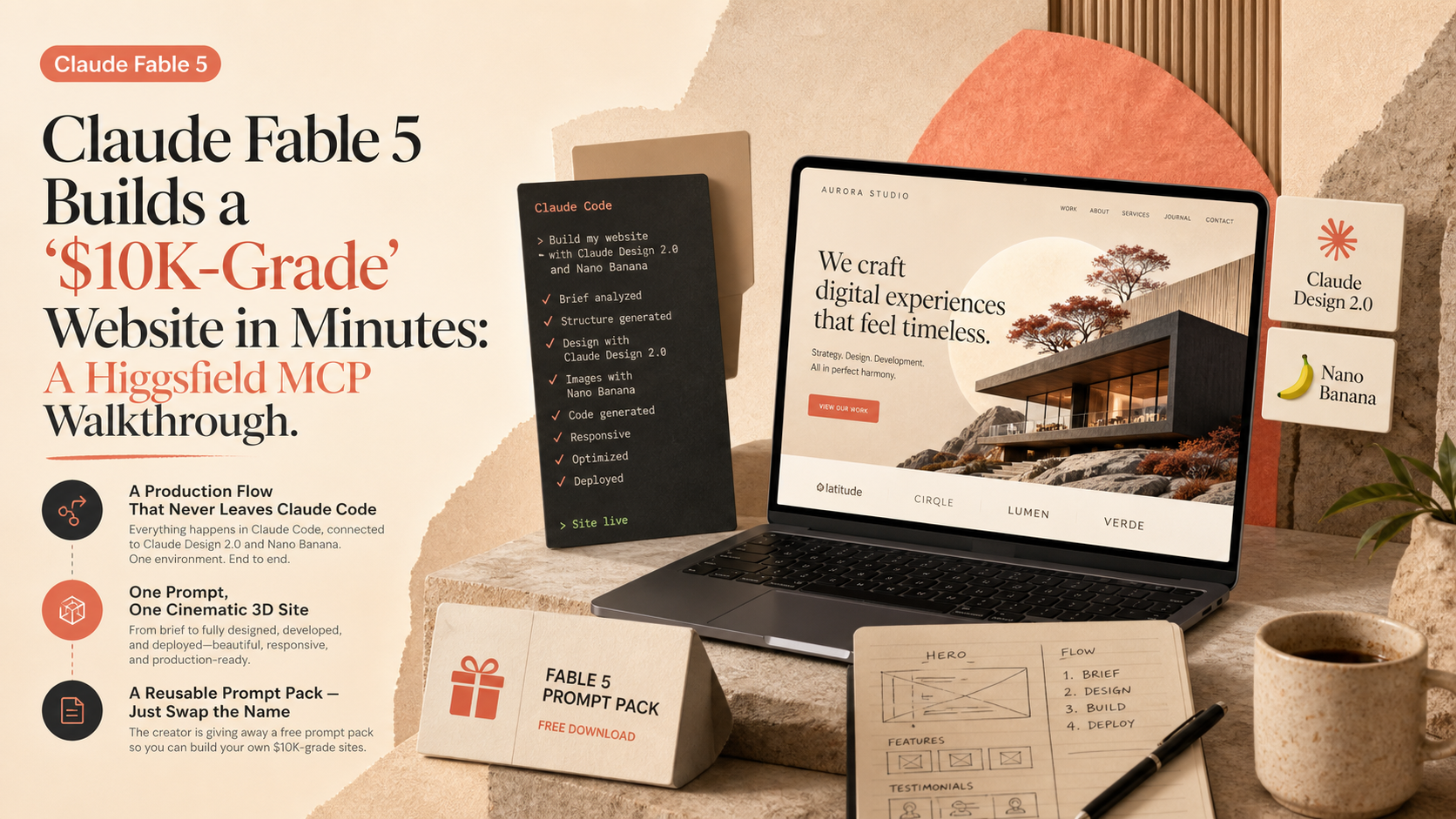
Claude Fable 5 Builds a '$10K-Grade' Website in Minutes: A Higgsfield MCP Walkthrough
With Claude Fable 5 back, the creator says it's astonishing at building websites and walks through the process while giving away a free prompt pack.
Griffin Wooldridge
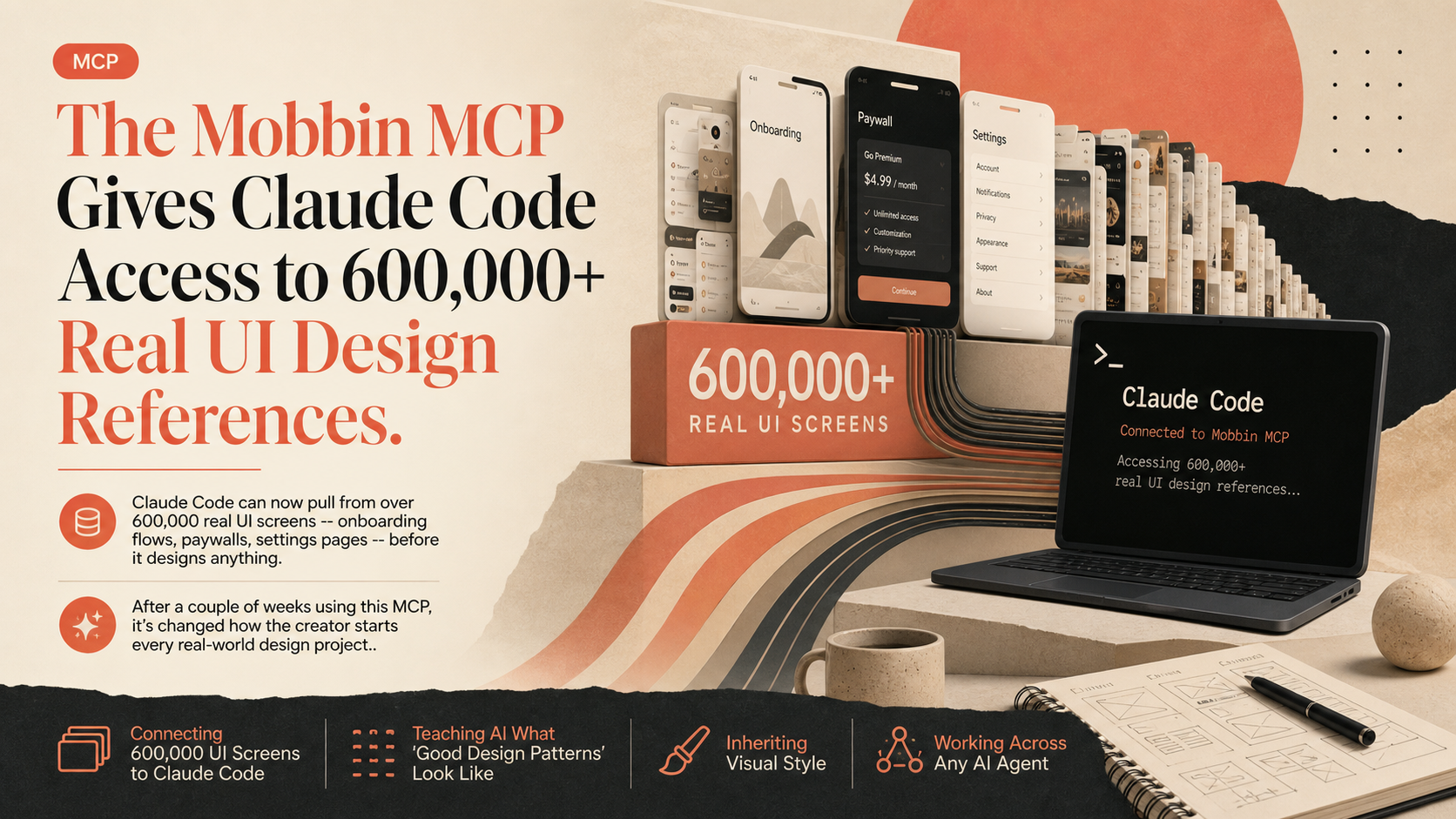
The Mobbin MCP Gives Claude Code Access to 600,000+ Real UI Design References
Claude Code can now pull from over 600,000 real UI screens -- onboarding flows, paywalls, settings pages -- before it designs anything.
为什么叫QQ
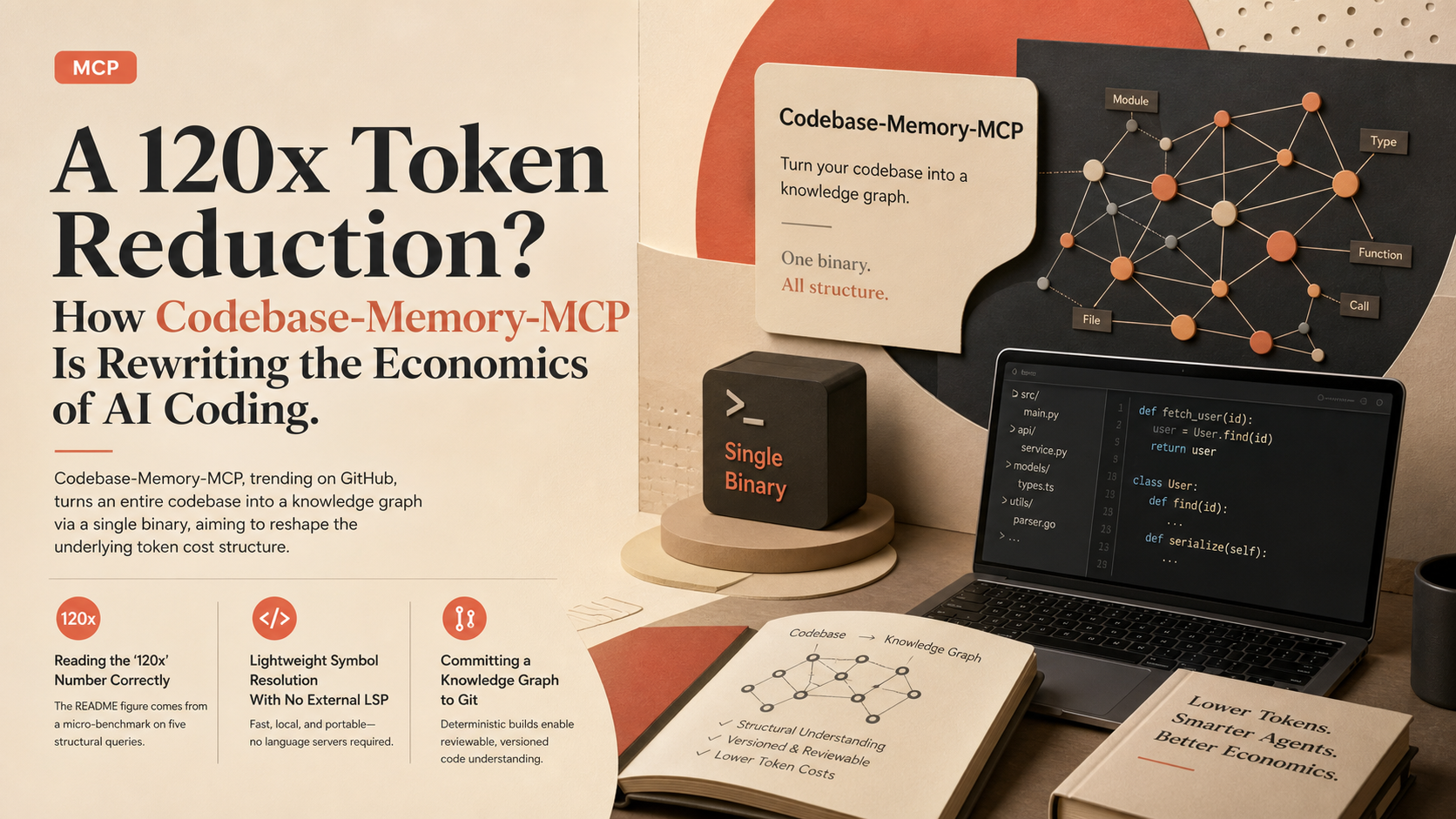
A 120x Token Reduction? How Codebase-Memory-MCP Is Rewriting the Economics of AI Coding
Codebase-Memory-MCP, trending on GitHub, turns an entire codebase into a knowledge graph via a single binary, aiming to reshape the underlying token cost structure.