
Claude Code Productivity Hacks — Claude vs Claude Code, Auto Mode, and External Tool Wiring
TL;DR · What you'll learn
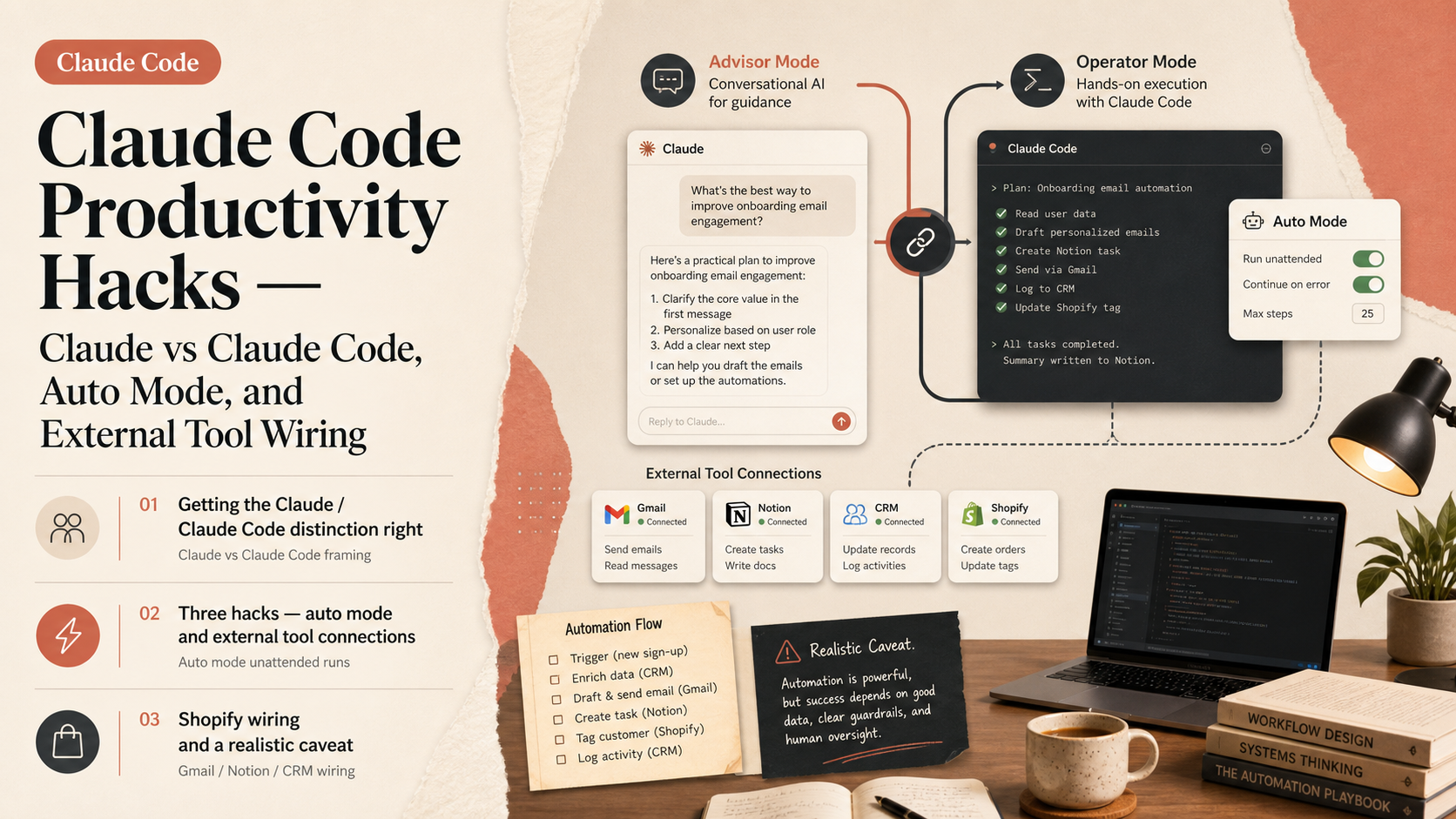
- 1 The creator's framing for beginners: Claude and Claude Code aren't the same product. Claude is the expert you chat with; Claude Code is the expert sitting at your desk doing the work.
- 2 Claude tells you what to do — you still execute. Claude Code reaches into your machine, creates files, organises folders, and handles execution.
- 3 Hack 1: auto mode. Skip step-by-step approvals so Claude Code can run long tasks unattended. The video walks through the gating and what continues running once you've granted access.
- 4 Hack 2: external tool wiring. Connect Claude Code to Gmail, Notion, your CRM. Claude Code can then reply or act like a human — within reason.
- 5 Real example: the creator's financial software. Claude Code is connected to several external tools so a EUR↔USD converter on a portfolio page pulls live data and stays current.
- 6 You don't have to spell out every connection. Claude Code itself often prompts: 'this connection is needed — should I wire it?' The agent moves from order-taker to proposer.
- 7 Application: Shopify. The skill used to build the online store in the video is in the description. Shows the arc from basic site building to deeper automation in one continuous flow.
- 8 Honest caveat: a polished online store doesn't generate sales on its own. Traffic acquisition and conversion are separate disciplines. The creator points to his free 27-hour course.
Read as slides
3 slides total
Getting the Claude / Claude Code distinction right
The gap between 'people building amazing things with Claude on YouTube' and 'the chat screen you see after logging in' stalls a lot of new users. The creator was one of them, he says, until he properly understood what Claude Code actually was.
His metaphor lands cleanly. Claude is like having an expert in everything you can chat with. Ask how to build a website and you'll get the steps — but you still build it yourself. Claude Code is that expert sitting at your computer, doing the work. File creation, folder structure, external tool connections — Claude Code executes. If Claude is the brain on its own, Claude Code is the brain with hands and feet attached.
Three hacks — auto mode and external tool connections
Hack 1 is auto mode. Skip per-step approvals so Claude Code can run extended tasks on its own. The video walks through the gating, the unlock, and what keeps running once you've handed over the keys.
Hack 2 is the bigger lever: external tool wiring. Connect Gmail, Notion, your CRM. Claude Code can then reply on your behalf or interact with each tool more or less like a human. The example used is the creator's own financial software — the portfolio page shows live data because Claude Code is connected to multiple external systems. A EUR↔USD converter pulls from a real data source and updates continuously. The behaviour worth noting: you don't always have to spell out every connection. Claude Code increasingly asks 'this connection is needed — should I set it up?' The agent has moved from order-taker to proposer.
Shopify wiring and a realistic caveat
The application example is Shopify. The skill the creator used to build the online store is linked in the description, and he walks the full arc — from basic site building to deeper Claude Code automation — in one continuous flow. The skill packaging that Anthropic has been building out makes this kind of bundled, ready-to-run workflow easier to share.
His closing caveat is honest and worth keeping. A polished online store doesn't generate sales on its own. Traffic acquisition, conversion optimisation, retention — these are separate disciplines, not technical problems Claude Code can wave away. He points users to his free 27-hour e-commerce course as the next step. Getting AI's generation speed to translate into business results requires the business fundamentals to be there already.
Editor's Take
The reason this video lands isn't the feature list — it's that it confronts the first psychological barrier directly. Most users open Claude as a ChatGPT alternative and never move past chat. Naming Claude Code as 'the expert sitting at your computer doing the work' is the right simplification for explaining the product gap. The more interesting operational point is in Hack 2. Claude Code proactively asking 'I need this connection — should I wire it?' shows the agent shifting from order-taker to active proposer. That shift was only possible once MCP standardised the connection layer, and what we're seeing now is the first stage of SaaS being redesigned around the assumption that an AI will be calling it. The actionable takeaway for readers: do a quick inventory of which SaaS tools in your stack already ship MCP connectors. That tells you where to start when you're ready to design real agent workflows.
Source
Adrián Sáenz
Estos Hacks De Claude Te Harán Tan Productivo Que Parece Ilegal
This article auto-summarizes the YouTube video's transcript with Claude. Please refer to the original video for nuance and exact wording.
Watch on YouTube →Related
3 articles
Nate Herk | AI Automation
GPT 5.6 Sol vs. Fable 5, Head to Head: Fable Edges Out a Bike Game Build at 3x the Cost
With GPT 5.6's Sol, Terra, and Luna released, benchmarks show Sol beating Opus and Fable while costing far less -- but the creator decided to run both models side by side on real work for a full day instead of just quoting numbers.
Trading with DaviddTech
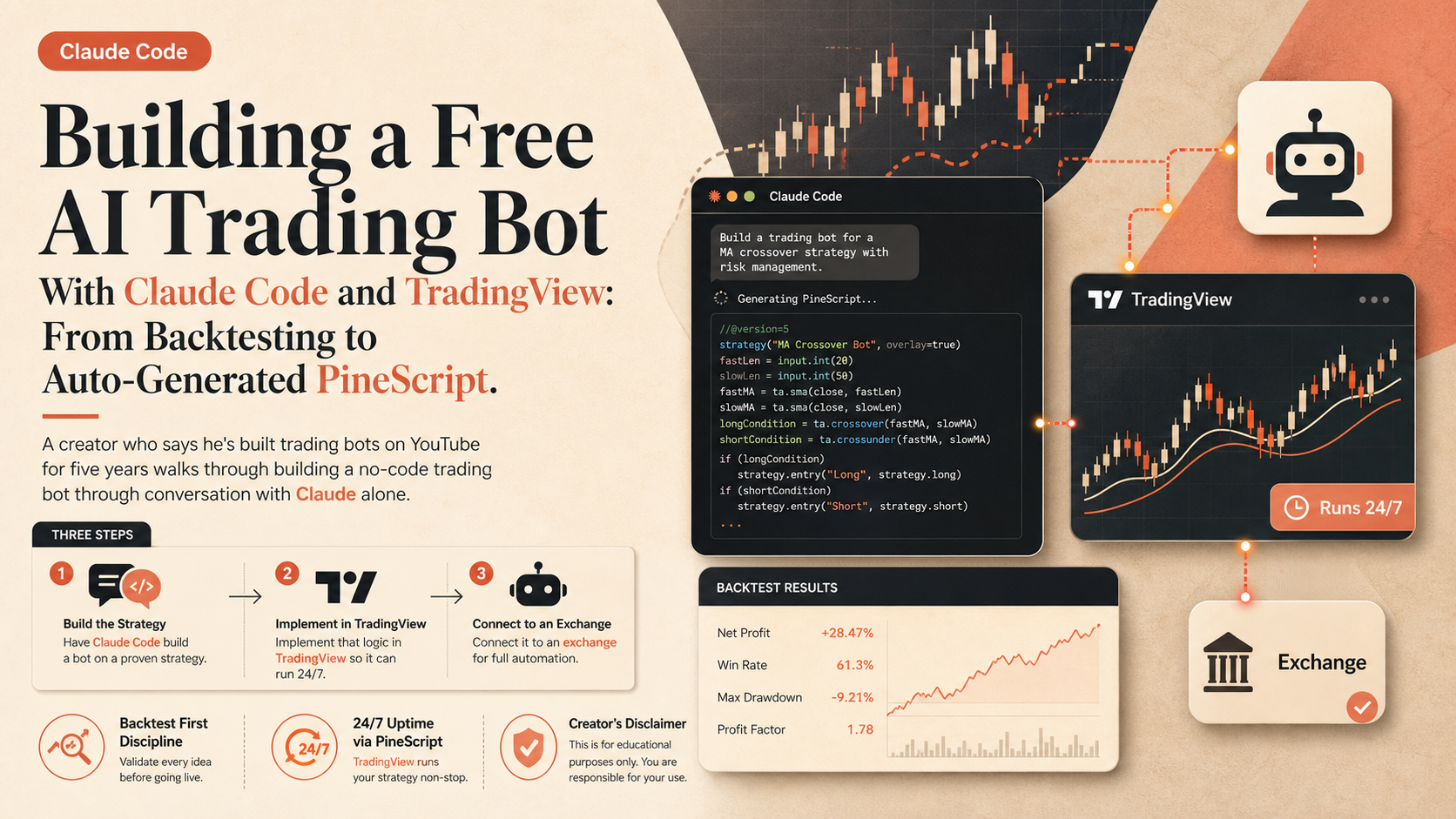
Building a Free AI Trading Bot With Claude Code and TradingView: From Backtesting to Auto-Generated PineScript
A creator who says he's built trading bots on YouTube for five years walks through building a no-code trading bot through conversation with Claude alone.

The Calum Johnson Show
Building a Membership Site With Claude Code in a Weekend, $20K in the First Week: 'You Don't Need the Terminal'
The guest says he built a membership platform, digitalcreatorclub.com, that would have previously cost $50,000-$100,000, in a single weekend using Claude Code -- and made about $20,000 in its first week.