Claude Code Artifacts Just Shipped — A Shareable, Always-Live Web Page for Team Collaboration
TL;DR · What you'll learn
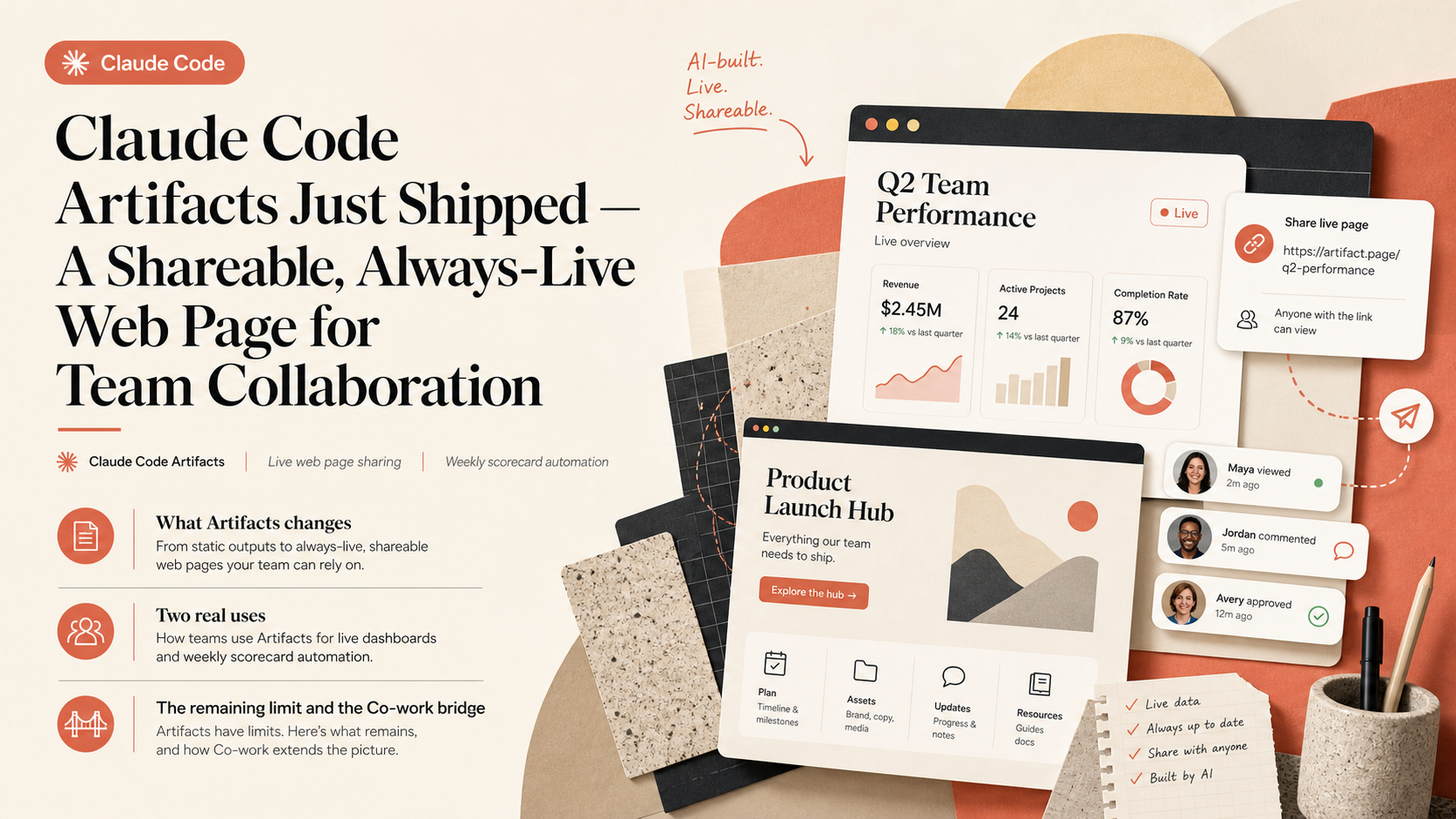
- 1 Anthropic shipped Claude Code Artifacts — anything Claude Code builds in a session (prototype, dashboard, analysis) becomes a live URL anyone on your team can open.
- 2 Previously, sharing meant manual file/screenshot drops or self-hosted pages you maintained yourself. Artifacts handles that for you, and recipients don't need Claude Code.
- 3 When the work updates, the shared page updates with it. Structurally eliminates the 'feedback on an old copy' bug.
- 4 Example 1: a landing page for an upcoming webinar. Share the Artifact with co-founders to gather feedback as they look at the actual live page.
- 5 Example 2: a weekly content scorecard. Five agents pull metrics from email, YouTube, community, and SEO tools into a dashboard that flags critical issues at the bottom.
- 6 Used to take a BI team weeks. Claude builds it in seconds. Reshapes how a manager prepares for a weekly team meeting.
- 7 Current limit: Artifacts are interactive but can't take action. A button that triggers another Claude Code agent to start promoting an underexposed workshop, for example, isn't possible yet.
- 8 Share controls let you publish team-wide or invite individuals, with built-in versioning. For non-engineers, Claude Co-work is the everyday-business variant of the same agent.
Read as slides
3 slides total
What Artifacts changes — Claude Code output becomes a live web page
Anthropic's new Artifacts feature for Claude Code reshapes how entire teams — not just engineers — work with AI. Anything Claude Code builds in a session (a prototype, a dashboard, an analysis) is turned into a live web page with its own URL, and the recipient doesn't need Claude Code to open it.
The old workflow meant sending HTML files, screenshots, or maintaining a small self-hosted page that you updated by hand. Artifacts handles that piece for you. When the work updates, the shared page updates with it, which structurally eliminates the 'feedback on an old copy' bug that plagued previous review loops.
Two real uses — a landing page and a weekly content scorecard
The creator's first example is a landing page for an upcoming webinar. Claude Code built the page; he turned it into an Artifact and shared the URL with his co-founders so they could give feedback while looking at the actual live page — no HTML attachments, no Slack file ping-pong.
The second is more substantial: a weekly content scorecard. Five agents pull metrics from the email tool, the YouTube channel, the community platform, and the SEO stack. The result is a dashboard that even flags critical issues at the bottom. The old version of this lives in a BI team's backlog for a couple of weeks. Claude builds it in seconds. Manager prep for a weekly team meeting starts to look like: paste an Artifact URL into Slack, done.
The remaining limit and the Co-work bridge
The limitation is clear-eyed and worth flagging. Artifact pages are dynamic and interactive — filters, element selection, the usual — but they can't take action. If the scorecard flags 'two upcoming workshops haven't been promoted yet,' there's no button next to it that queues a Claude Code agent to start the promotion. The creator names this as the obvious next step.
Share controls cover team-wide publishing or individual invites, with versioning baked in. For non-engineers, Anthropic also has Claude Co-work — the same agent class, tuned for everyday business work instead of code. Read together with Artifacts, the move is clear: Anthropic is pushing into the 'distribute AI to your team' phase, not the 'lone power user' phase.
Editor's Take
Artifacts matters less for the people generating output and more for the people circulating it. Claude Code had been a power-user productivity tool; Artifacts plugs its output directly into team workflows. The 'build a BI dashboard in seconds' headline is doing a lot of work in the marketing copy, but the structural win isn't speed — it's that the version everyone sees is always current. That mirrors how Notion and Coda institutionalised real-time shared documents; AI-generated artefacts now sit on the same surface. The decision to omit action execution from Artifact pages reads as a deliberate constraint, not an oversight. Until the blast radius of a widely-shared AI artefact with write permissions is well understood, read-only web pages are the responsible product call. The next interesting design question isn't 'how fast can we build dashboards' — it's 'who gets to hold the action button.'
Source
9x
Claude Code Artifacts Just Dropped (changes everything)
This article auto-summarizes the YouTube video's transcript with Claude. Please refer to the original video for nuance and exact wording.
Watch on YouTube →Related
3 articles
Nate Herk | AI Automation
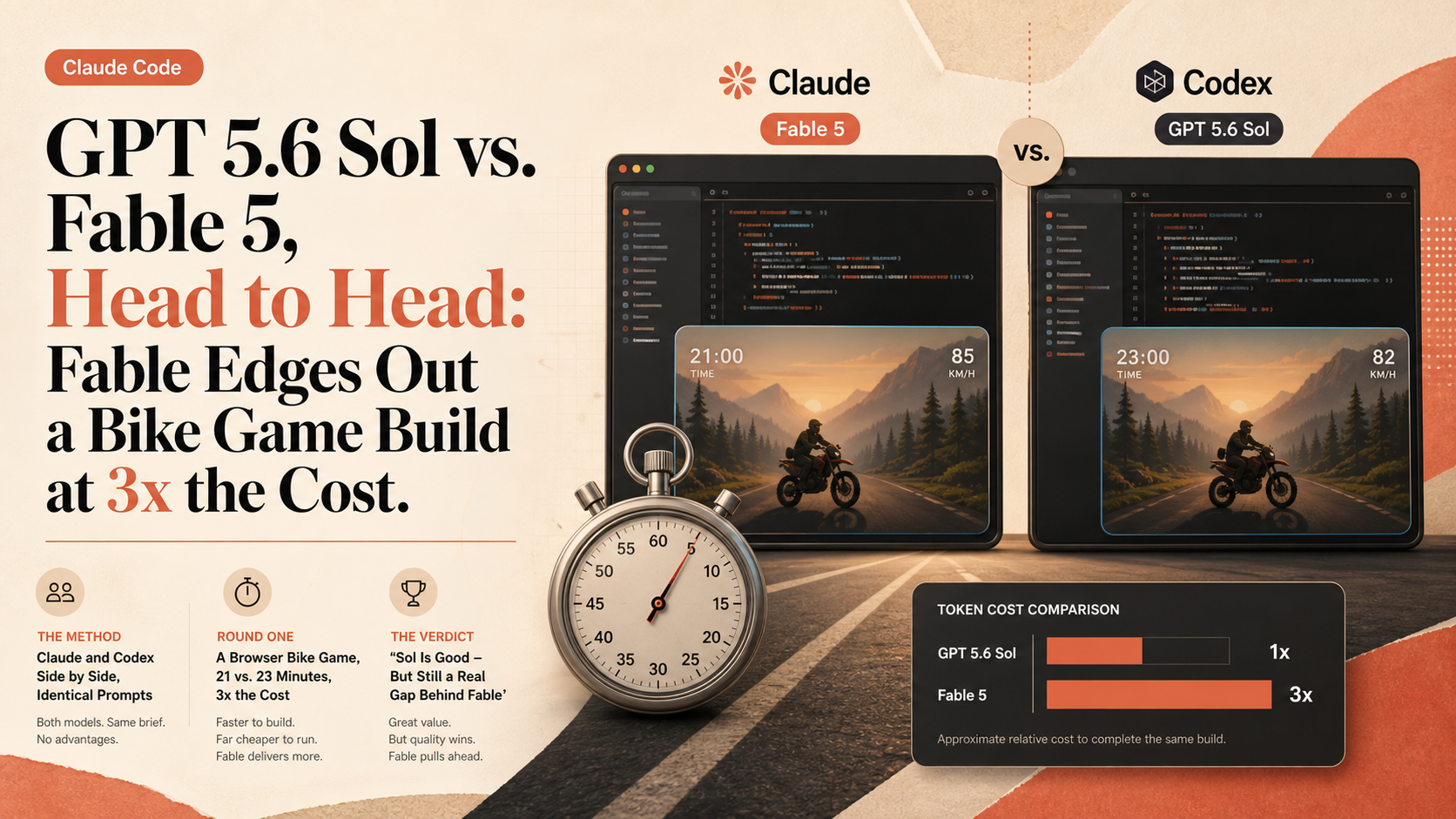
GPT 5.6 Sol vs. Fable 5, Head to Head: Fable Edges Out a Bike Game Build at 3x the Cost
With GPT 5.6's Sol, Terra, and Luna released, benchmarks show Sol beating Opus and Fable while costing far less -- but the creator decided to run both models side by side on real work for a full day instead of just quoting numbers.
Trading with DaviddTech
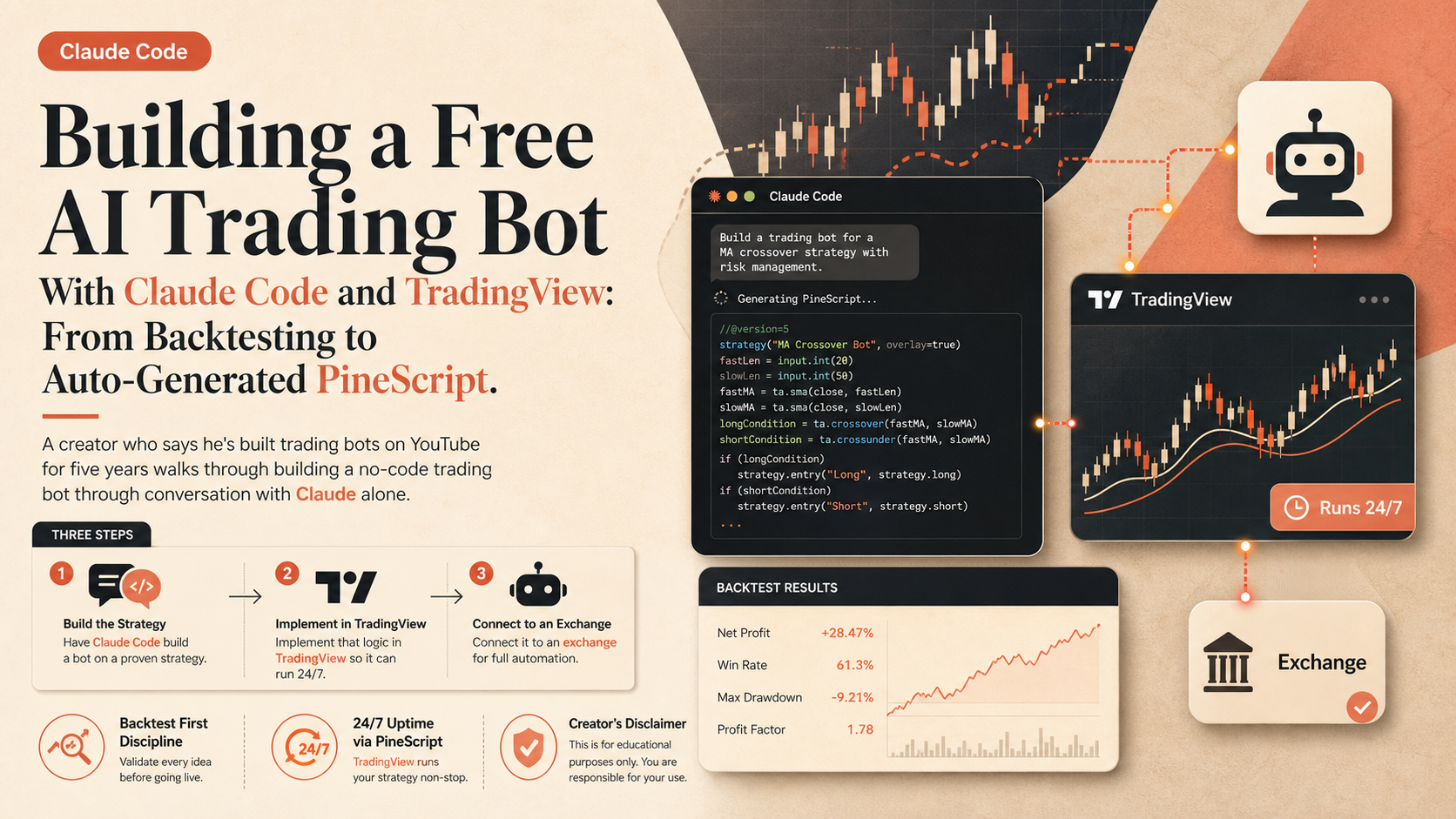
Building a Free AI Trading Bot With Claude Code and TradingView: From Backtesting to Auto-Generated PineScript
A creator who says he's built trading bots on YouTube for five years walks through building a no-code trading bot through conversation with Claude alone.

The Calum Johnson Show
Building a Membership Site With Claude Code in a Weekend, $20K in the First Week: 'You Don't Need the Terminal'
The guest says he built a membership platform, digitalcreatorclub.com, that would have previously cost $50,000-$100,000, in a single weekend using Claude Code -- and made about $20,000 in its first week.