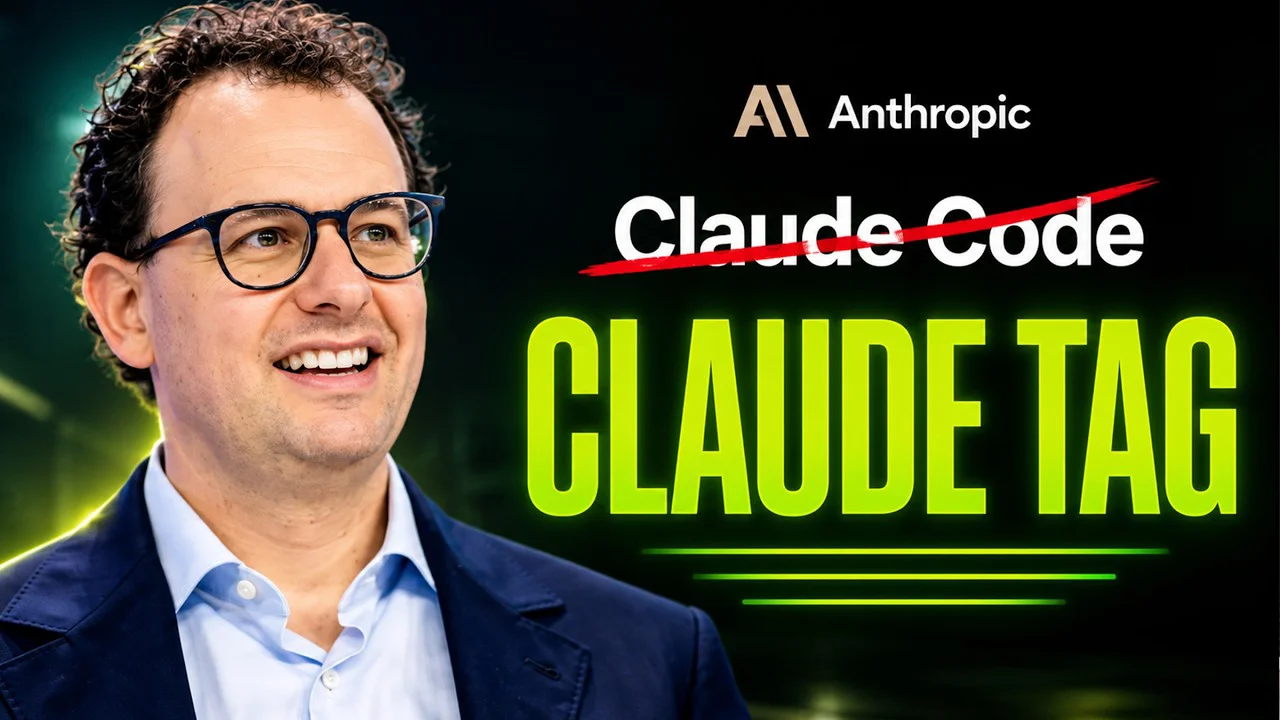
Claude Tag Arrives — Anthropic's Slack-Resident Team Agent, and Matt Green's Crypto Probe
TL;DR · What you'll learn
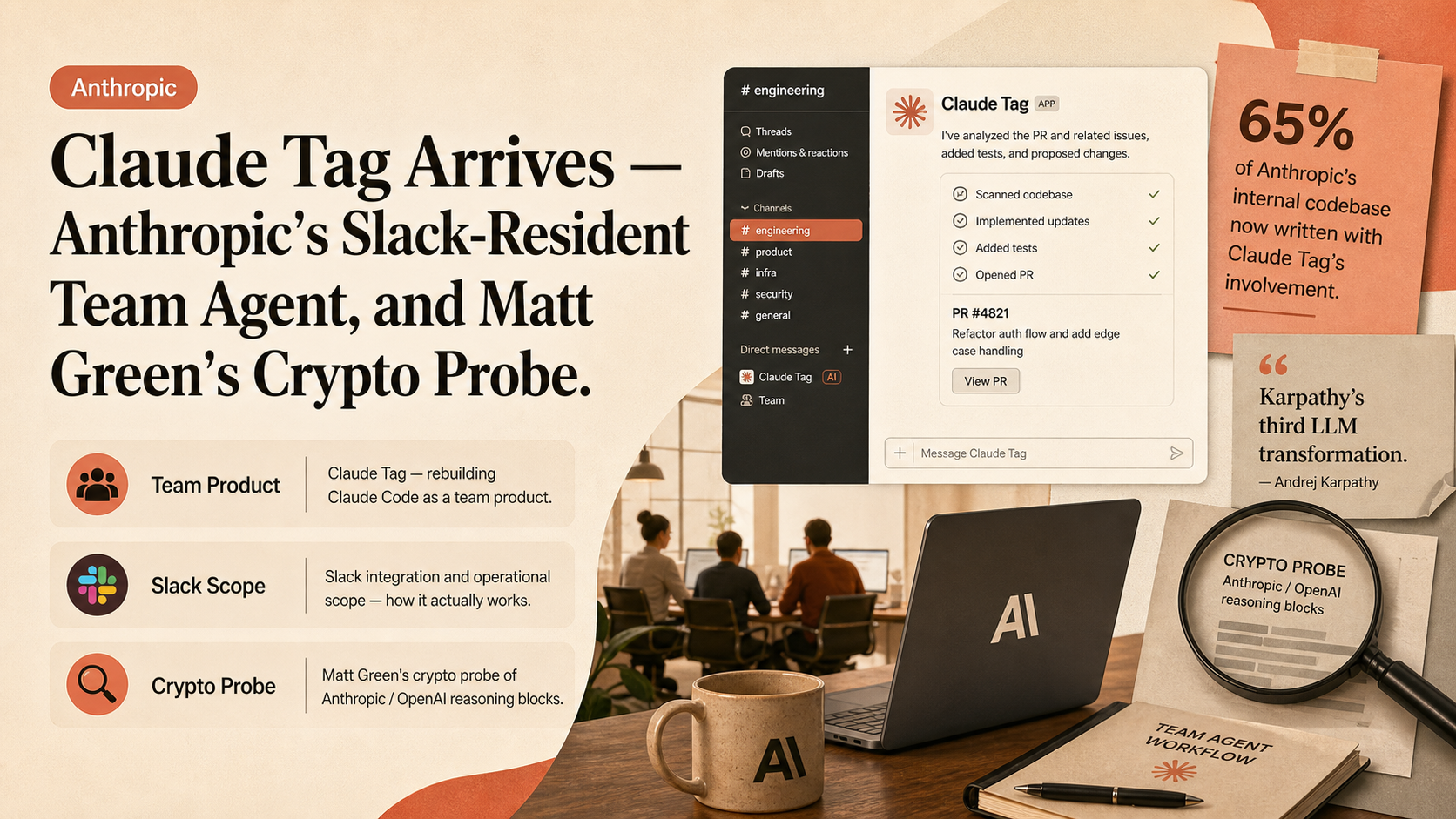
- 1 Anthropic had a big week. Claude Tag launches as the evolution of Claude Code, rebuilt around teams rather than individual developers.
- 2 The headline stat from Anthropic: around 65% of the company's own product code is now being written with Claude Tag's involvement. A heavy dogfooding bet.
- 3 Andrej Karpathy, who recently joined Anthropic, framed Claude Tag as the third major LLM-interface transformation — from web chat to desktop app, and now to an independent, continuously running system embedded in organisational infrastructure, collaborating with human teams.
- 4 Today's surface: Slack integration. Mention it in a channel or thread, it breaks the request into steps, executes via connected tools, and posts results back in the conversation.
- 5 Scope covers PR submissions and merges, data analysis, problem solving. Integrations include GitHub, Jira, Linear, databases, CRM systems.
- 6 Demo: an engineer named Nadia proposed a feature in a #productingles-launches channel, Claude analysed the codebase and produced a solution — the full exchange happening publicly in the channel.
- 7 Separately, Johns Hopkins cryptography professor Matt Green hit a strange signature error in Claude's thinking-block output while setting up an open Claude agent, and spent a weekend on it. Burned about 5 million Codex tokens.
- 8 Green's findings: reasoning blocks for both OpenAI and Anthropic ship to the client as JSON containing base-64 ciphertext. OpenAI's implementation looks loosely Fernet-based (his guess). The intent — stateless conversations, zero-retention modes, tool loops without a persistent server — makes sense in principle.
Read as slides
3 slides total
Claude Tag — rebuilding Claude Code as a team product
AI Revolution's video walks through Anthropic's loaded week. The centrepiece is Claude Tag, a new product positioned as the evolution of Claude Code, rebuilt for teams rather than individual developers.
The dogfooding claim is striking — around 65% of Anthropic's own product code now goes through Claude Tag. On top of that, Andrej Karpathy, recently arrived at Anthropic, framed Claude Tag as the third major transformation of LLM interfaces. Web chat first, desktop apps second, and now independent, continuously running systems embedded in organisational infrastructure, collaborating with human teams. The framing signals a different posture for the product than what came before.
Slack integration and operational scope — how it actually works
Today's Claude Tag surface is Slack. Mention it in a channel or thread, and it breaks the request into steps, executes through connected tools, and posts results back in the conversation. For teams whose workflow already lives in Slack, the friction is essentially zero.
The scope is broad. Claude Tag handles PR submissions and merges, data analysis, and problem solving, with integrations that include GitHub, Jira, Linear, databases, and CRM systems. In Anthropic's demo, an engineer named Nadia proposed adding a feature in a #productingles-launches channel; Claude analysed the codebase and delivered a solution, the entire exchange playing out in public view. Team visibility and agent execution meet in the same surface — that's the structural move.
Matt Green's crypto probe of Anthropic / OpenAI reasoning blocks
On a separate axis, the video covers Johns Hopkins cryptography professor Matt Green's investigation of how reasoning blocks are encrypted. Green hit a strange signature error in Claude's thinking-block output while setting up an open Claude agent and, true to form for a cryptographer, couldn't let it go. A full weekend, roughly 5 million Codex tokens spent, and at one point OpenAI's security flagged him hard enough that he had to photograph his driver's licence and submit it to a cyber-trusted access portal just to keep going.
His findings: both OpenAI and Anthropic ship reasoning blocks to the client as JSON containing base-64 ciphertext. OpenAI's implementation appears loosely Fernet-based (Green flags this as a guess). The design intent makes sense — in stateless conversations, zero-retention modes, or tool loops without a persistent server session, the client needs to carry state forward, and encrypted reasoning lets the provider hand back hidden model state in a form the client can relay but not read or modify. Reasonable on paper. In practice, Anthropic's implementation has a 64-byte field labelled 'signature' whose role wasn't clear.
Editor's Take
Reading Claude Tag at release, the product strategy is clear. Anthropic is shifting weight from 'tool for the individual power user' to 'foundation embedded in team operations.' The 65% internal code stat is impressive as a marker, but whether external teams can reproduce that depends on cultural and operational readiness to host an AI inside Slack as a first-class presence. Karpathy's 'third transformation' framing is strong as marketing language, but the substance is simply naming the move from web-chat interfaces to org-resident agents. Matt Green's cryptographic probe matters independently. The decision by both Anthropic and OpenAI to encrypt reasoning blocks is sound from a stateless-operations standpoint, but it also formalises a layer that's hard to audit externally as it embeds itself in everyday workflows. The reader's takeaway is to evaluate the productivity gains and the increasing opacity of the reasoning layer as separate, parallel considerations.
Source
AI Revolution
Anthropic Just Replaced Claude Code With New Claude Tag
This article auto-summarizes the YouTube video's transcript with Claude. Please refer to the original video for nuance and exact wording.
Watch on YouTube →Related
3 articles
Nate Herk | AI Automation
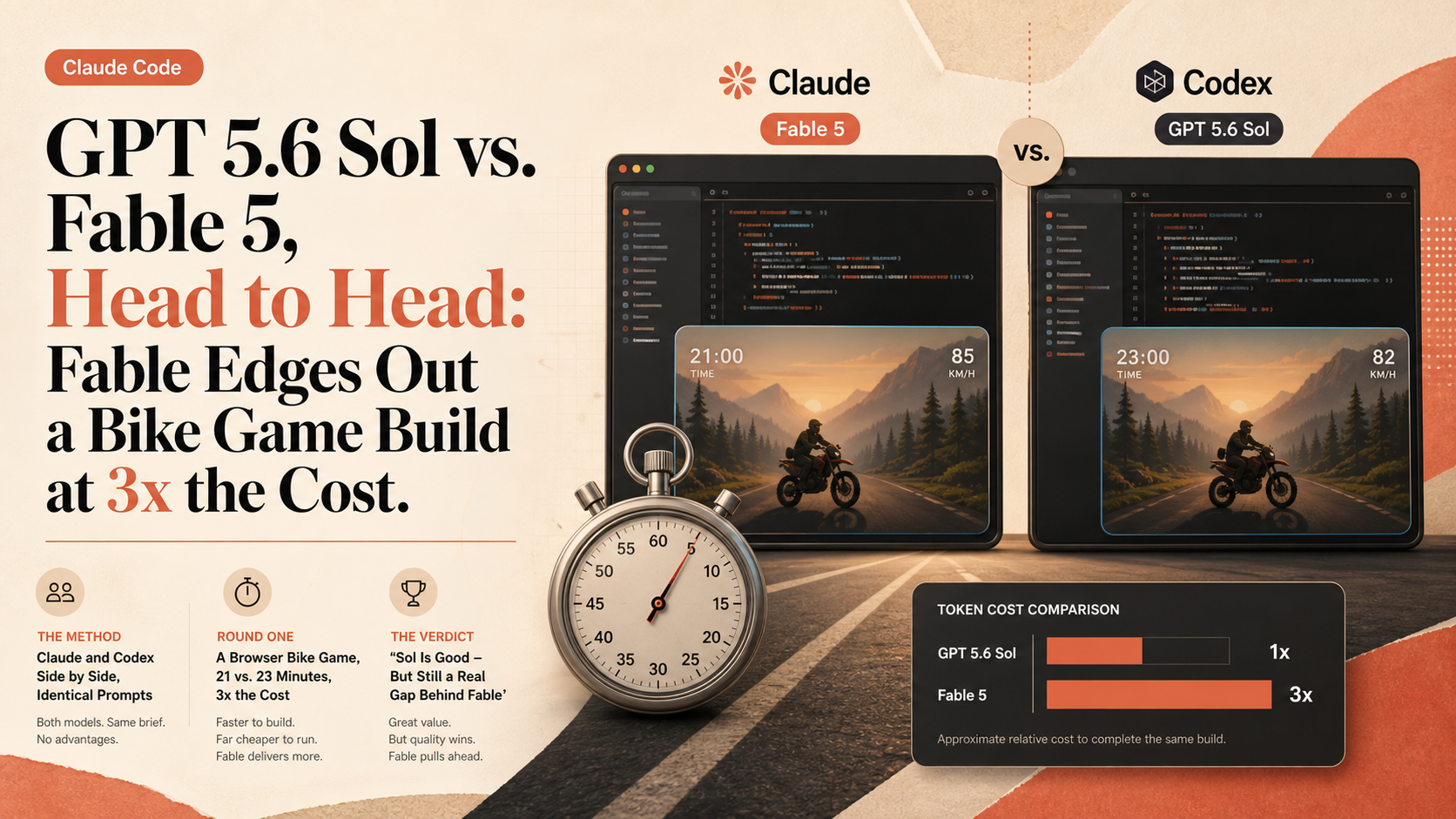
GPT 5.6 Sol vs. Fable 5, Head to Head: Fable Edges Out a Bike Game Build at 3x the Cost
With GPT 5.6's Sol, Terra, and Luna released, benchmarks show Sol beating Opus and Fable while costing far less -- but the creator decided to run both models side by side on real work for a full day instead of just quoting numbers.
Trading with DaviddTech
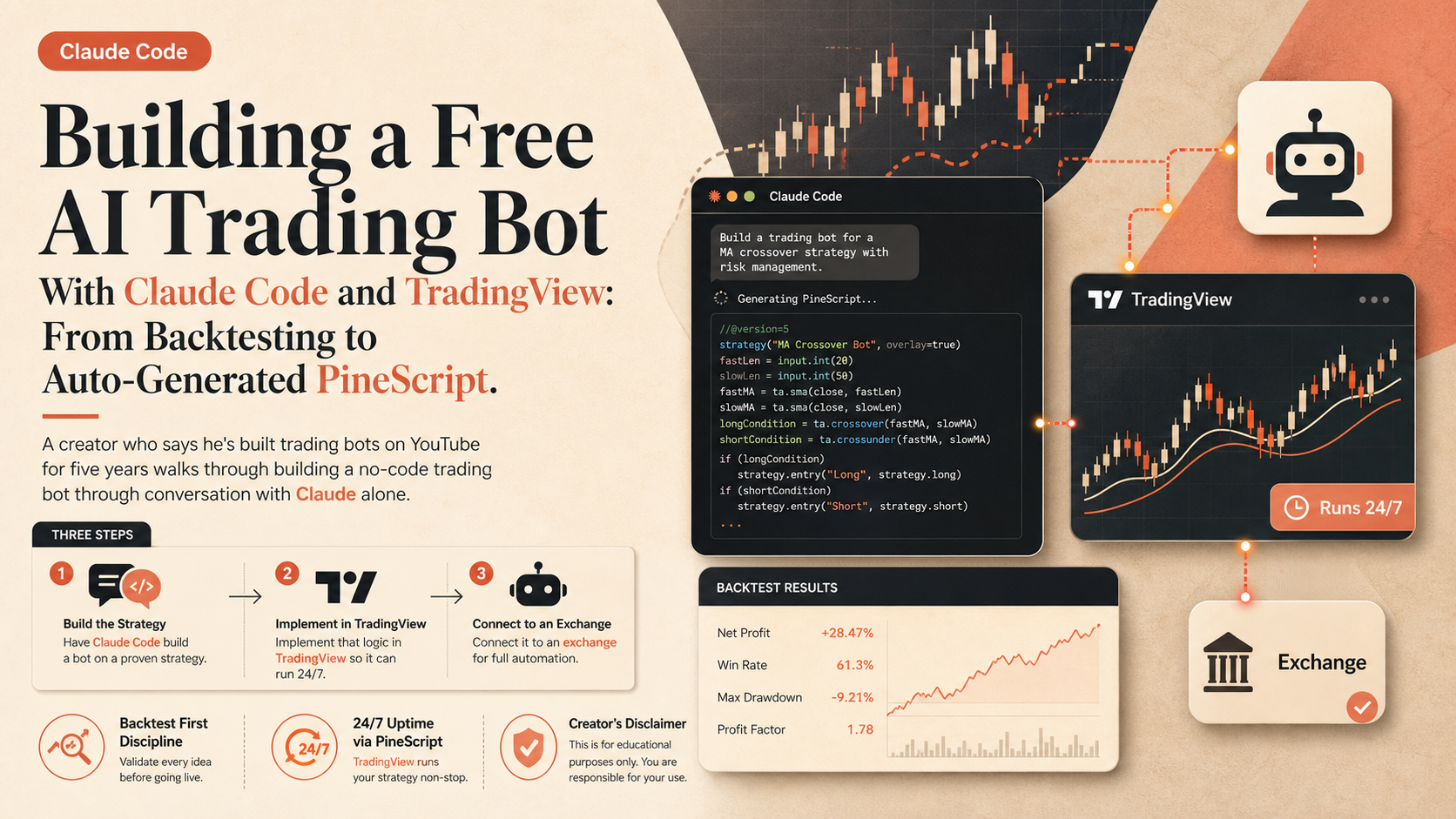
Building a Free AI Trading Bot With Claude Code and TradingView: From Backtesting to Auto-Generated PineScript
A creator who says he's built trading bots on YouTube for five years walks through building a no-code trading bot through conversation with Claude alone.

The Calum Johnson Show
Building a Membership Site With Claude Code in a Weekend, $20K in the First Week: 'You Don't Need the Terminal'
The guest says he built a membership platform, digitalcreatorclub.com, that would have previously cost $50,000-$100,000, in a single weekend using Claude Code -- and made about $20,000 in its first week.