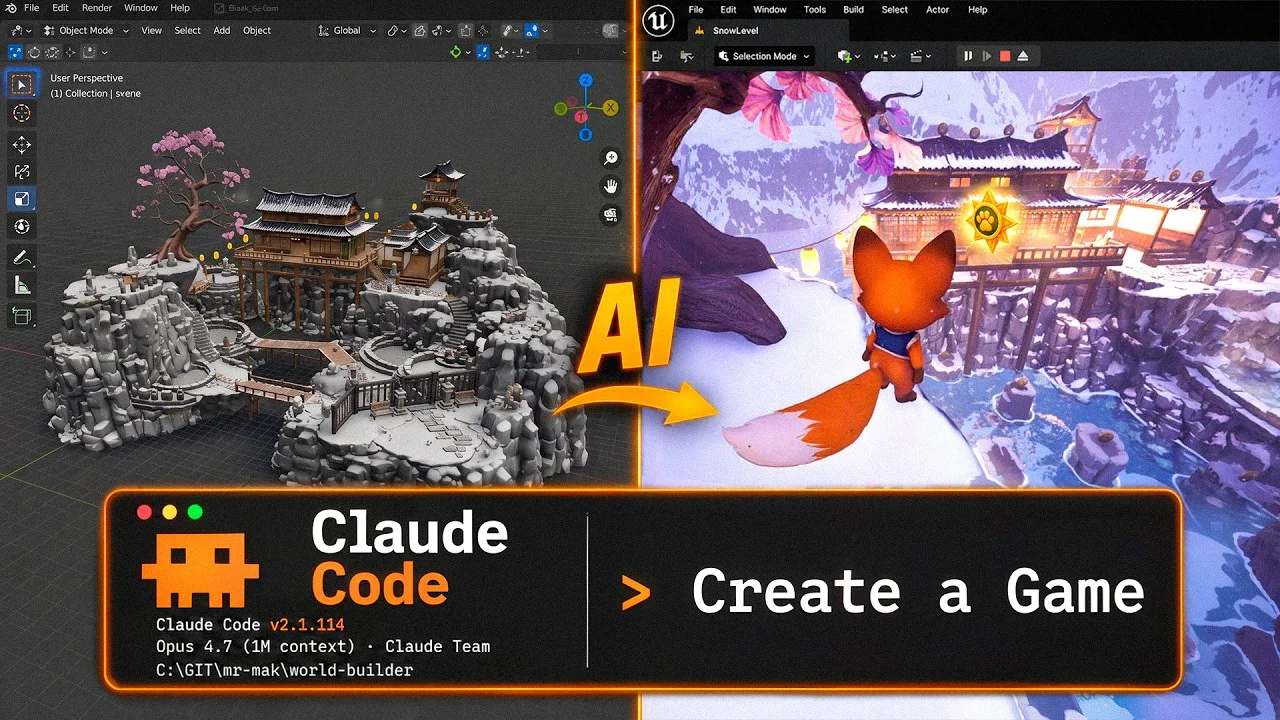
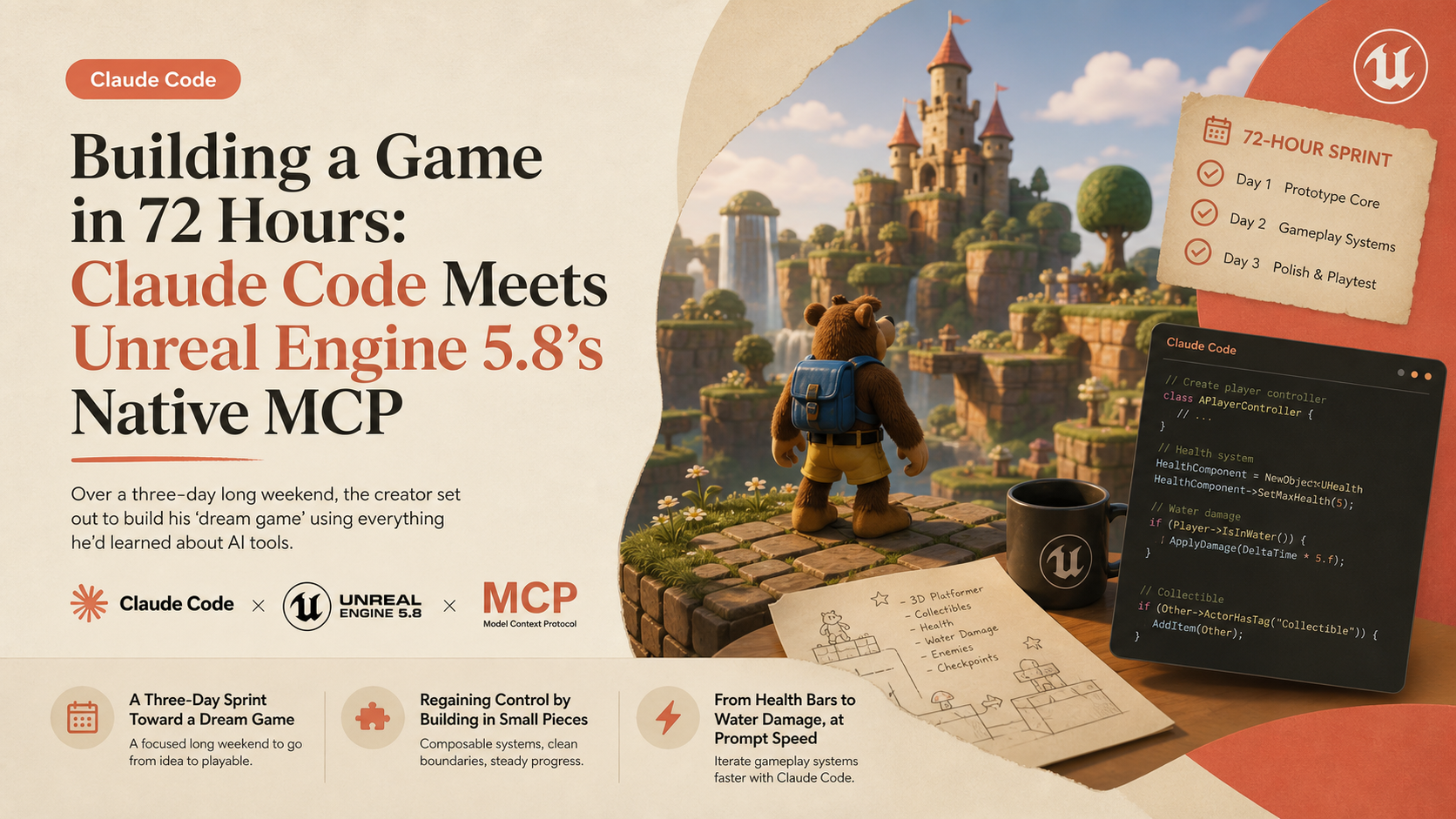
Building a Game in 72 Hours: Claude Code Meets Unreal Engine 5.8's Native MCP
TL;DR · What you'll learn
- 1 Over a three-day long weekend, the creator set out to build his 'dream game' using everything he'd learned about AI tools.
- 2 The goal was a 3D platformer in the spirit of Banjo-Kazooie or Super Mario 64.
- 3 The build combined Unreal Engine 5.8's native MCP support with Claude Code to handle the game logic.
- 4 When stuck, breaking the project into small pieces instead of building everything at once made it far easier to stay in control.
- 5 Finishing each piece let the bigger picture emerge, building a sense of accomplishment and momentum toward completion.
- 6 Adding a health bar and a HUD for collectibles took just one prompt and 22 minutes of work.
- 7 The water-damage effect was implemented by spawning a cylinder where the water sat and manually nudging its position into place.
Read as slides
3 slides total
A Three-Day Sprint Toward a Dream Game
With a three-day long weekend ahead, the creator decided to pour everything he'd learned about AI tools into building an actual playable game. The goal: a 3D platformer in the spirit of Banjo-Kazooie or Super Mario 64, with a particular focus on recreating the small, satisfying hidden secrets those games are known for.
Three days isn't much time for a 3D game, but between deep familiarity with AI tools for 3D asset generation and a new setup pairing Unreal Engine 5.8's native MCP support with Claude Code for game logic, the pieces were in place to move fast.
Regaining Control by Building in Small Pieces
The turning point came when, stuck partway through, the creator switched from trying to build everything at once to breaking the project into small individual pieces. That approach gave him far more control -- each finished piece clarified what needed to happen next, and subsequent pieces got progressively easier.
Some parts took longer because the reference material wasn't clearly defined, but as the pieces came together, the emerging bigger picture brought a sense of accomplishment that kept motivation building toward the finish line.
From Health Bars to Water Damage, at Prompt Speed
Features like a health bar and a HUD showing collectibles took just one prompt and 22 minutes to implement. Testing started from a floating character with a HUD and coin counter, then moved to adding a health bar and a water hazard that deals damage over time -- essentially hot water.
The actual implementation involved spawning a cylinder object where the water sat, requiring a small manual adjustment to lower its position, but the underlying damage logic worked correctly. It's a real snapshot of the collaboration pattern: AI-generated logic, refined by a final human touch.
Editor's Take
What makes this project notable is how Unreal Engine 5.8's native MCP support is blurring the line between game engine and coding agent. Engine scripting and AI assistance used to be separate workflows; now a single prompt routed through MCP can add a feature end to end. At the same time, the water-damage sequence -- where the AI's output still needed a manual position tweak -- is a reminder that agentic coding shines not as full automation but as fast first-draft generation paired with human refinement. If a solo developer can prototype a playable 3D game in 72 hours, the barrier to entry for game creation is dropping fast.
Source
Stefan 3D AI
I Built My Dream Game in 72 Hours — Assets by AI, Gameplay by Claude Code
This article auto-summarizes the YouTube video's transcript with Claude. Please refer to the original video for nuance and exact wording.
Watch on YouTube →Related
3 articles
IGN
Unreal Engine 5.8 Adds Experimental MCP Support for Claude Code Workflows
At State of Unreal 2026, Epic Games unveiled new tools aimed at reducing the technical overhead of game development and freeing creators from endless node-graph untangling.
Jason Lee
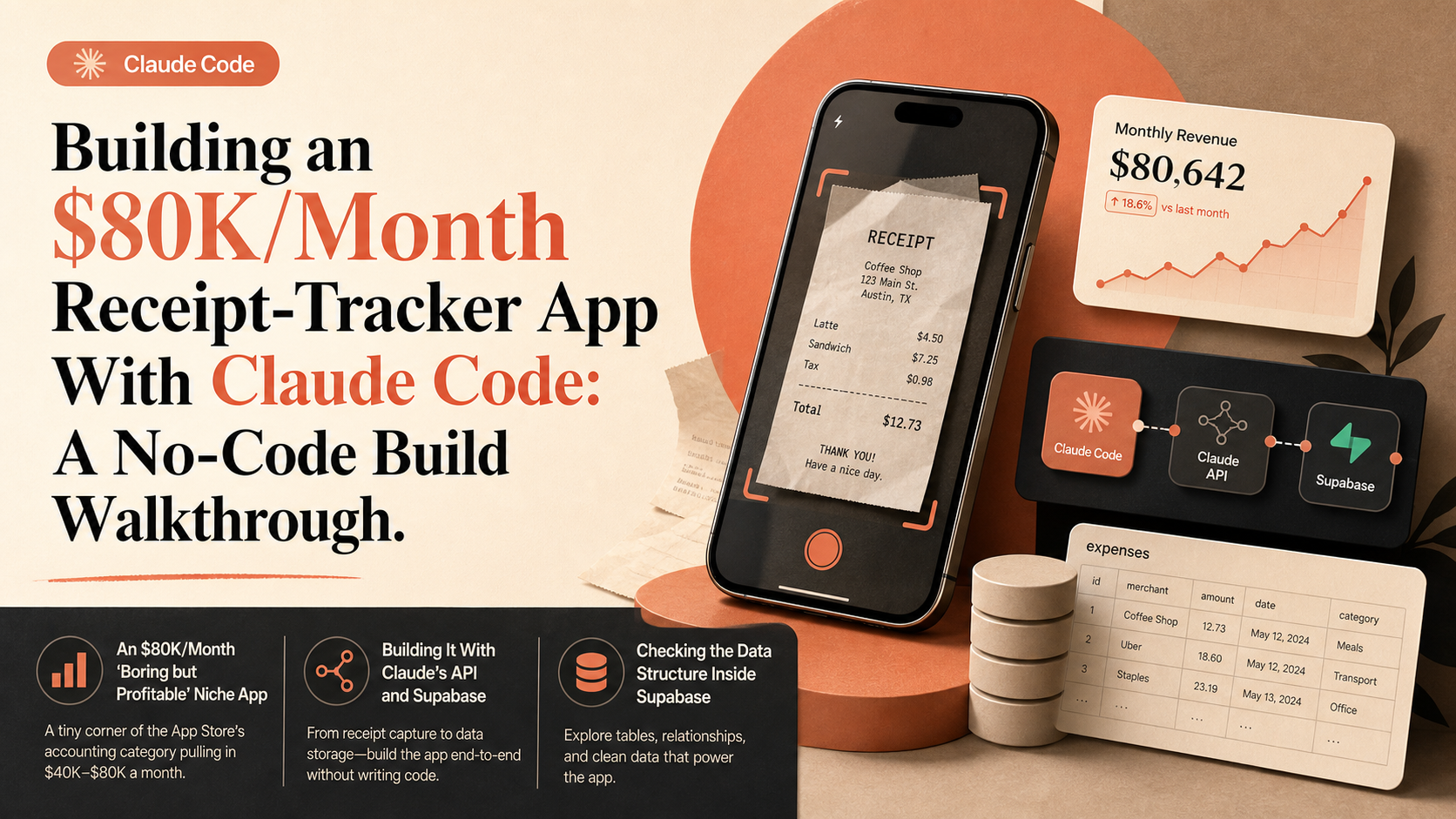
Building an $80K/Month Receipt-Tracker App With Claude Code: A No-Code Build Walkthrough
The video highlights a tiny niche in the App Store's accounting category -- receipt and expense tracking -- where several apps pull in $40,000-$80,000 a month.
Griffin Wooldridge
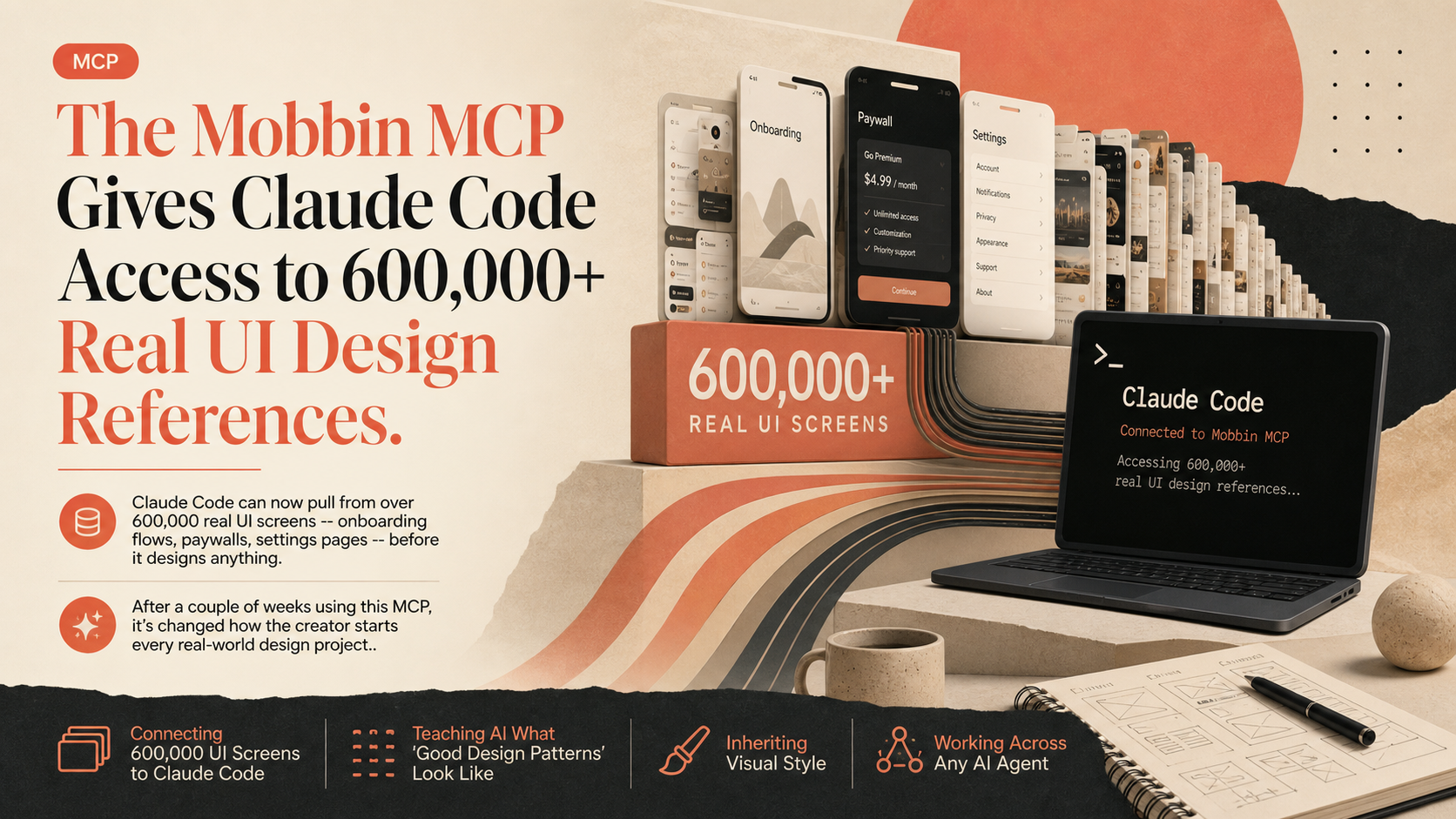
The Mobbin MCP Gives Claude Code Access to 600,000+ Real UI Design References
Claude Code can now pull from over 600,000 real UI screens -- onboarding flows, paywalls, settings pages -- before it designs anything.