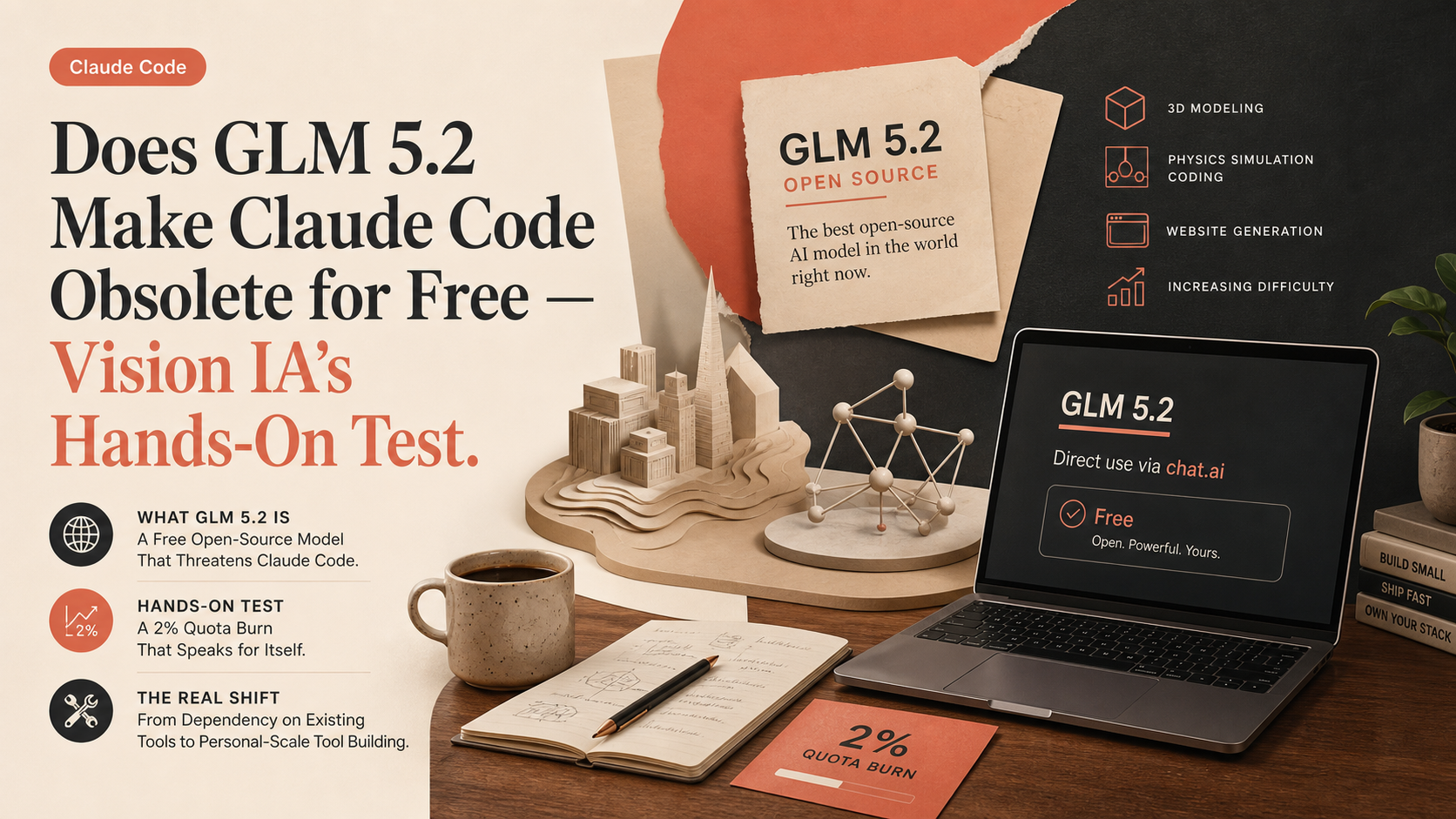
Does GLM 5.2 Make Claude Code Obsolete for Free — Vision IA's Hands-On Test
TL;DR · What you'll learn
- 1 Vision IA opens flatly: 'GLM 5.2 is the best open-source AI model in the world right now.' From a channel that tests AI models daily, and the model is free — that's the load-bearing premise of the rest of the video.
- 2 The test plan: 3D modeling, physics simulation coding, website generation, and similar tasks at increasing difficulty. Vision IA hints that some results surprised them in directions they didn't expect.
- 3 Two main entry points. Run it directly via chat.ai with no installation, or wire it into Claude Code, Open Claw, or Hermes-style agent frameworks. The second path is where the model's full capability shows up.
- 4 In the hands-on, the request is to add a reset button to an existing app. The agent follows the spec correctly and steadily, consuming only 2 percent of the quota. For a free model, the efficiency is unusual.
- 5 Vision IA stresses how far we've come compared to three years ago. Tasks that were difficult even with paid APIs back then run reliably on a free model today.
- 6 The real shift is freedom from market-side tools — the ones that don't exist for your use case, are too expensive, or come bundled with features you don't actually need.
- 7 'You can build the tool you need yourself, for free, on your own terms.' That's the real inflection. You don't have to be a professional engineer to assemble small custom tools any more.
- 8 Near the end, Vision IA pitches their training program 'Vision,' which combines N8N with AI agents. Roughly six to seven thousand members so far, lifetime access for a single payment.
Read as slides
3 slides total
What GLM 5.2 Is — A Free Open-Source Model That Threatens Claude Code
Vision IA opens the channel by stating plainly: 'GLM 5.2 is the best open-source AI model in the world right now.' From a channel that runs AI tests daily, that's a strong claim — and the model is free. This is the central axis Vision IA's evaluation rests on.
The test surface is broad. 3D modeling, physics simulation coding, website generation, gradually escalating in difficulty. Two main entry points are flagged. You can run it directly through chat.ai without installing anything, or wire it into Claude Code, Open Claw, or Hermes-style agent frameworks. The framework path is where the model's full capability becomes visible.
Hands-On Test — A 2% Quota Burn That Speaks for Itself
Later, the hands-on segment runs the test: add a reset button to an existing app. The agent follows the spec faithfully and the quota burn after the change is only 2 percent. Vision IA highlights that this kind of quota efficiency from a free model is unusual.
The three-year comparison is the framing argument. Tasks that were difficult on paid APIs back then now run reliably on a free model. The situation that this caliber of AI is publicly available for free becomes the precondition for everything else — a precondition that begins to wobble the value proposition of paid SaaS tooling. The headline is provocative — 'GLM 5.2 makes Claude Code obsolete' — but the actual argument lands on 'equivalent quality is now available for free.'
The Real Shift — From Dependency on Existing Tools to Personal-Scale Tool Building
Vision IA delivers the video's real message in the second half. The real shift GLM 5.2 represents is freedom from market-side tools. There are too many situations where the tool you need either doesn't exist, exists but is too expensive, or comes bundled with features you'd never use.
You can now build those tools yourself, for free, on your own terms. You don't have to be a professional engineer — combining an AI agent with existing frameworks lets you assemble small custom tools. The video ends with a pitch for the 'Vision' training program, which combines N8N with AI agents, with lifetime access for a one-time payment. The pitch sits inside the same 'personal-scale tool building' frame as the rest of the argument.
Editor's Take
Calling GLM 5.2 a 'replacement for Claude Code' is too narrow. What Vision IA actually emphasizes is that commercial-SaaS-grade quality is now available for free, and that the implication isn't a swap of competitors but an expansion of what users themselves can build. Three points for readers. First, simple workflow tools are starting to be cheaper to self-build than to license from existing SaaS. Second, even when Claude Code stays the primary tool, slotting GLM 5.2 in as a companion model lowers total cost meaningfully. Third, as open-source quality keeps climbing, the differentiation surfaces left to commercial models will increasingly sit in context management, governance, and enterprise integration. Anthropic's direction with Claude Tag and the Notion integration reads coherently as the deliberate move to defend that exact differentiation surface.
Source
Vision IA
GLM 5.2 : ce modèle gratuit rend Claude Code obsolète
This article auto-summarizes the YouTube video's transcript with Claude. Please refer to the original video for nuance and exact wording.
Watch on YouTube →Related
3 articles
Riley Brown
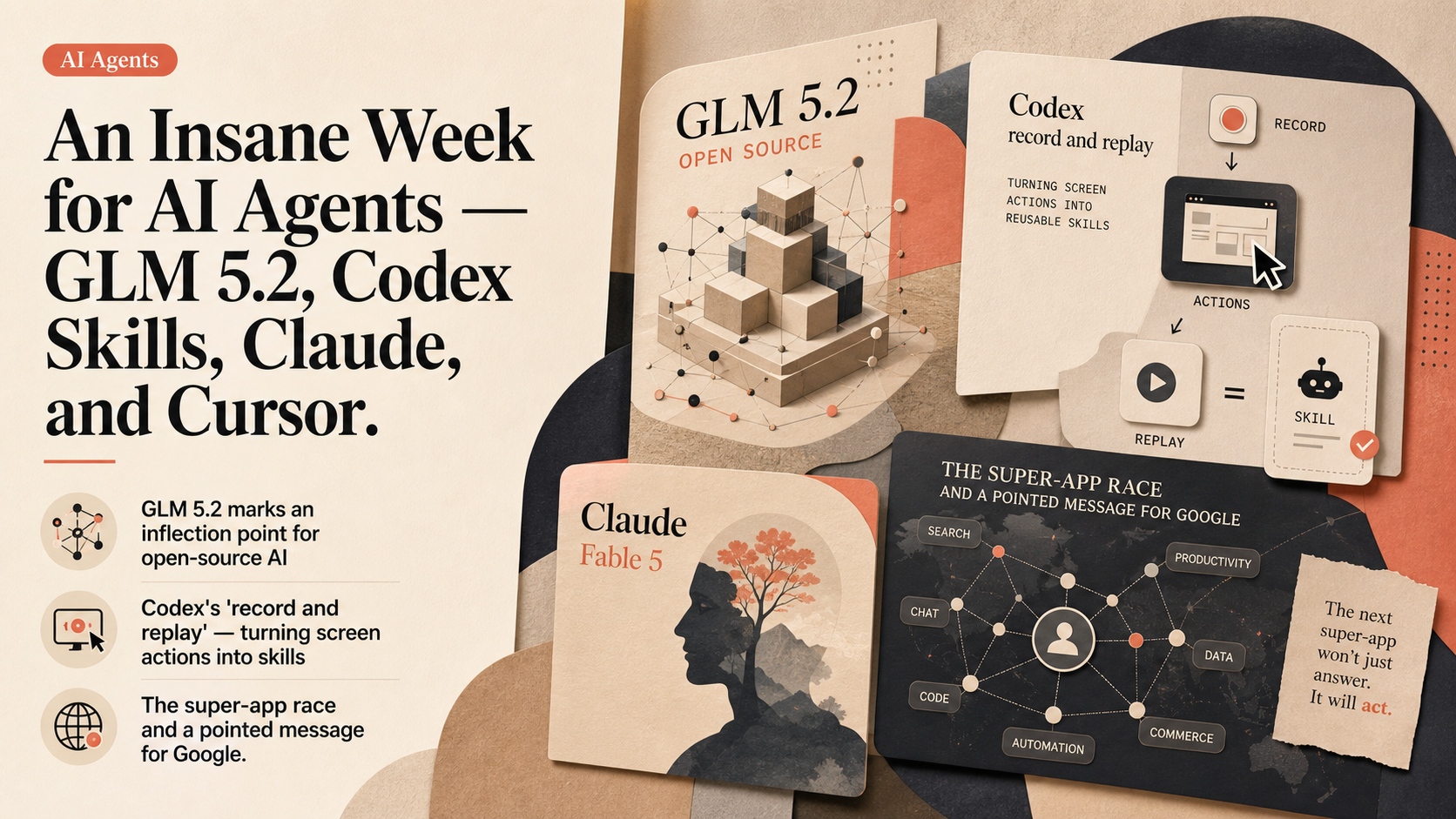
An Insane Week for AI Agents — GLM 5.2, Codex Skills, Claude, and Cursor
It's been an insane week for AI agents — latest Claude Fable 5 news, a new Codex feature that turns screen recordings into skills, the world's best open-source model, and the SpaceX × Cursor acquisition all hit at once.
Nate Herk | AI Automation
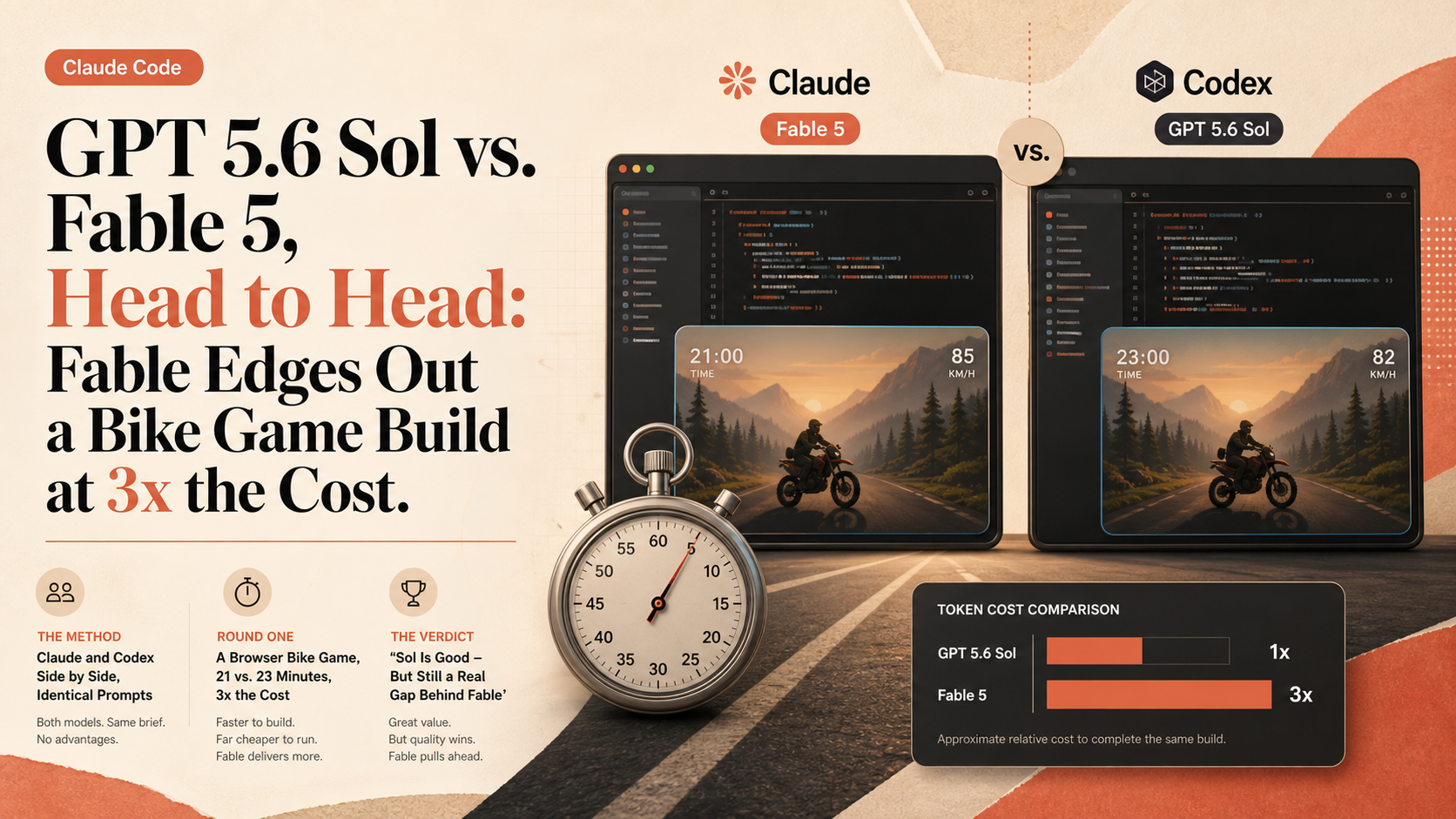
GPT 5.6 Sol vs. Fable 5, Head to Head: Fable Edges Out a Bike Game Build at 3x the Cost
With GPT 5.6's Sol, Terra, and Luna released, benchmarks show Sol beating Opus and Fable while costing far less -- but the creator decided to run both models side by side on real work for a full day instead of just quoting numbers.
Trading with DaviddTech
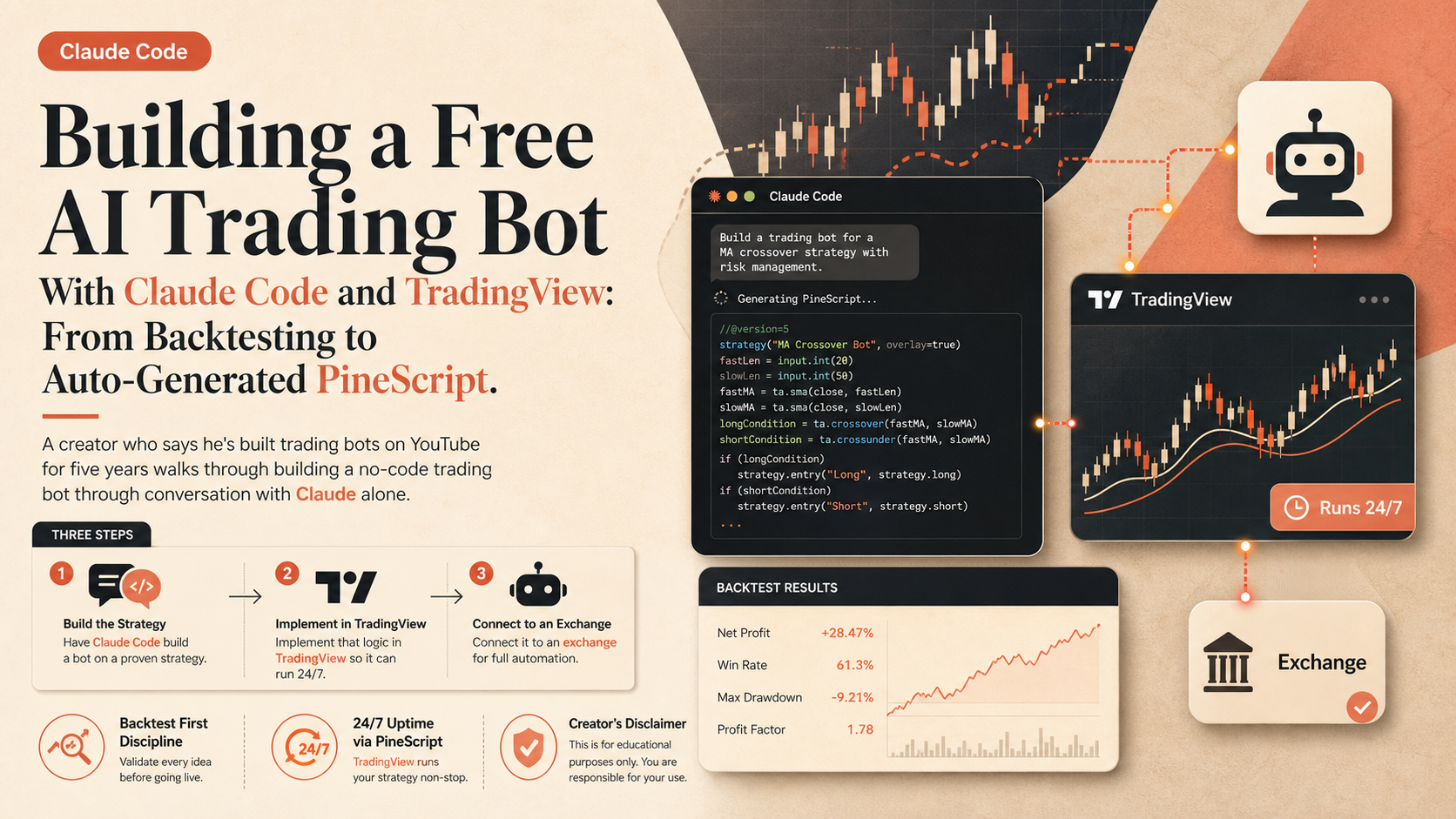
Building a Free AI Trading Bot With Claude Code and TradingView: From Backtesting to Auto-Generated PineScript
A creator who says he's built trading bots on YouTube for five years walks through building a no-code trading bot through conversation with Claude alone.