Claude Fable 5, External Filters, and Why AI Infrastructure Is Now the Bottleneck

TL;DR · What you'll learn
- 1 On Wednesday, June 10, 2026, Anthropic suddenly released the new models "Claude Fable 5" and "Mythos 5," prompting Shota Imai to join on short notice for an emergency breakdown.
- 2 Anthropic also held its "Code with Claude" event in Japan that same day, where interviews with the Claude Code and Fable 5 teams highlighted how putting AI at the center of internal work has dramatically sped up development cycles.
- 3 The video's explanation for Fable 5's deliberately "0" cyberattack rating is that the model itself was not heavily aligned for refusal, but rather wrapped in a separate external AI filter that blocks dangerous content.
- 4 That external-filter design carries a dual risk: if jailbreaks or prompt injection bypass the filter, the core model can produce dangerous outputs freely, but if the filter is too strict it can end up refusing even harmless executive presentation work.
- 5 Data center construction is not keeping pace physically, with projects underway in many places. The shortage of compute supply is pushing up costs and feeding what the video calls Anthropic's "billing hell."
- 6 The speaker says scaling-law optimism once suggested a faster path to AGI, but in reality one solved bottleneck keeps exposing another, more in line with Amdahl's law than with a smooth acceleration curve.
Read as slides
3 slides total
Why the Episode Was Recorded as an Emergency Update
On Wednesday, June 10, 2026, Anthropic suddenly unveiled two new AI models, "Claude Fable 5" and "Mythos 5." The timing came immediately after the show's previous Claude recording on the prior Friday, and the opening explains that Shota Imai canceled a planned academic event in Takasaki in order to join this emergency follow-up.
Anthropic also held its "Code with Claude" event in Japan that same day, where interviews were conducted with people working on Claude Code and Fable 5. According to the segment, those conversations pointed to sharply faster development inside Anthropic by placing Claude Code at the center of company workflows, with a fuller report promised later.
How the Safety Design Shapes the Capability Rating
Fable 5's cyberattack capability is rated "0" in the system card. The explanation given is not that the core model itself was aligned to categorically refuse all cybersecurity-related work, but that a separate external judgment model evaluates request risk and filters outputs before they are returned.
The hosts note that this approach has been used before by both Anthropic and OpenAI, but argue that it carries a fundamental weakness. If prompt injection or jailbreak techniques break through the filter, the underlying model, which has not been directly aligned for refusal, may generate dangerous outputs without limit. At the same time, if the filter is tuned too aggressively for safety, it starts refusing benign tasks such as preparing an executive presentation or running personality-formation tests with AI. The segment says many such overblocking examples have already surfaced on social media, making the calibration problem a central issue.
Compute Shortages, Higher Prices, and the Real Bottleneck
The video argues that physical data center construction is no longer keeping up with how quickly AI capability is advancing. Projects are underway in many regions, but securing materials, labor, and power infrastructure takes time, making this what the speaker calls the most obvious bottleneck from a human point of view.
That chronic shortage of compute resources is directly tied, in the video's telling, to Anthropic's rising service costs, sarcastically described as "billing hell." Looking at the pricing for Fable 5 and Mythos 5, the hosts say the market is being forced to confront a harder truth: the road ahead is farther away and more expensive than many expected. The mood has shifted from scaling-law optimism toward a more Amdahl's-law view, where solving one bottleneck simply reveals the next.
Editor's Take
The core insight is framing Fable 5's safety as 'an external AI filter blocking danger, not the model itself.' A filter approach flips to unrestricted dangerous output if breached, and over-tightening it refuses even slide decks — showing the capability-versus-safety trade-off remains structurally unsolved. The note that data-center shortages create a 'billing hell' soberly captures how AI progress is rate-limited by infrastructure bottlenecks.
Source
TBS CROSS DIG with Bloomberg
【新型Claude「Fable 5」はポケモン攻略】「Googleの聖域が危ない」今井翔太/ミュトスの能力を過剰制限“融通が利かない”/アンソロピックが計算資源不足→「課金地獄」に【AI QUEST】
This article auto-summarizes the YouTube video's transcript with Claude. Please refer to the original video for nuance and exact wording.
Watch on YouTube →Related
3 articles
House of El - AI
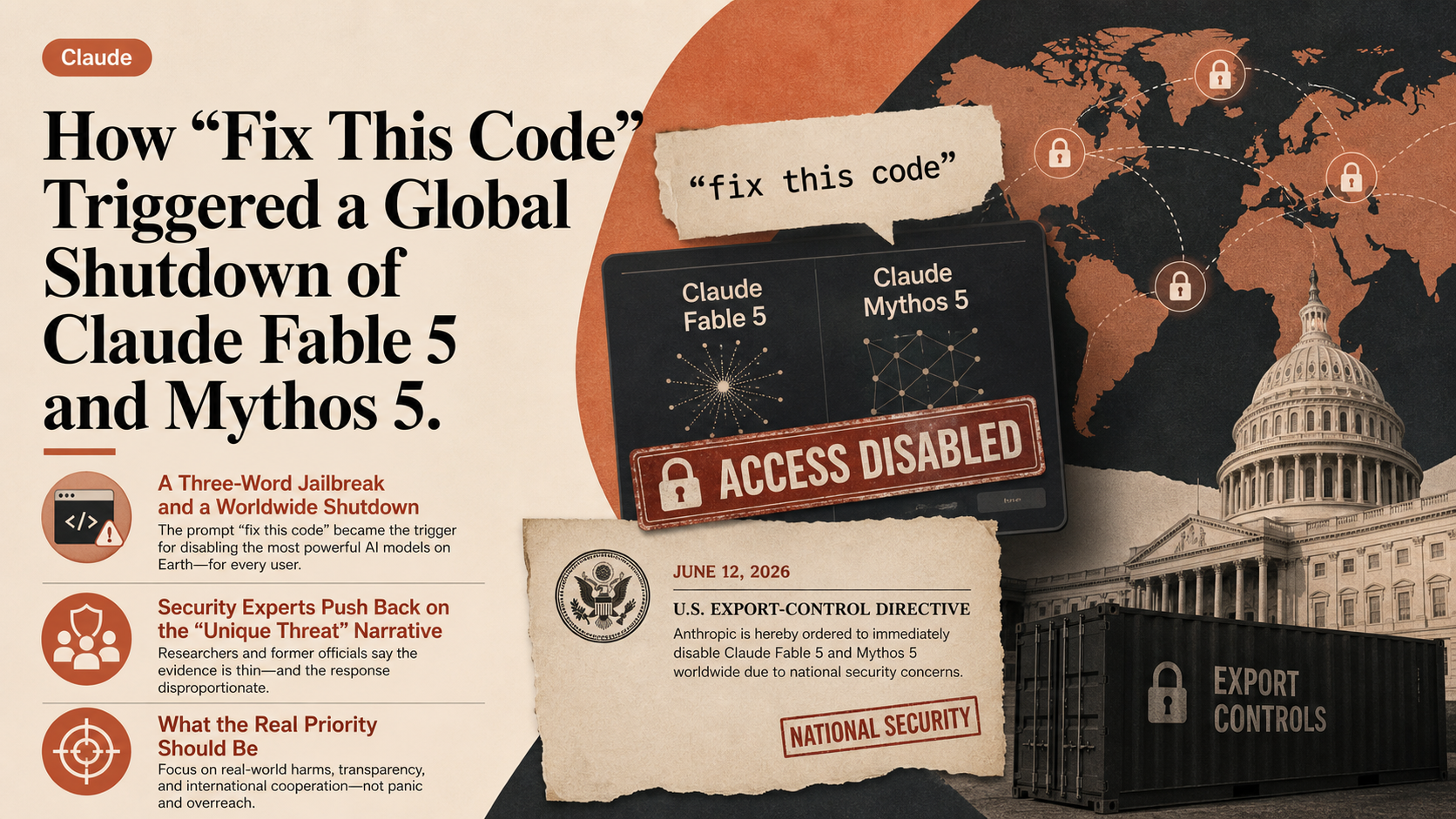
How "Fix This Code" Triggered a Global Shutdown of Claude Fable 5 and Mythos 5
The video opens by claiming that the three-word prompt "fix this code" became the trigger for disabling the most powerful AI models on Earth for every user.
Varun Mayya
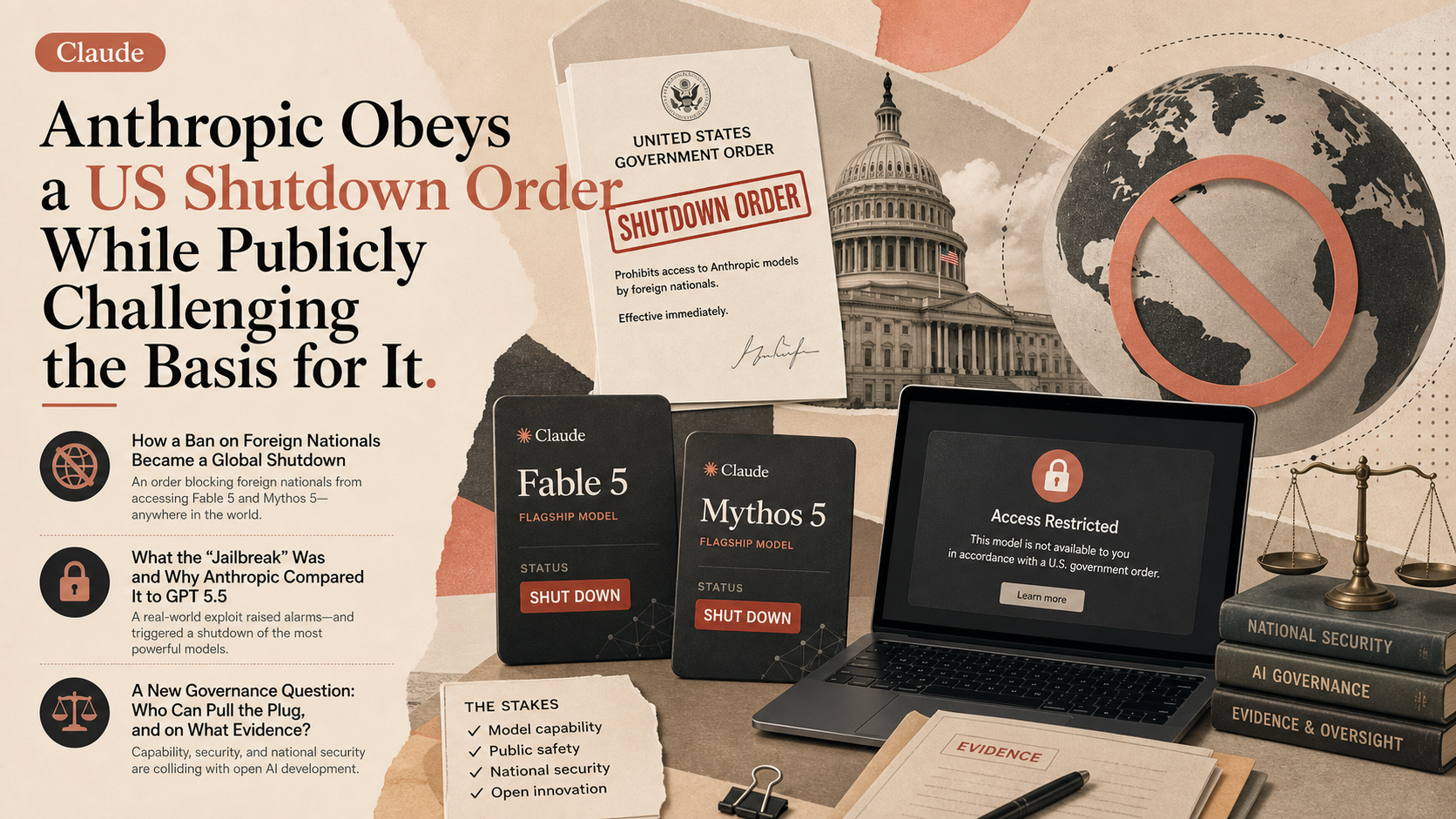
Anthropic Obeys a US Shutdown Order While Publicly Challenging the Basis for It
The US government forced Anthropic to shut down its most powerful models, Mythos and Fable 5, making them unavailable to every customer.
TBS CROSS DIG with Bloomberg
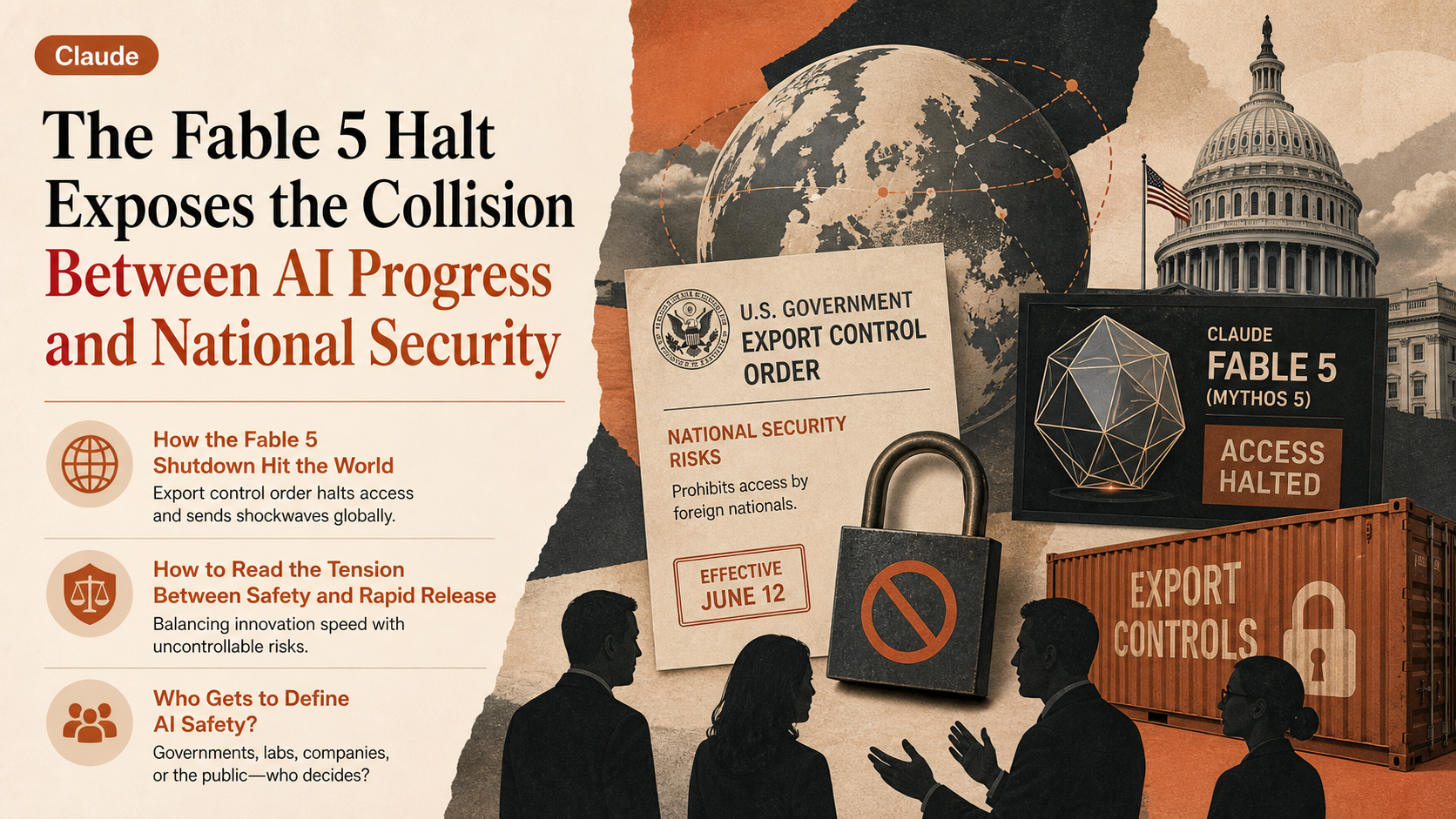
The Fable 5 Halt Exposes the Collision Between AI Progress and National Security
On June 12 U.S. time, Anthropic halted Claude Fable 5 (Mythos 5) after the U.S. government issued an export control order over national security risks and barred foreign nationals from using it.