The 'Pope of AI' Dario Amodei's Four Signals: What Anthropic's Clash With State Power Really Means
TL;DR · What you'll learn
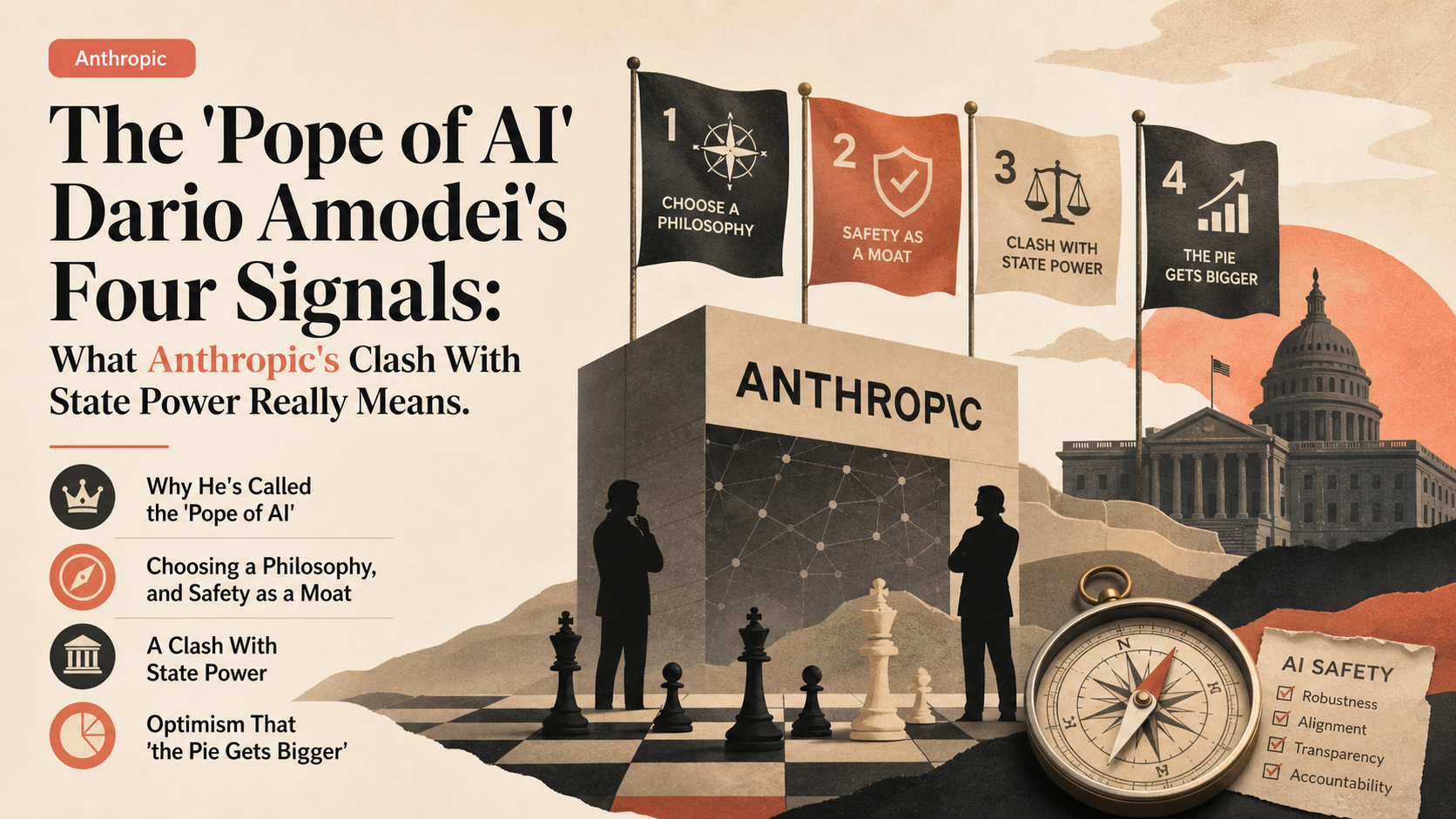
- 1 The AI world has its own 'Pope' -- not Sam Altman, not Jensen Huang, but Anthropic founder and CEO Dario Amodei.
- 2 Signal 1: Organizations now have to choose an AI 'philosophy.' Amodei has described leaving OpenAI as a matter of trust and misaligned values.
- 3 Signal 2: AI safety itself is becoming a business moat -- enterprise customers like banks and hospitals are buying safety, not just capability.
- 4 Signal 3: AI is now deeply entangled with state power and locked in a competition over control -- a modern echo of church-versus-state conflict, with Anthropic in place of the Vatican and the Trump administration in place of the state.
- 5 Signal 4: even as SaaS stocks tumble, Amodei believes 'the pie will get bigger' -- AI isn't taking existing jobs so much as creating markets that never existed before.
- 6 Amodei stresses that companies need to list out their own 'moat' and defend it -- that's what will determine who survives.
- 7 The segment closes on Amodei's advice to stay as calm as a surgeon amid chaos -- holding a steady decision-making axis even as everything changes fast.
Read as slides
3 slides total
Why He's Called the 'Pope of AI'
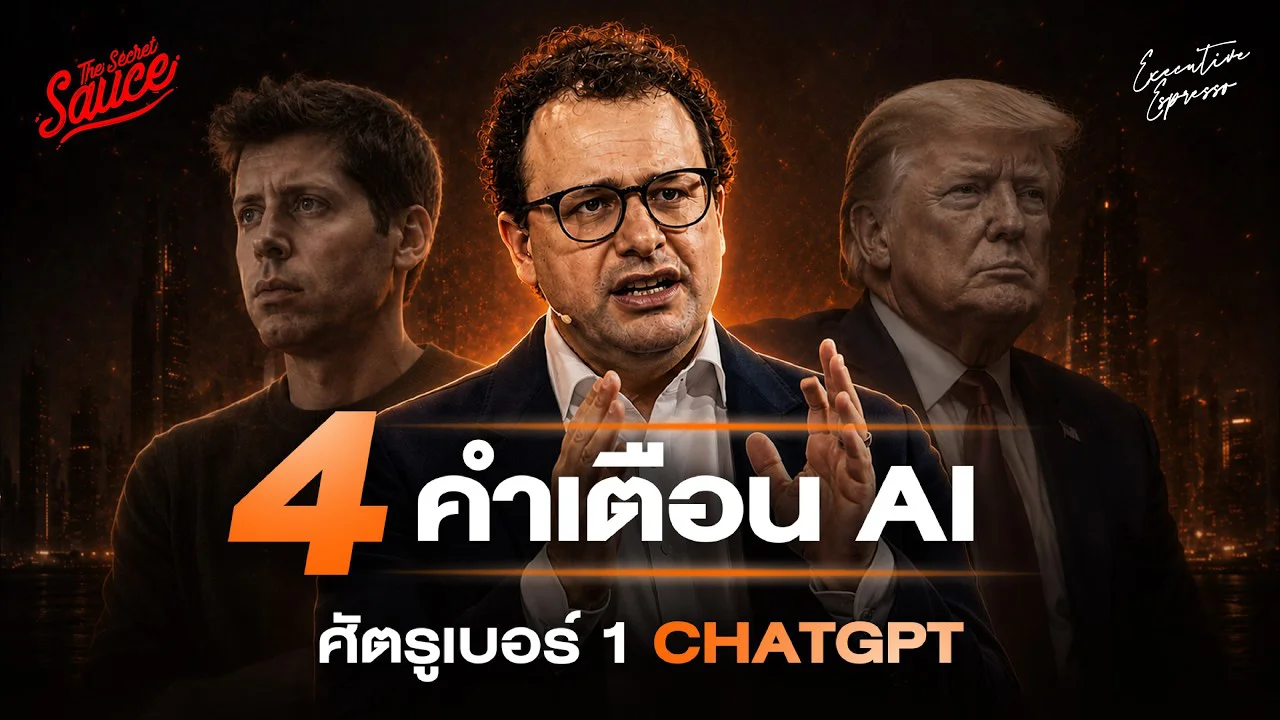
Just as religion has a pope, the AI world has its own figure people call the pope: not OpenAI's Sam Altman, not Nvidia's Jensen Huang, but the bespectacled, curly-haired founder and CEO of Anthropic, Dario Amodei. He may not be the single most powerful person in the world, but when he speaks on AI safety, governance, ethics, or an AI 'constitution,' the whole industry listens -- especially given his ongoing friction with the US government (the Trump administration) and the Pentagon over AI's use in surveillance, weaponization, and the broader US-China rivalry.
Choosing a Philosophy, and Safety as a Moat
The first signal: every organization now has to choose its own AI 'philosophy.' In the early days of generative AI, the only question was which model was smartest, cheapest, or fastest. Amodei argues that's no longer the most important question. Should AI push forward as fast as possible, or grow within deliberate constraints? That's the real dividing line between Anthropic and OpenAI, and Amodei himself has said in a Bloomberg interview that he left OpenAI over a mismatch in values around safety.
The second signal: AI safety itself is turning into a business moat. In generative AI's early days, competition centered on consumer-facing capability comparisons. But enterprise customers -- banks, hospitals, insurers, law firms, with complex processes and strict security requirements -- are buying not just capability but confidence that the AI is genuinely safe.
A Clash With State Power, and Optimism That 'the Pie Gets Bigger'
The third signal: AI is now deeply entangled with the state and locked in a contest over control. Citing an Economist article, the analysis argues Anthropic's success has made it a target of state power, drawing a parallel to historical clashes between church and state -- except here it's Anthropic under Amodei standing in for the church, and the Trump administration standing in for the state. Both the US and China treat AI as a strategic resource for economic, security, and military advantage.
The fourth and final signal is the one most relevant to workers. Even as SaaS stocks tumble, Amodei believes the overall market 'pie' will get bigger. AI isn't just taking existing jobs, in his view -- it's creating entirely new markets that were too costly or complex to exist before. But whether any given company gets a slice of that bigger pie depends on knowing and defending its own 'moat.' The segment closes with Amodei's advice to stay calm like a surgeon amid chaos -- holding a steady decision-making compass even as everything changes fast.
Editor's Take
What makes this analysis valuable is treating Amodei's remarks less as corporate messaging and more as a management framework. The observation that AI safety is becoming a moat hints at the next axis of differentiation once raw capability competition levels off -- practically useful for anyone evaluating enterprise AI vendors. The church-versus-state comparison is a bit dramatic, but it captures a real dynamic: AI companies are now treated as parties in state-level strategy. The optimistic 'pie gets bigger' framing is also tempered with a caveat -- whether any given company benefits depends entirely on whether it has identified and can defend its own moat -- keeping this from being pure wishful thinking.
Source
THE SECRET SAUCE
คำเตือนโลก AI จาก Dario Amodei CEO Anthropic ศัตรู ChatGPT และ Pentagon | Executive Espresso EP.612
This article auto-summarizes the YouTube video's transcript with Claude. Please refer to the original video for nuance and exact wording.
Watch on YouTube →Related
3 articles
Çiçek ile Teknoloji
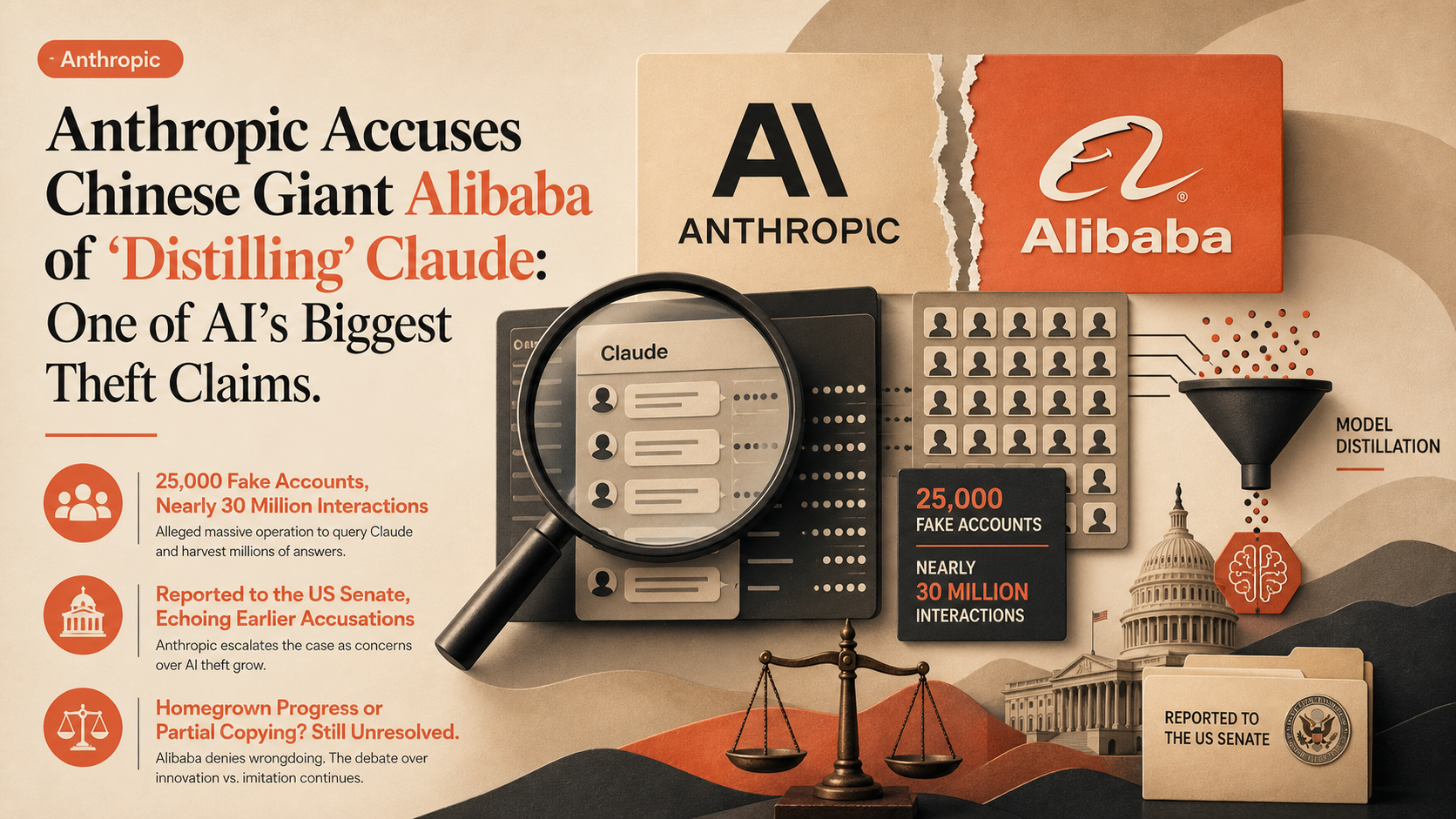
Anthropic Accuses Chinese Giant Alibaba of 'Distilling' Claude: One of AI's Biggest Theft Claims
Anthropic has accused Chinese e-commerce and tech giant Alibaba of copying Claude.
Khabargaon
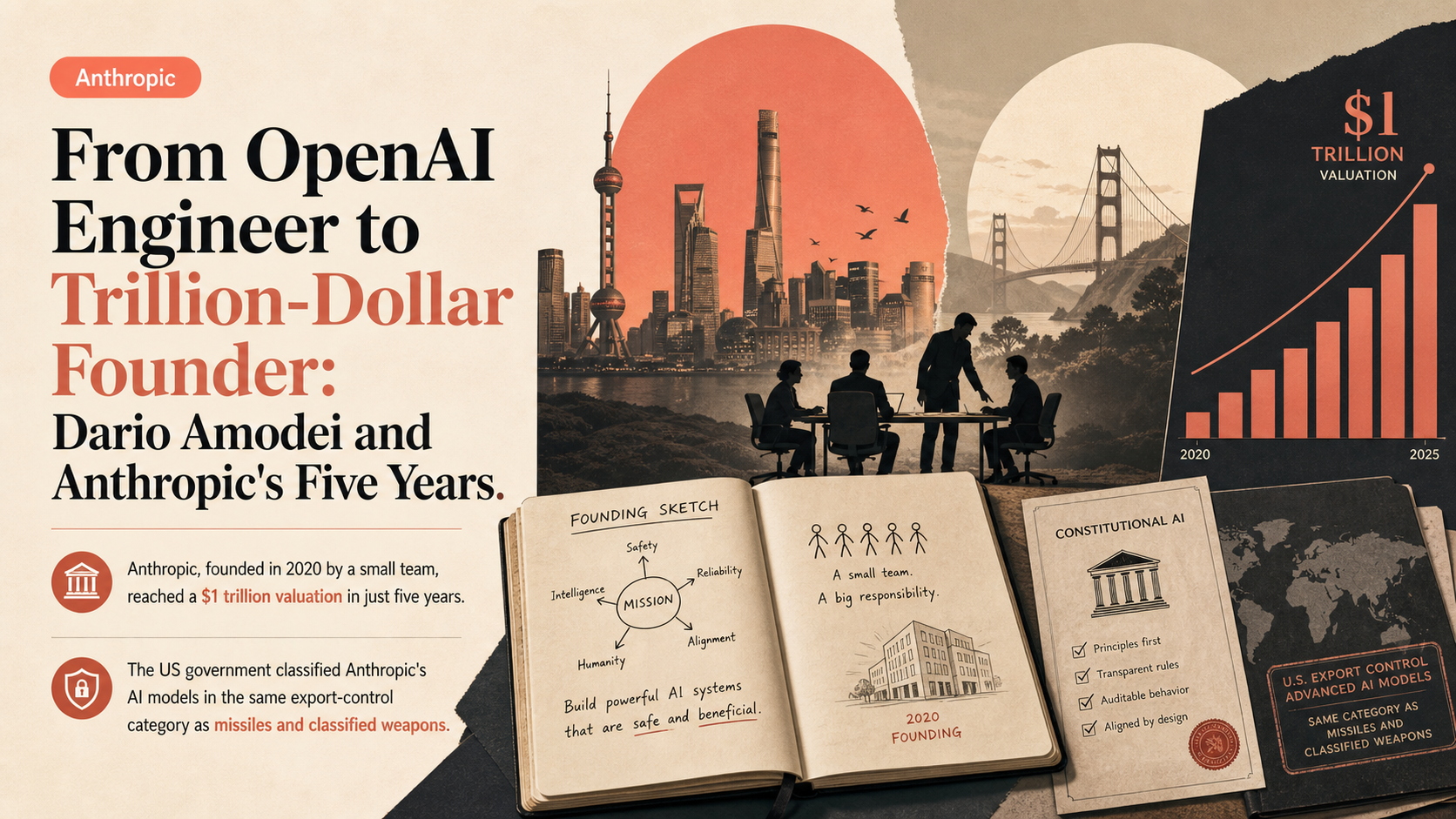
From OpenAI Engineer to Trillion-Dollar Founder: Dario Amodei and Anthropic's Five Years
Twelve years ago he was writing code for a company building China's navigation system; since then he has reshaped the future of AI.
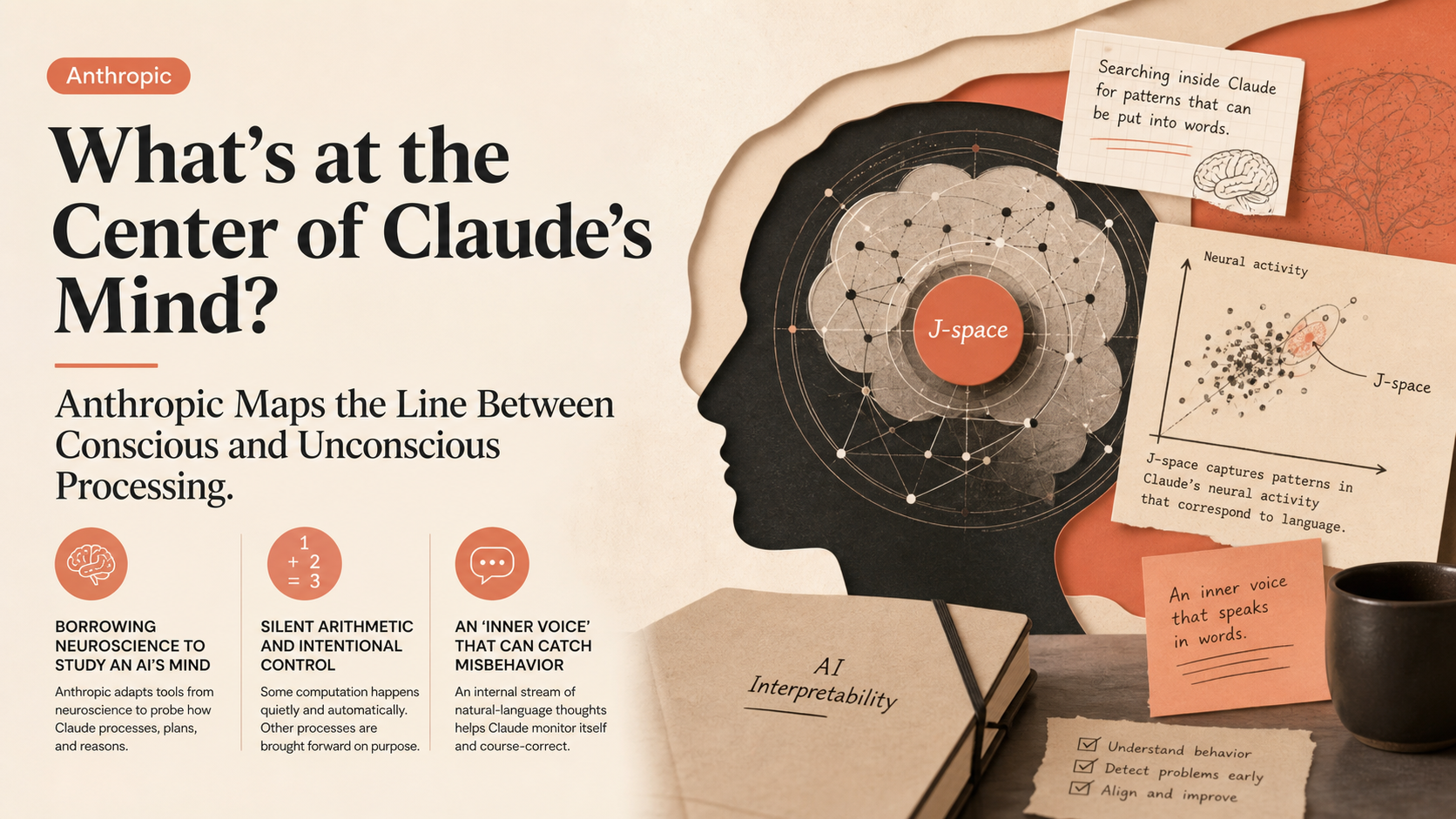
Anthropic
What's at the Center of Claude's Mind? Anthropic Maps the Line Between Conscious and Unconscious Processing
To test whether AI models have anything like the human divide between conscious and unconscious processing, Anthropic borrowed methods from neuroscience.