Claude Daily Claude Daily
RSS
Economy Media 11 min video 3 slides

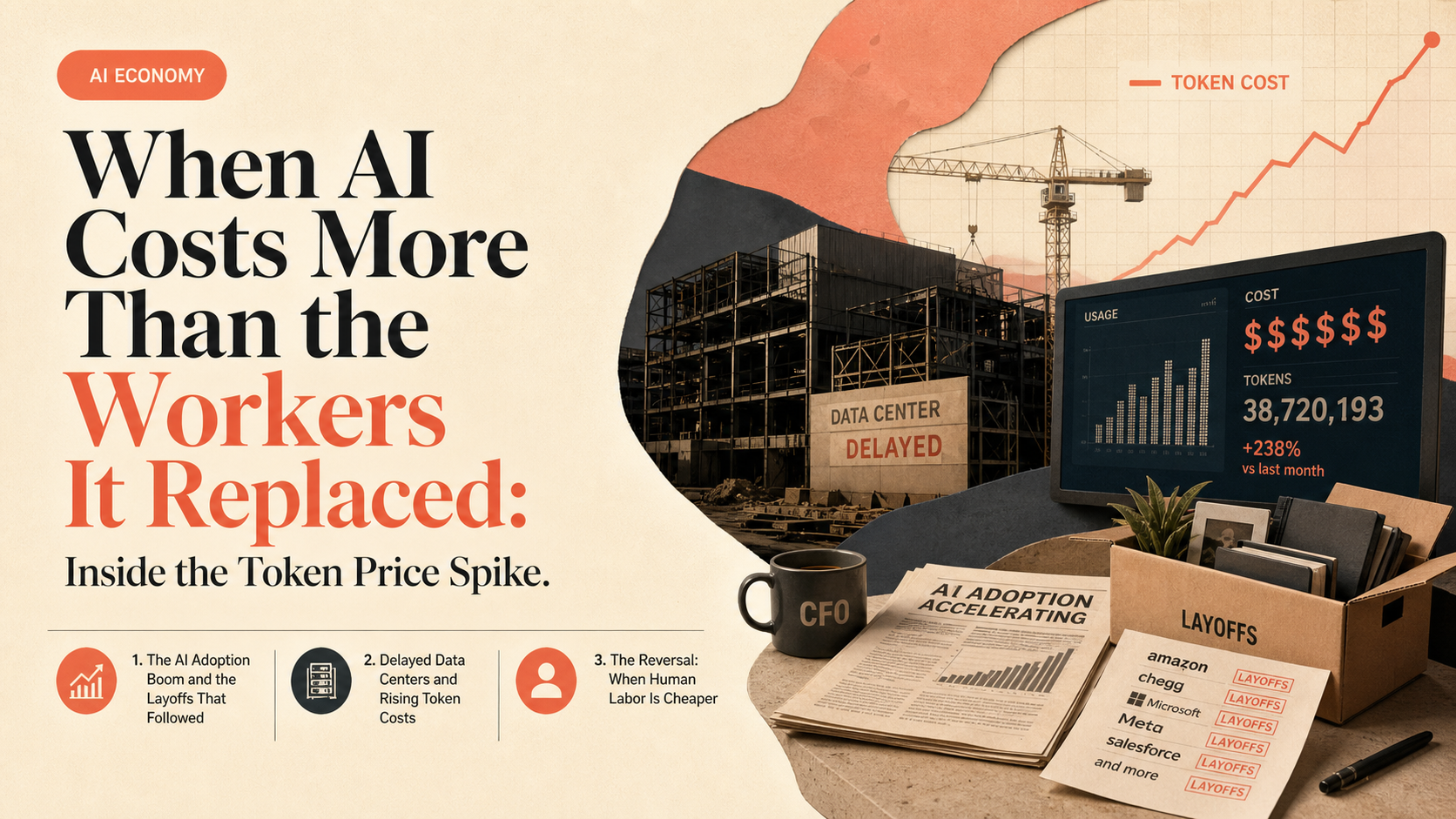
When AI Costs More Than the Workers It Replaced: Inside the Token Price Spike
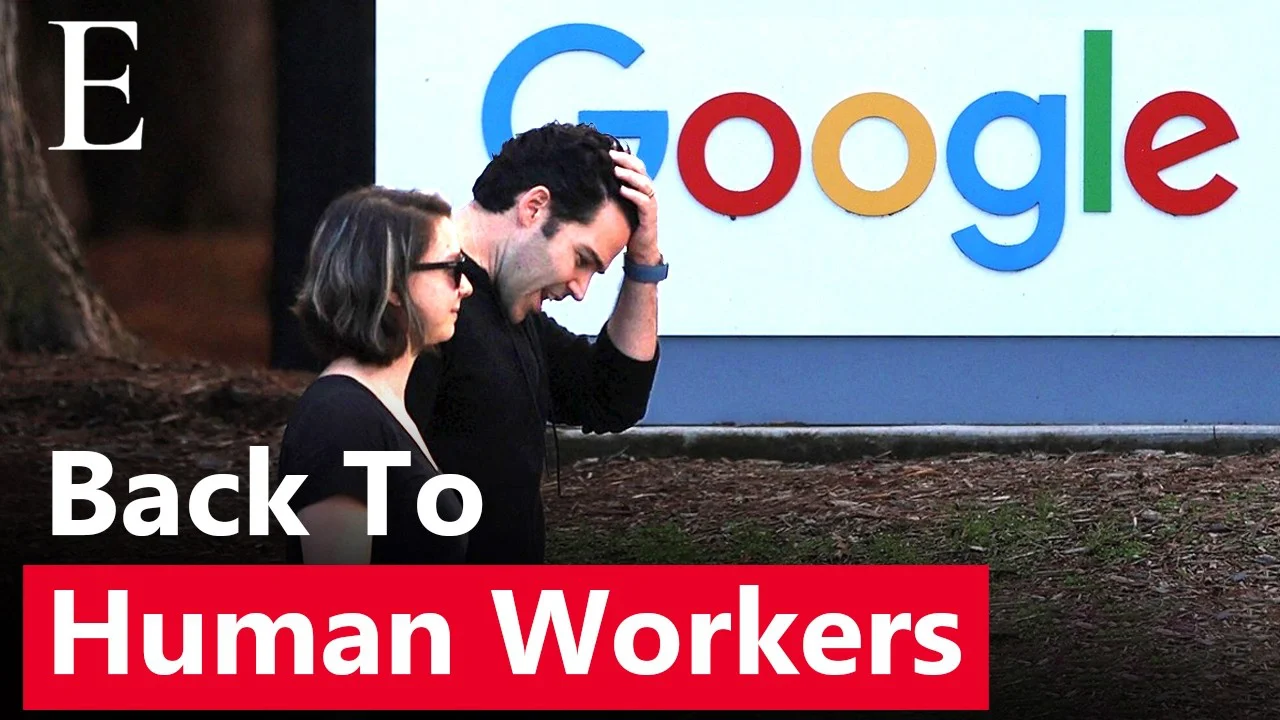
How AI Became More Expensive Than The Workers It Replaced
86,062 views 7 highlights

TL;DR · What you'll learn

  • 1 Since ChatGPT's launch, companies rushed to adopt AI into their processes, drawn in by how cheap it seemed.
  • 2 As Anthropic sounded alarms about AI's impact on employment, tens of thousands of layoffs hit Amazon, Chegg, Microsoft, Meta, Salesforce, and more.
  • 3 According to Bloomberg, nearly half of all US data-center construction projects planned for 2026 have been canceled or delayed.
  • 4 Experts are starting to question how much AI infrastructure demand is real usage versus inflated numbers.
  • 5 Component shortages, delayed data-center builds, and surging global AI adoption combined to push token costs up sharply.
  • 6 Uber and Microsoft are starting to second-guess aggressive AI adoption as AI operating costs begin to exceed the cost of human labor in some cases.
  • 7 AI still wins clearly on coding tasks, but in areas like call centers, human labor is actually turning out to be cheaper.

Read as slides

3 slides total

01 Slide 1 / 3
Watch at 00:00

The AI Adoption Boom and the Layoffs That Followed

Since ChatGPT's release, AI appeared capable of anything -- hyperrealistic images, code generation, delegating complex tasks -- and companies rushed to adopt it once they saw how cheap it was. But that cheapness soon created problems of its own.

As Anthropic raised alarms about AI's impact on employment, tens of thousands of layoffs hit tech companies including Amazon, Chegg, Microsoft, Meta, and Salesforce. Fast-food chains started replacing drive-thru staff with AI too -- it looked like AI was wiping out jobs across every industry.

Claude Daily 01 / 03
02 Slide 2 / 3
Watch at 04:52

Delayed Data Centers and Rising Token Costs

But a problem has since surfaced. According to Bloomberg, nearly half of all US data-center construction projects planned for 2026 have been canceled or delayed due to component shortages. Meanwhile, demand for AI infrastructure is reported to still exceed supply -- but experts are starting to question how much of that demand is real usage versus inflated figures.

Component shortages, delayed builds, and surging global adoption combined to drive token costs up sharply. Concerns over rising AI costs contributed to a major tech stock sell-off that dragged the S&P and Nasdaq down more than 500 points.

Claude Daily 02 / 03
03 Slide 3 / 3
Watch at 09:47

The Reversal: When Human Labor Is Cheaper

Uber and Microsoft are starting to second-guess aggressive AI adoption, as AI operating costs begin exceeding the cost of human employees in some scenarios. According to Reuters, running AI agents today already costs about the same as human labor -- and sometimes more. AI remains clearly cheaper for coding tasks, the gap is minimal for data entry, but in areas like call centers, human labor is now actually the cheaper option.

AI companies have been able to subsidize the real cost of tokens through abundant funding so far, but that appears to be ending. With Anthropic's and OpenAI's public listings, investor pressure for returns, and ongoing component shortages, the conditions are in place for token costs to keep rising.

Claude Daily 03 / 03

Editor's Take

The structure this video points to comes down to one thing: the economic case for AI adoption has rested on subsidized pricing. Abundant funding has let providers price tokens below their real cost, which fueled the rush to adopt AI at scale -- but pull that subsidy away and the underlying economics look very different. The observation that human labor is already cheaper in areas like call centers is a useful check on the blanket assumption that AI is simply 'cheaper.' As companies evaluate AI adoption going forward, running the ROI math against unsubsidized, real-cost pricing rather than today's promotional rates is becoming an increasingly important discipline.

Source

How AI Became More Expensive Than The Workers It Replaced

Economy Media

How AI Became More Expensive Than The Workers It Replaced

Published 7/2/2026 11 min 86,062 views

This article auto-summarizes the YouTube video's transcript with Claude. Please refer to the original video for nuance and exact wording.

Watch on YouTube

Related

3 articles